Durable High-Strength Components for Advanced Locking Systems
Advanced Locking Component RFQ Decision: This article explains how buyers can specify metal injection molding, powder pressing molding, investment casting, and CNC machining prototyping for durable high-strength components in advanced locking systems. The part types include lock cylinders, cams, deadbolt parts, latch components, pawls, gears, clutch features, mounting brackets, and stainless steel security inserts. The practical RFQ problem is deciding which material grade, process route, heat treatment, surface treatment, secondary machining, and inspection evidence should be quoted before the buyer validates anti-pry behavior, torque transfer, corrosion exposure, wear, and assembly reliability.
Locking components carry security-related mechanical loads, but each component has a different manufacturing risk. A miniature MIM pawl, a powder metal gear, a cast bracket, a machined lock cylinder feature, and a stainless steel insert do not need the same process route. Buyers should define the force path, contact surface, movement pattern, and inspection scope before comparing quotations.
Which Locking System Component Needs High Strength?
The component function should drive the RFQ. Lock cylinders and security inserts often need stainless steel material control, machining datums, corrosion resistance, and tight assembly fit. Cams, pawls, and latch parts often need wear resistance, edge condition, torque transfer, and surface treatment. Smart lock gears and clutch features often need compact geometry, repeatable tooth form, and low-friction movement. Brackets, housings, and strike-related parts may need investment casting or machining depending on geometry and load path.
Buyers should state whether the part resists prying, transfers torque, guides rotation, blocks movement, supports a latch, or aligns a smart lock transmission. This classification helps compare MIM, powder pressing molding, investment casting, and CNC machining prototyping without treating all lock parts as a single generic category.
Lock Component Type | Manufacturing Route To Review | RFQ Risk To Clarify | Inspection Evidence |
|---|---|---|---|
Lock cylinder or security insert | CNC machining, MIM, or machining after forming | Datum control, corrosion exposure, keyway or mating feature | CMM report, material record, and surface finish inspection |
Cam, pawl, or latch component | MIM plus heat treatment or finishing | Edge condition, wear surface, torque transfer, small feature strength | Critical dimension report and hardness or treatment record |
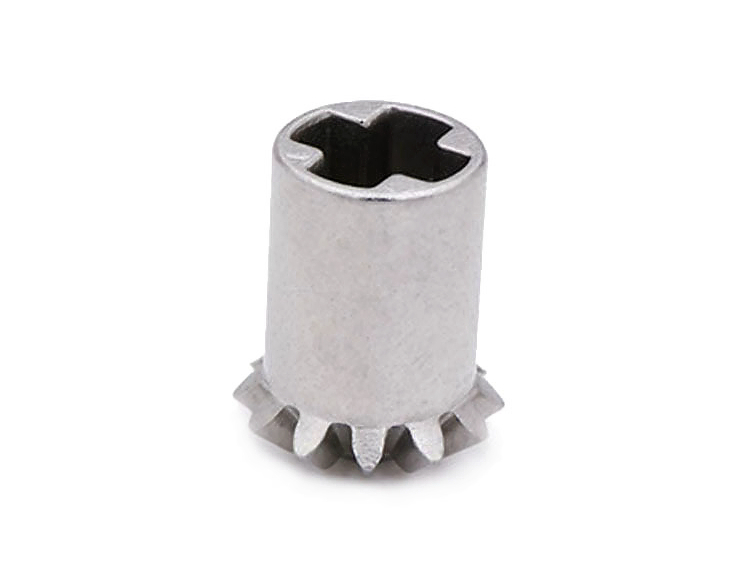
Smart lock gear or clutch feature | Powder pressing molding, MIM, or CNC prototype | Tooth geometry, backlash, density, sliding contact, wear | Dimensional inspection and functional fit review |
Bracket, strike part, or structural support | Investment casting plus machining | Wall thickness, load path, mounting hole position, surface treatment | First article inspection and assembly fit check |
When Should MIM Be Used For Miniature Lock Parts?
MIM should be considered when a locking component is small, geometrically complex, and intended for repeatable production. Miniature pawls, trigger pieces, clutch features, retaining parts, latch details, and compact gears can be candidates when the design accounts for MIM shrinkage and when critical surfaces are defined before tooling. MIM can reduce machining of complex forms, but the RFQ should still identify machined datums, threads, holes, and contact surfaces.
Material grade should be tied to strength, wear, and corrosion exposure. Buyers may compare MIM 17-4 PH stainless steel, MIM 420 stainless steel, and MIM 440C stainless steel when lock parts require strength, hardness, or wear resistance. Buyers can also review MIM design, materials, tolerances, and cost factors before approving production tooling.
When Do Powder Pressing Or Investment Casting Fit Lock Parts?
Powder pressing molding should be reviewed for powder metal gears, bushings, or repeated mechanical elements where density, wear behavior, and production repeatability matter. Investment casting should be reviewed for larger brackets, strike-related parts, housings, or structural metal parts where geometry, wall transitions, and casting surface condition affect the quotation. The route decision should be based on function, geometry, volume stage, and final machining needs.
The RFQ should not ask for "strong metal" without a process decision. Powder pressing molding may fit sintered transmission elements, while investment casting may fit load-bearing structural parts with more open geometry. Buyers can compare powder metallurgy process and applications, investment casting process considerations, and MIM versus investment casting when deciding the production route.
Which Materials And Treatments Support Lock Durability?
Material choice should match load, corrosion exposure, wear, and assembly role. Stainless steels can support corrosion-related requirements and security inserts. Low alloy steels and tool steels may be reviewed for wear or impact-loaded lock features. Powder metal materials may support gears and bushings. Cast stainless steel or zinc alloy may be considered for housings or structural lock accessories when geometry and production method justify the choice.
Surface treatment should be specified by function. A sliding cam, gear tooth, cylinder face, latch contact, and outdoor housing surface may need different finishing. Buyers can reference black oxide coating, nitriding for surface hardness, and passivation for stainless steel corrosion resistance. If the buyer owns final security, corrosion, or endurance validation, the RFQ should state which supplier records will support that validation.
How Should Tolerances And Secondary Machining Be Quoted?
Tolerances should be assigned to lock features that control movement and security. A lock cylinder bore, keyway-related datum, gear bore, pivot hole, latch face, threaded insert, and mounting hole can need tighter control than non-contact surfaces. For MIM, powder pressing molding, and investment casting, secondary machining may be needed on functional holes, datum faces, sliding contacts, threads, and mating features.
CNC machining prototyping can support early fit checks, torque review, and mechanism testing before production tooling. For production parts, buyers should mark critical-to-function dimensions on the drawing and identify whether the quote should include machining after forming, heat treatment, surface treatment, and inspection. Useful background includes functional prototype services and metal prototype process selection.
RFQ Requirement | Entity To Specify | Manufacturing Implication | Buyer Decision Supported |
|---|---|---|---|
Anti-pry or force-resistant feature | Material grade, heat treatment, wall section, load path | Controls whether MIM, casting, PM, or machining is realistic | Security validation and process comparison |
Rotating or sliding mechanism | Gear tooth, cam face, pivot hole, surface finish, coating | May require machining, finishing, or hardness control | Wear behavior and smooth actuation |
Outdoor or humid exposure | Stainless steel grade, passivation, black oxide, coating | Controls corrosion-related process records | Material and surface treatment selection |
Prototype mechanism review | CNC sample, production-intent MIM sample, inspection report | Separates fit testing from production route validation | Tooling approval and design release |
What Inspection Evidence Should Support Locking Components?
Inspection evidence should focus on lock mechanism behavior. CMM inspection can support pivot holes, mounting datums, gear position, and cylinder-related features. Hardness and material records can support heat-treated MIM parts, stainless steel inserts, and wear-facing components. Surface finish inspection can support sliding surfaces, cam faces, and rotating features. Visual inspection can support burrs, sharp edges, plating coverage, and cosmetic areas.
The RFQ should state whether inspection is needed for prototype samples, first article parts, validation lots, or production shipments. Buyers can use CMM dimensional inspection for critical features and industrial CT defect inspection when internal casting or density-related risk must be reviewed.
What Should Buyers Include In A Lock Component RFQ?
A lock component RFQ should include CAD files, 2D drawings, lock function, mating parts, target process, material grade, heat treatment, surface treatment, critical dimensions, datum scheme, wear surfaces, corrosion exposure, prototype purpose, production stage, and inspection report requirements. For MIM lock parts, buyers should identify shrinkage-sensitive dimensions, machined datums, small features, and functional surfaces. For powder metal gears, buyers should identify tooth geometry, bore control, density expectations, and heat treatment. For investment cast brackets, buyers should identify wall sections, mounting datums, machining stock, and surface finish.
Important buyer decisions should be stated directly. If the buyer is comparing MIM with investment casting, the RFQ should show geometry, size, production stage, and secondary machining needs. If the buyer is testing anti-pry behavior, wear, corrosion, or torque transfer, the RFQ should identify which material and inspection records will support the buyer's final validation.
Related FAQs
What material and process combinations help resist prying and brute-force attacks?
What benefits does MIM offer over machining for gears in smart locks?
How should buyers choose materials and treatments for outdoor lock corrosion resistance?
For miniaturized lock parts, which route is better: MIM or investment casting?
What should a lock component project include from prototype to mass production?
Which precision factors are most vital to prevent technical lock manipulation?
For smart lock transmissions, are metal or engineering plastics more reliable?
Which surface treatments best reduce friction and wear in moving lock parts?