For smart lock transmissions, are metal or engineering plastics more reliable?
For smart lock transmissions, metal and engineering plastics can both be reliable when the material is matched to torque, wear, noise, environment, and assembly tolerance. This FAQ compares MIM metal gears, shafts, cams, pawls, and latch inserts with injection molded plastic gears, carriers, bushings, guides, and housings in smart lock transmission systems. The practical RFQ problem is to decide which transmission parts need metal strength and wear resistance, and which parts can use engineering plastic for lower noise, lower weight, electrical insulation, and production efficiency.
What makes smart lock transmission reliability different?
Smart lock transmissions combine mechanical load, electronic actuation, repeated cycling, compact packaging, and user feel. A transmission gear may need stable backlash, a shaft may need tight bearing fit, a cam may need wear resistance, and a plastic carrier may need dimensional stability around electronics and fasteners.
Reliability depends on the complete transmission system rather than a single material. Gear mesh, lubrication, shaft alignment, housing stiffness, motor torque, latch load, temperature, humidity, dust exposure, and assembly tolerance all affect whether metal or engineering plastic is the right route.
Transmission requirement | Metal route to evaluate | Engineering plastic route to evaluate | RFQ detail to provide |
|---|---|---|---|
High torque or latch load | MIM steel gear, cam, pawl, shaft, or insert | Plastic carrier with metal reinforcement if needed | Motor torque, latch force, load direction, safety margin |
Low noise and smooth feel | Polished or coated metal with controlled lubrication | POM, nylon, or other low-friction molded components | Noise target, cycle requirement, mating part material |
Compact assembly with electronics | MIM inserts or metal shafts at loaded points | Injection molded carrier, housing, guide, or insulator | Sensor clearance, insulation need, assembly stack-up |
Outdoor or humid service | Stainless MIM, passivation, coating, corrosion review | Moisture-stable resin and sealing design | Environment, sealing target, corrosion test, lubricant |
When are MIM or machined metal transmission parts the safer choice?
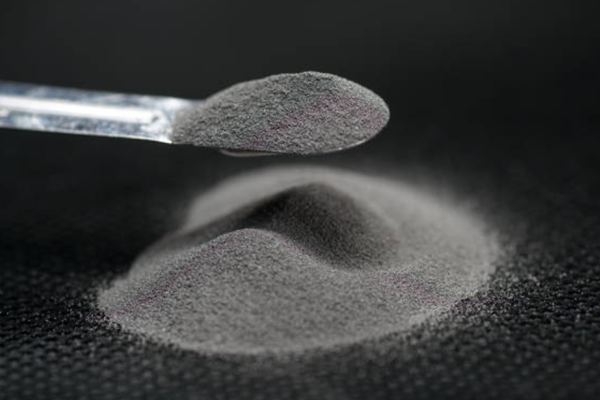
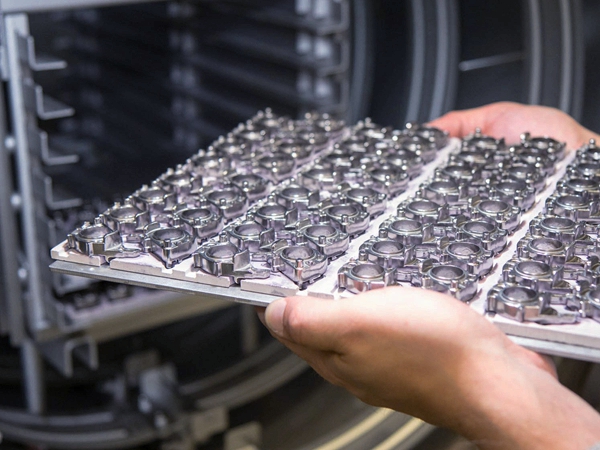
Metal is usually selected when the part transmits higher torque, carries latch load, resists concentrated wear, controls anti-manipulation features, or must keep a stable datum under repeated cycling. MIM can support small complex gears, cams, pawls, latch inserts, and shafts when the geometry is stable and the production volume can support tooling.
Materials such as MIM 17-4 PH, MIM 420, MIM 440C, and other steel routes may be reviewed according to strength, wear, heat treatment, corrosion exposure, and surface finish. CNC machining may still be used for prototype validation or for critical datums after MIM, casting, or forming.
Metal is not automatically required for every transmission component. Using metal everywhere can increase weight, noise, cost, and assembly complexity. Neway evaluates whether the metal feature is carrying load or whether it can be replaced by a molded plastic feature supported by a metal insert.
When do engineering plastic gears and carriers make sense?
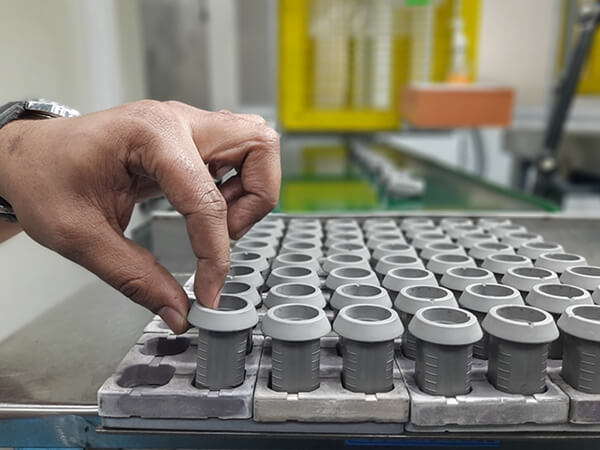
Engineering plastics can be suitable when the part needs low noise, lower inertia, electrical insulation, molded features, corrosion resistance, or integration with a plastic housing. POM may be reviewed for low-friction gears or sliding parts. Reinforced nylon, PBT, PC-PBT, PEEK, and PEI may be reviewed for carriers, guides, housings, bushings, or high-temperature areas.
Plastic reliability depends on creep, moisture absorption, temperature, wear, weld lines, fiber orientation, lubrication, and mating material. A plastic gear may run quietly, but a thin tooth, unsupported shaft, or poorly controlled carrier can create wear or backlash after repeated operation.
Buyers should avoid choosing plastic only for cost or weight. The RFQ should show torque, cycle count, operating temperature, gear module or tooth data, mating gear material, lubricant, noise requirement, and expected environment.
How do hybrid metal-plastic transmissions control noise and wear?
Hybrid transmission design uses metal where load is high and plastic where noise, weight, insulation, or molded integration matters. A smart lock can use a MIM steel cam, a metal shaft, and an injection molded carrier in the same transmission. Insert molding can locate metal shafts or bushings in plastic carriers, while overmolding can add damping, sealing, or grip features.
The hybrid route needs careful control of shaft alignment, insert position, plastic shrinkage, gear mesh, lubrication, and housing stiffness. If the plastic carrier moves after molding or after environmental exposure, the metal gear and shaft can still lose alignment.
Hybrid transmission feature | Why it is used | Reliability risk | Control method |
|---|---|---|---|
MIM gear in plastic carrier | Metal tooth strength with lighter support structure | Carrier warpage or shaft misalignment | Datum design, fixture inspection, assembly gauge |
Metal shaft with plastic bushing | Controlled rotation with reduced noise | Wear, creep, lubricant mismatch | Material pairing, cycle test, roughness control |
Plastic gear driving metal cam | Noise control with metal load interface | Tooth wear or backlash growth | Torque test, tooth inspection, environmental cycling |
Insert molded motor bracket | Metal fastening strength with molded alignment features | Insert movement or boss cracking | Insert pull-out test and dimensional sampling |
What tests and inspection decide transmission reliability?
Transmission reliability should be confirmed by both component inspection and assembly testing. Component checks may include gear profile, bore diameter, shaft position, surface roughness, hardness, resin condition, insert position, warpage, and coating thickness. Assembly checks may include torque, cycle life, noise, gear mesh, backlash, latch movement, temperature exposure, humidity exposure, and lubricant compatibility.
For MIM parts, Neway reviews shrinkage control, heat treatment, machining allowance, and surface finish. For injection molded plastic parts, Neway reviews mold flow, shrinkage, warpage, material batch, and insert position. The inspection plan should connect each measured feature to the final lock transmission behavior.
What RFQ data helps Neway compare metal and plastic transmissions?
A useful RFQ should include 3D models, gear data, torque requirement, cycle requirement, motor specifications, latch load, noise target, material preference, target weight, temperature range, humidity exposure, lubricant, critical dimensions, mating component drawings, and annual volume. Buyers should also identify whether the transmission part is a gear, cam, shaft, guide, carrier, bushing, housing, or insert.
Neway can then recommend MIM metal, CNC-machined metal, injection molded plastic, insert molding, overmolding, or a hybrid route based on function and risk. Reliability comes from matching material and process to the transmission duty, not from choosing metal or plastic as a single rule.
Related FAQs
Can engineering plastics be used in high-security locks, and what limits exist?
What benefits does MIM offer over machining for gears in smart locks?
What materials and heat treatments suit gears under high-frequency impact loads?
What material and heat treatment requirements apply to gears under high load?
How should buyers design locks that balance weight reduction with strength and durability?
Which precision factors help prevent technical lock manipulation?
How can buyers control consistency across high-volume lock parts?
Can Neway support a full lock component solution from prototype to mass production?