How Ceramic Injection Molding Reduces the Cost of Complex Ceramic Parts Ceramic
CIM Complex Ceramic Cost RFQ Decision: Ceramic injection molding can reduce the finished-part cost of complex ceramic components when the part design, material, tooling, production volume, sintering process, post-processing, and inspection plan fit the CIM route. This article explains how CIM affects cost for custom ceramic connectors, insulating bodies, wear guides, thermal substrates, valve parts, pump components, and small complex ceramic structures. The practical RFQ problem is deciding whether CIM can reduce ceramic machining, material waste, assembly steps, and inspection uncertainty enough to justify tooling and production validation.
CIM cost reduction should be evaluated on finished parts, not on one process step. Ceramic powder, tooling, debinding, sintering, grinding, polishing, lapping, inspection, and yield risk all affect the final quote. Buyers should ask where the current cost comes from and whether CIM removes that cost or simply moves it to another process stage.
How Can CIM Reduce Cost for Complex Ceramic Parts?
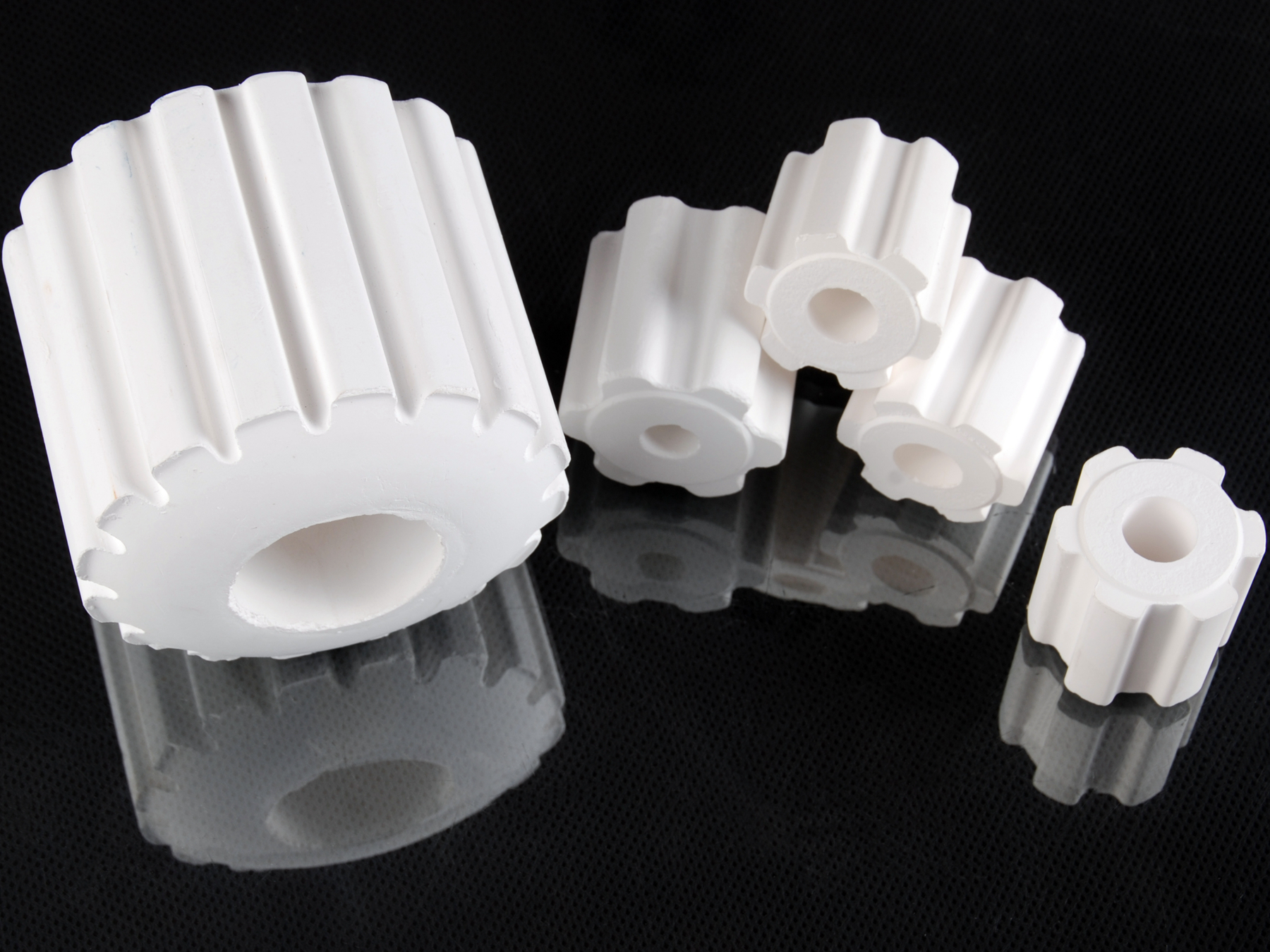
CIM can reduce cost by forming complex ceramic geometry near the final shape before the ceramic body becomes fully sintered and difficult to machine. For suitable parts, molded features can replace extensive grinding, drilling, profiling, or multi-piece assembly.
The engineering reason is that ceramic machining after sintering can be slow, tool-intensive, and sensitive to chipping or cracking. If CIM forms holes, slots, ribs, bosses, curved surfaces, and alignment features during molding, fewer post-sintering operations may be needed. This can reduce labor, fixtures, inspection loops, and scrap risk.
The RFQ implication is that buyers should identify the cost driver in the existing route. If most cost comes from machining complex features in hard ceramic, CIM may deserve review. If most cost comes from a tight polished surface that still requires finishing, CIM may reduce shape cost but not the full finished-part cost.
Which Cost Drivers Are Lowered by Near-Net Ceramic Molding?
Near-net ceramic molding can reduce costs tied to material removal, machining time, fixture complexity, assembly, and repeated inspection of features that can be molded directly. The greatest benefit usually appears when many small features are integrated into one ceramic part.
Useful CIM cost drivers include ceramic powder feedstock, mold design, gate location, parting line, debinding path, sintering support, shrinkage allowance, surface finish, and production yield. A molded ceramic blank is not automatically low cost if the part still needs heavy grinding, polishing, or rework after sintering.
Buyers should compare CIM with CIM, powder pressing, and hot pressing options when shape, quantity, and material requirements are unclear. A simple pressed part may cost less through pressing. A complex molded body may be more suitable for CIM.
How Do Tooling, Volume, and Design Maturity Affect CIM Cost?
Tooling, volume, and design maturity decide whether CIM cost reduction is realistic. CIM tooling requires upfront engineering, so the design should be stable enough for tool review before the buyer expects production cost benefits.
The reason is straightforward: tool changes, material changes, and geometry changes after validation can affect molding, debinding, sintering, shrinkage, and inspection. A low-volume prototype or frequently changing part may not justify production tooling. A stable complex part with repeated demand may support CIM more naturally.
The RFQ should state prototype quantity, pilot quantity, expected production demand, design revision status, and validation plan. The supplier can then decide whether rapid tooling, prototype machining, powder pressing, or full CIM tooling is the more practical buying stage.
When Do Secondary Operations Still Add Cost?
Secondary operations still add cost when the ceramic part needs tight local surfaces, polished areas, ground bores, flat sealing faces, lapped surfaces, threaded features, surface coating, cleaning, or special inspection. CIM can reduce the amount of ceramic machining, but it does not remove every finishing requirement.
Common cost-sensitive operations include grinding, lapping, polishing, edge conditioning, laser marking, coating, cleaning, CMM inspection, surface finish checks, flatness checks, and functional testing. These operations should be included in the quote if they are required for final acceptance.
Buyers should separate as-sintered dimensions from finished dimensions on the drawing. If the part is accepted only after grinding or polishing, the RFQ should state the final condition. This prevents a low molded-part estimate from missing the actual finished-part cost.
What RFQ Details Are Needed for a CIM Cost Review?
A CIM cost review needs enough data to identify tooling cost, material cost, process risk, finishing cost, inspection cost, and production repeatability. A 3D model alone is not enough when material properties and finished surfaces are important.
CIM Cost Factor | Why It Affects Cost | RFQ Detail Needed | Buyer Decision Supported |
|---|---|---|---|
Complex molded geometry | Integrated features can reduce ceramic machining and assembly. | 3D CAD model, 2D drawing, critical features, current process route, and machining pain points. | Whether CIM can reduce finished-part process steps. |
Ceramic material | Alumina, zirconia, silicon carbide, silicon nitride, and blends have different feedstock and sintering behavior. | Material grade or target properties, thermal need, insulation need, wear need, and chemical exposure. | Whether the selected material fits CIM and final cost expectations. |
Production quantity | Tooling and validation cost must be evaluated against repeated demand. | Prototype quantity, pilot quantity, annual demand, design maturity, and expected revision plan. | Whether the project is ready for CIM tooling or should use another route first. |
Post-processing and inspection | Grinding, polishing, lapping, coating, cleaning, and inspection can dominate finished cost. | Finished surfaces, datum scheme, surface finish, flatness, functional tests, and report expectations. | Whether the quoted route covers the final accepted part, not only the molded blank. |
When Is Another Ceramic Process More Cost Effective?
Another ceramic process may be more cost effective when the part is simple, flat, one-directional, very low in volume, frequently changing, or dominated by post-sintering precision surfaces. In those cases, powder pressing, hot pressing, ceramic machining, or prototype methods may reduce risk.
The process choice should match the cost driver. If the buyer needs simple ceramic discs or plates, pressing may be practical. If the buyer needs a complex molded body with many features, CIM may be practical. If the buyer needs only a few samples before design freeze, prototype machining may be a better buying step.
Buyers can also review CIM mass production suitability and CIM complex geometry capability before deciding whether tooling is justified.
What Neway Precision Reviews for CIM Cost Reduction
Neway Precision reviews CIM cost-reduction RFQs by checking ceramic material, part size, geometry complexity, wall thickness, tooling approach, debinding path, sintering shrinkage, fixture support, post-processing, surface finish, inspection criteria, production quantity, and current manufacturing route. The review connects CIM shape formation with finished-part cost.
A complete RFQ should include the 3D model, 2D drawing, target ceramic material, production quantity, current process if available, critical dimensions, surface finish, post-processing requirements, inspection reports, functional tests, and cost pain points. Clear RFQ data helps determine whether CIM can reduce cost or whether a different ceramic manufacturing process is more suitable.
Related FAQs