What Materials Are Used in Ceramic Injection Moulding?
What materials are used in ceramic injection moulding?
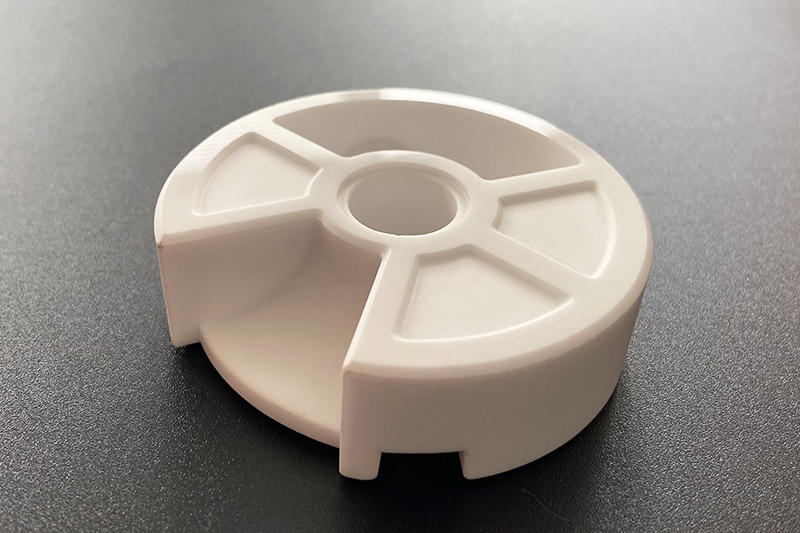
Ceramic injection moulding can use ceramic powder feedstocks such as alumina, zirconia, alumina-zirconia composites, silicon carbide, silicon nitride, and other advanced ceramic materials when the powder, binder, moldability, debinding route, sintering behavior, and part geometry are suitable. The practical RFQ problem is matching the ceramic material to the molded part function, shrinkage behavior, finishing allowance, inspection method, and production stage.
CIM material selection should start from the application requirement, not from a material list alone. A ceramic insulator, pump valve part, optical component, wear guide, sensor part, or thermal management component may need different hardness, toughness, electrical insulation, thermal behavior, surface finish, flatness, or chemical resistance. Buyers should define the use environment and acceptance criteria before tooling and sintering review.
When is alumina used in CIM parts?
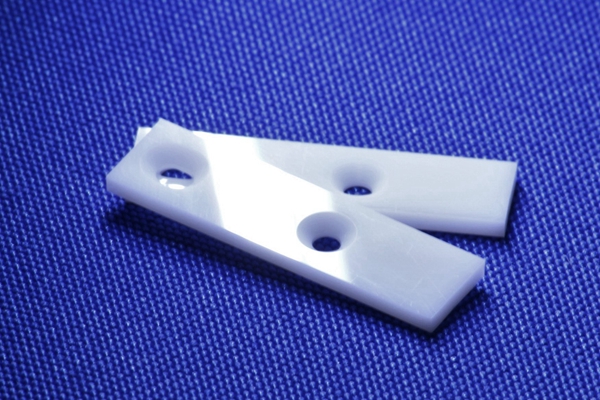
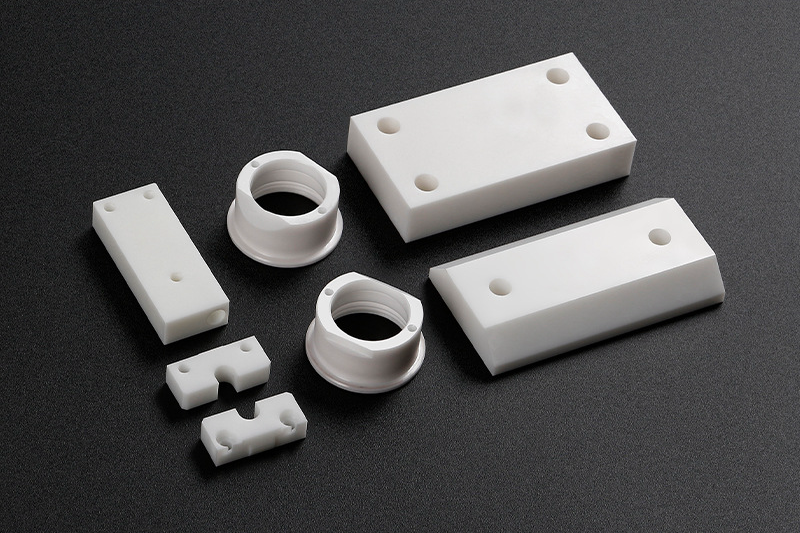
Alumina ceramic injection moulding is often reviewed for electrical insulation, wear resistance, chemical resistance, temperature exposure, and stable ceramic surfaces. Alumina may be considered for insulators, sleeves, pump or valve components, sensor-related parts, lighting-related components, and small structural ceramic parts where the drawing fits the CIM route.
Alumina material choice should be reviewed together with purity, powder particle size, sintering shrinkage, surface roughness, flatness, and post-sintering grinding needs. If the part has polished surfaces, sealing faces, small holes, sharp edges, or thin sections, the RFQ should define those features clearly so the tooling and sintering plan can account for ceramic brittleness and finishing allowance.
When is zirconia used in CIM parts?
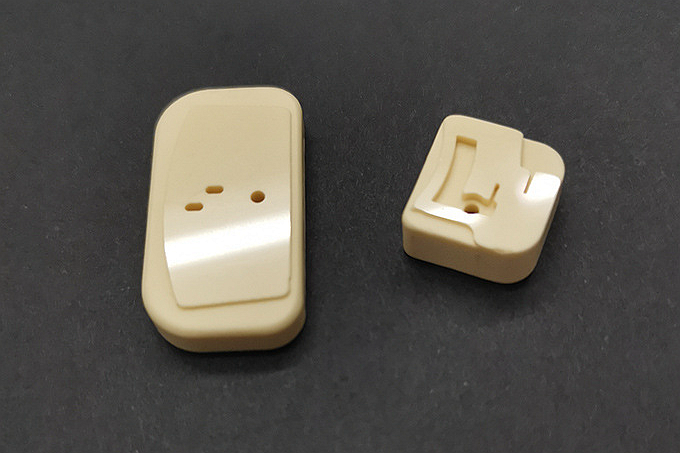
Zirconia ceramic injection moulding may be reviewed when the part needs higher toughness than many other ceramics, fine surface finish, wear behavior, cosmetic ceramic appearance, or precise molded geometry. Zirconia is often considered for small wear parts, aesthetic ceramic components, precision guides, medical-device components subject to buyer validation, and components that need a dense smooth ceramic surface.
Zirconia still requires careful review of shrinkage, phase stability, edge condition, grinding allowance, and final inspection. The buyer should define whether the surface is cosmetic, sliding, sealing, optical, or assembly-related. A cosmetic zirconia surface and a functional zirconia sealing surface may require different finishing and inspection methods.
When are silicon carbide and silicon nitride reviewed?
Silicon carbide may be reviewed for ceramic parts that need wear resistance, thermal behavior, chemical exposure resistance, or a hard structural ceramic route. Silicon nitride may be reviewed for demanding mechanical or thermal conditions when the part geometry, powder feedstock, sintering process, and buyer specifications fit the CIM process.
These materials can be more demanding to process and finish than basic ceramic material names suggest. Buyers should confirm the operating temperature, contact media, load condition, surface roughness, flatness, and inspection method. For high-temperature, wear, thermal management, or regulated applications, final validation remains the buyer's responsibility.
How do CIM materials affect shrinkage and dimensional control?
CIM materials affect shrinkage because each powder and binder system responds differently during molding, debinding, and sintering. Powder morphology, particle size distribution, binder removal, green density, sintering atmosphere, thermal profile, wall thickness, and support method can all affect final dimensions. A material with good functional properties can still be difficult if the geometry creates distortion, chipping, or flatness risk.
The RFQ should identify critical dimensions, datum surfaces, holes, grooves, thin walls, flat faces, polished surfaces, and any edge condition that needs special control. Some dimensions may be acceptable as-sintered after process review. Other faces may require diamond grinding, lapping, polishing, or optical inspection after sintering.
How do surface finish and inspection affect CIM material choice?
Surface finish and inspection can change the preferred CIM material and process route. Alumina, zirconia, silicon carbide, and silicon nitride do not respond to grinding, polishing, glazing, or lapping in exactly the same way. A surface that needs low roughness, tight flatness, optical clarity, sealing performance, or wear control should be defined before the quotation is finalized.
Inspection may include dimensional report, CMM inspection, optical measurement, surface roughness report, flatness report, visual inspection, edge condition review, or application-specific tests defined by the buyer. If the ceramic part is used in a medical, aerospace, optical, energy, or other regulated or performance-critical assembly, the buyer should provide acceptance criteria and validation requirements before production approval.
CIM Material | Typical Reason for Review | Manufacturing Risk to Check | RFQ Information Needed |
Alumina | Electrical insulation, wear resistance, chemical exposure, and stable ceramic surfaces | Sintering shrinkage, flatness, polished faces, edge condition, and grinding allowance | Purity, use environment, critical dimensions, surface roughness, and inspection method |
Zirconia | Tougher ceramic parts, smooth surfaces, wear features, and cosmetic ceramic components | Phase stability, surface finish, edge chipping, and dimensional control after sintering | Grade, color or appearance requirement, functional surfaces, and finishing standard |
Silicon carbide | Wear, chemical exposure, thermal behavior, and hard ceramic structural requirements | Feedstock processability, finishing difficulty, brittleness, and sintering control | Operating media, temperature exposure, roughness, flatness, and acceptance criteria |
Silicon nitride | Mechanical or thermal demands where the geometry and powder route fit CIM | Sintering route, grinding allowance, edge condition, and inspection repeatability | Load condition, thermal exposure, critical faces, test method, and validation plan |
What should buyers provide for a CIM material RFQ?
A CIM material RFQ should include the 2D drawing, 3D model, target ceramic material or performance requirement, expected quantity, prototype or production stage, surface roughness, flatness, wall thickness, critical dimensions, edge requirements, operating environment, and inspection package. If the material is not fixed, the buyer should describe the functional need such as insulation, wear resistance, temperature exposure, chemical contact, optical behavior, or structural support.
This information helps the manufacturer compare alumina, zirconia, silicon carbide, silicon nitride, composite ceramic materials, and alternative processes such as machining or compression molding. It also helps separate molded features from ground, polished, or inspected surfaces before tooling starts.
Related FAQs
How to assess and ensure long-term biocompatibility of implant materials?
How to choose substrates for high-power LEDs balancing heat insulation and cost?
How to control transmittance, haze, and refractive index accuracy in lenses?
What weather-resistant traits must outdoor optical parts have and how to achieve them?
How to balance lightweight requirements with thermal efficiency in telecom gear?