Custom Ceramic Parts Manufacturing: CIM, Powder Pressing, or Hot Pressing?
Custom Ceramic Parts Process RFQ Decision: This article compares ceramic injection molding CIM, powder pressing molding, and hot pressing for custom ceramic parts manufacturing. The part types include alumina insulators, zirconia sleeves, silicon carbide wear parts, silicon nitride components, boron carbide B4C blocks, ceramic substrates, connector bodies, and compact ceramic structural parts. The practical RFQ problem is choosing the forming route that fits the geometry, ceramic material, density requirement, tolerance strategy, surface finish, and production stage before tooling or sintering decisions are made.
Custom ceramic parts should begin with process selection, not only material selection. Alumina, zirconia, silicon carbide, silicon nitride, and boron carbide can perform very differently depending on whether the part is formed by CIM, powder pressing, or hot pressing. Buyers should match geometry, density, performance risk, finishing needs, and production volume before asking suppliers to quote one route.
Why Do Custom Ceramic Parts Require Process Selection?
Custom ceramic parts require process selection because ceramic performance depends on both material and forming route. A ceramic material that fits heat, wear, insulation, or corrosion requirements can still create manufacturing problems if the geometry, density target, surface finish, or tolerance requirement does not match the forming method.
The engineering reason is that ceramic parts are shaped before final densification or during pressure-assisted sintering. CIM uses ceramic feedstock and injection molding for complex shapes. Powder pressing compacts powder in a die for simpler pressed forms. Hot pressing combines heat and pressure for materials or density targets that need a different route. Each route changes tooling, shrinkage, finishing, and inspection strategy.
The RFQ implication is direct: buyers should define the part function, material candidate, geometry complexity, critical surfaces, dimensional requirements, and production stage before asking whether CIM, powder pressing, or hot pressing is best.
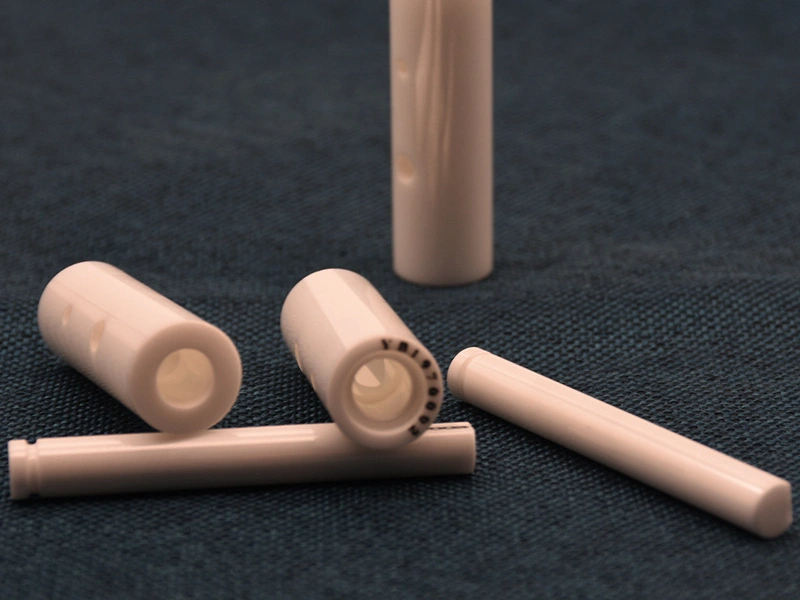
When Should Buyers Choose Ceramic Injection Molding CIM?
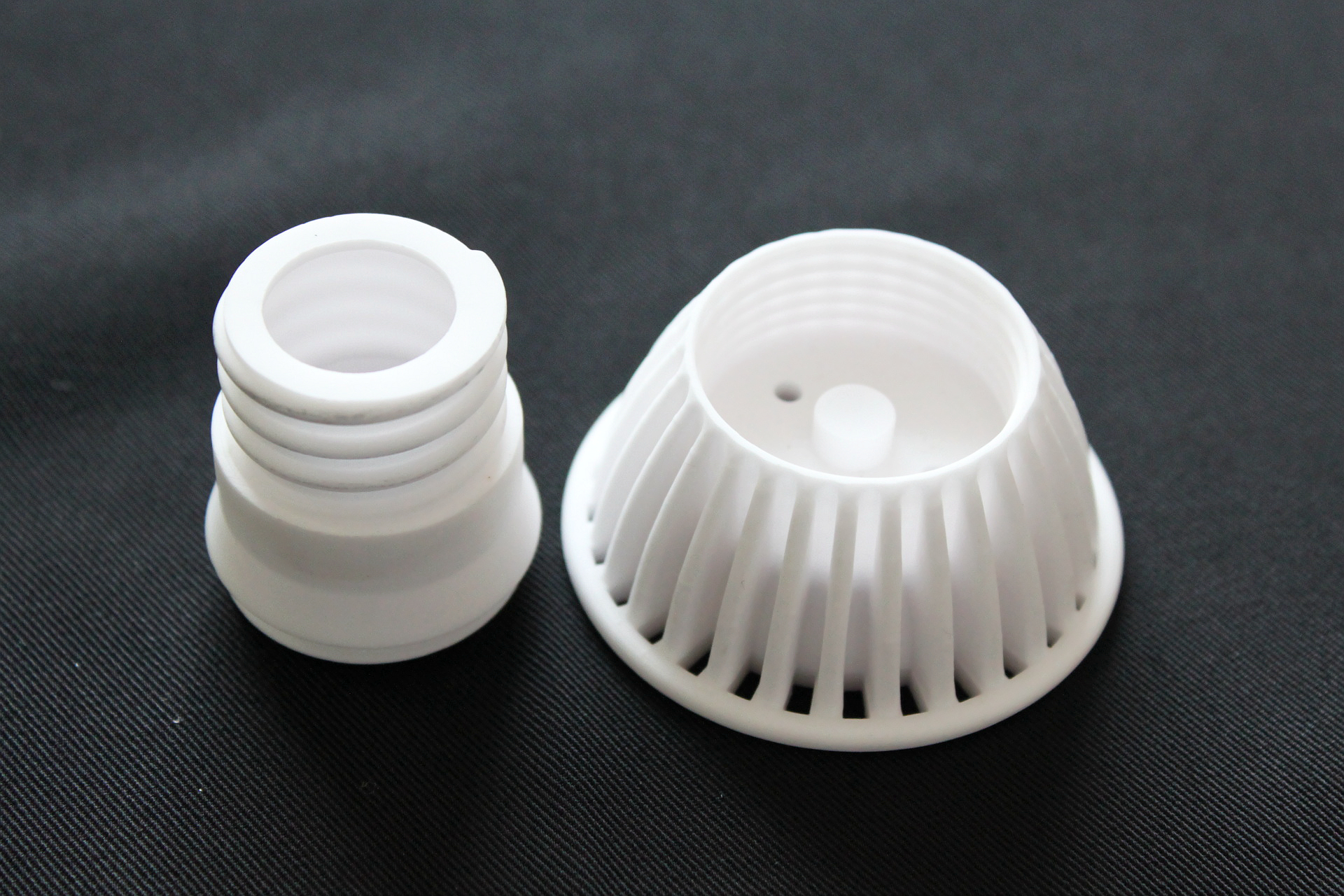
Buyers should choose CIM when the ceramic part needs complex molded geometry, small features, thin walls, undercuts, ribs, connector forms, or compact shapes that would be difficult to machine after sintering. CIM is often considered for alumina, zirconia, silicon carbide, silicon nitride, and alumina-zirconia parts when shape complexity is the main manufacturing problem.
CIM uses ceramic powder and binder as moldable feedstock. The feedstock is injected into tooling, debound, and sintered. Because shrinkage is planned into the tooling and sintering route, the buyer should define critical dimensions, functional surfaces, and inspection records before tooling is released.
The RFQ should state which features are functional. A connector body may need accurate mating areas. A ceramic guide may need wear surfaces. A thermal component may need contact surfaces. A cosmetic or non-critical area should not be controlled like a datum unless the buyer has a functional reason.
When Is Powder Pressing Better For Ceramic Parts?
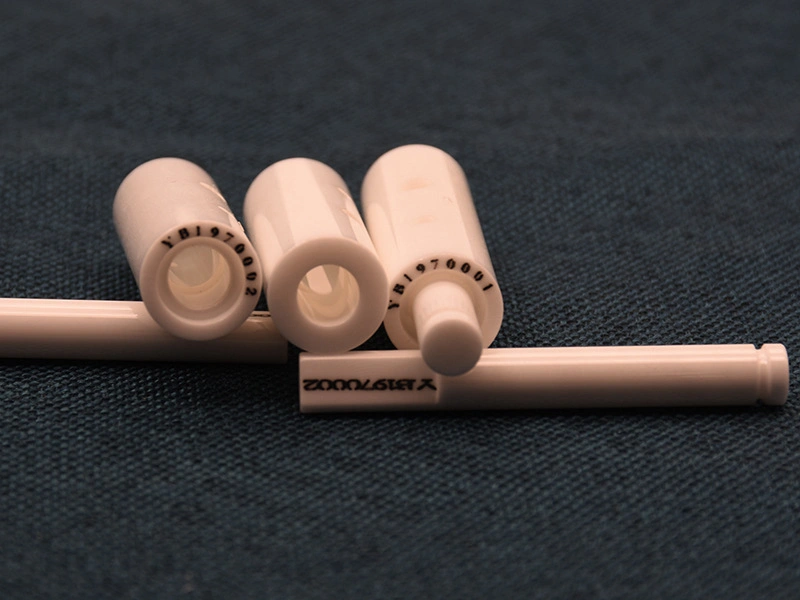
Powder pressing is better when the ceramic part has a simpler shape, pressable geometry, and a manufacturing route that can use die compaction before sintering. Powder pressing can be relevant for ceramic discs, rings, blocks, plates, sleeves, and other shapes where the pressing direction and tool release are practical.
The engineering reason is that powder pressing compacts ceramic powder in a die. This route can be efficient for suitable shapes, but it may not support the same undercuts, side features, or complex three-dimensional geometry that CIM can form. The buyer should review pressing direction, wall uniformity, density distribution, green strength, sintering shrinkage, and finishing needs.
The RFQ should include the expected ceramic material, press direction if known, critical surfaces, density requirement, and finishing operations. If the design includes side holes, complex bosses, or internal features, the buyer should ask whether CIM or post-sintering machining is more realistic than forcing a powder pressing route.
When Does Hot Pressing Fit High-Performance Ceramic Components?
Hot pressing fits ceramic components when material behavior, density target, or performance risk requires heat and pressure during densification. Hot pressing is often reviewed for demanding ceramic materials or applications where density, wear, thermal behavior, or structural integrity are more important than highly complex molded geometry.
The tradeoff is geometry. Hot pressing is generally better for simpler shapes that can be pressed under load. Complex undercuts, thin molded details, and intricate connector forms may not fit hot pressing as well as CIM. Buyers should define the target ceramic material, density expectation, final shape, machining allowance, and inspection requirement.
If boron carbide B4C, silicon carbide SiC, or other demanding ceramic materials are being reviewed, the buyer should state the final use condition and validation method. The supplier can then review whether hot pressing, powder pressing, or CIM is a better starting route.
Ceramic Manufacturing Route | Best-Fit Part Geometry | Material Or Density Question | RFQ Risk To Clarify |
|---|---|---|---|
Ceramic injection molding CIM | Small complex parts, thin walls, ribs, undercuts, connector bodies | Can the ceramic feedstock, debinding, and sintering route control the shape? | Shrinkage, critical dimensions, tool design, and secondary finishing |
Powder pressing molding | Pressable discs, rings, plates, sleeves, blocks, simpler forms | Can die compaction support density and geometry requirements? | Pressing direction, density distribution, green strength, and sintering change |
Hot pressing | Simpler high-performance ceramic shapes with machining allowance | Does heat plus pressure support the required ceramic behavior? | Shape limitation, tooling, density target, and post-process machining |
How Should Buyers Match Ceramic Material To Process Route?
Buyers should match the ceramic material to the process route by function and manufacturability. Alumina may be considered for insulation and wear. Zirconia may be considered for toughness and smooth wear surfaces. Silicon carbide may be considered for wear, heat, and chemical exposure. Silicon nitride may be considered for thermal shock and demanding mechanical use. Boron carbide B4C may be considered where hardness and specific high-performance ceramic behavior are relevant.
The buyer should describe the operating environment rather than only naming a material. The supplier needs to know whether the part must insulate, conduct heat, resist wear, resist corrosion, support a load, seal against another component, or maintain an optical or electrical relationship. That information determines whether the material and forming route make sense together.
How Do Tolerance, Shrinkage, And Surface Finish Affect Route Choice?
Tolerance, shrinkage, and surface finish often decide the route after material and geometry are reviewed. CIM and powder pressing both involve sintering shrinkage. Hot pressing uses a pressure-assisted densification route but may still require machining allowance and finishing. Buyers should separate critical dimensions from general surfaces.
Critical bores, sealing faces, optical surfaces, wear tracks, datum surfaces, and assembly interfaces may need grinding, lapping, polishing, or dimensional inspection. Non-critical surfaces may not need the same control. The RFQ should state which dimensions require inspection and which surfaces can remain as-sintered or as-pressed.
Buyer Requirement | Entity To Define In RFQ | Route Selection Impact | Inspection Evidence |
|---|---|---|---|
Complex geometry | Undercut, rib, thin wall, side feature, internal feature | May favor CIM over powder pressing or hot pressing | Tooling review and dimensional inspection plan |
Simple high-density shape | Disc, ring, plate, block, sleeve, pressing direction | May favor powder pressing or hot pressing | Density-related evidence and dimensional check |
Functional surface | Seal face, wear surface, optical surface, datum, bore | May require grinding, lapping, polishing, or machining allowance | Surface finish, visual inspection, or CMM report |
Production approval | Prototype sample, tooling sample, validation part, production run | Changes inspection scope and process risk review | Sample report, process notes, and buyer validation plan |
What Should Buyers Include In A Custom Ceramic Parts RFQ?
A complete RFQ should include CAD files, 2D drawings, ceramic material candidate, process preference if known, part function, operating environment, density requirement if applicable, critical dimensions, surface finish, finishing operations, inspection records, mating parts, production stage, and buyer-owned validation tests.
Important decisions should be stated directly. If CIM is being considered for a complex connector body, identify the molded features. If powder pressing is being considered for a disc or sleeve, define pressable geometry and density expectations. If hot pressing is being considered for boron carbide B4C or silicon carbide SiC, define the performance risk and machining allowance. If the buyer is unsure, the RFQ should request a process comparison instead of a single route quote.
Related FAQs