Maximizing Budgets: How PCM Offers Cost-Effective Solutions for Manufacturing
PCM Cost Effective Manufacturing RFQ Decision: Powder Compression Molding, also called powder pressing molding or PCM, can be cost-effective when the buyer needs repeatable powder metal, ceramic, or composite parts with suitable geometry, stable material requirements, controlled compaction, sintering, and limited secondary machining. This article explains how powder pressing molding affects manufacturing budgets for gears, bushings, structural inserts, magnetic parts, wear components, ceramic shapes, and sintered powder metallurgy parts. The practical RFQ problem is deciding whether PCM reduces material waste, machining time, tooling cost, assembly steps, and inspection risk enough for the required production volume.
PCM cost efficiency depends on part geometry and production goals. The process can be attractive for parts that compact well in the press direction and need repeated production from powder feedstock. Buyers should compare the finished part cost, including powder, tooling, pressing, sintering, sizing, machining, heat treatment, finishing, inspection, and packaging.
How Does Powder Compression Molding Control Manufacturing Cost?
Powder compression molding controls cost by pressing powder into a near-net shape before sintering and finishing. When the part geometry fits the press direction, PCM can reduce material removal, machining setups, and repeated fixture work compared with fully machining the part from solid stock.
The engineering reason is that powder feedstock is compacted in tooling, then sintered to bond the powder structure. The pressed form can include profiles, bores, shoulders, flat surfaces, and simple functional features when the tool and ejection direction support them. Cost improves when these molded features reduce later machining.
The RFQ implication is direct: buyers should identify the current cost driver. If machining waste, long cycle time, tool wear, or assembly steps dominate the current route, PCM may deserve review. If the part needs complex side features that cannot be pressed, another process may be better.
Which Part Types Fit PCM Cost Efficiency?
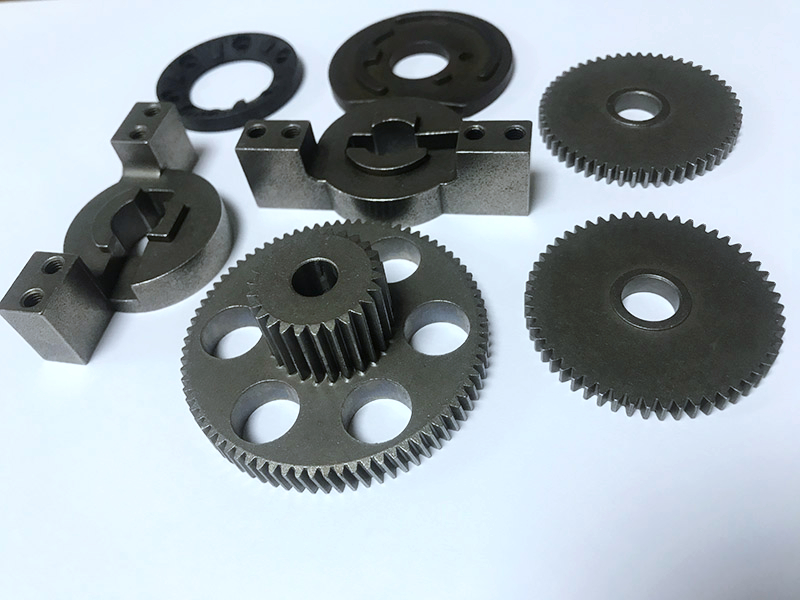
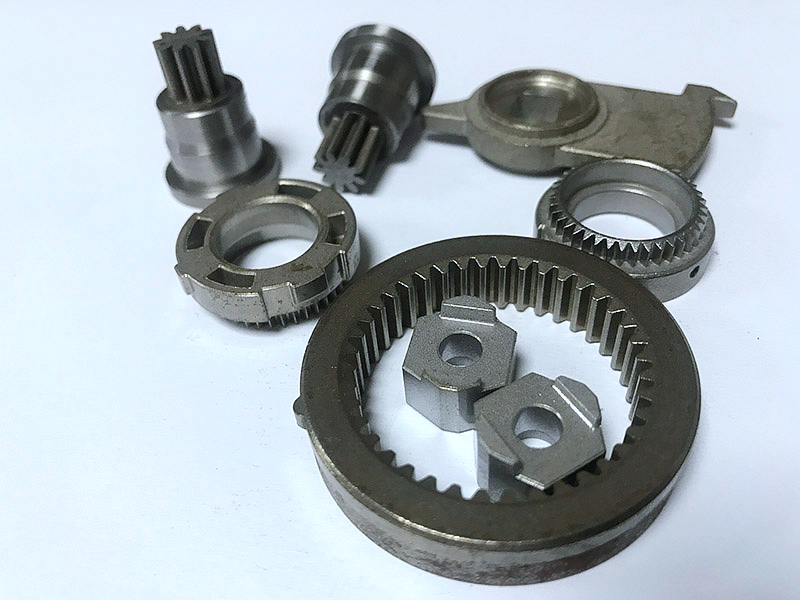
PCM usually fits parts with a clear pressing direction, repeatable geometry, and material requirements that work with powder metallurgy. Common examples include bushings, gears, spacers, small structural parts, wear parts, magnetic components, ceramic powder parts, and tool or machine components with suitable compaction geometry.
Material selection affects cost. PCM material capabilities may include stainless steel, low-alloy steel, tool steel, magnetic alloy, silicon carbide, boron carbide, and other powder-based material systems. Each material has different powder cost, compaction behavior, sintering behavior, and post-processing needs.
Buyers should define the function before asking for a material. A magnetic part, wear part, corrosion-resistant part, ceramic part, and structural insert can require different powder, density, heat treatment, finishing, and inspection criteria.
How Do Material Use, Compaction, and Sintering Affect Budget?
Material use, compaction, and sintering affect the budget because they decide yield, shrinkage, density, and secondary operation needs. A low-cost powder route is not cost-effective if the compact cracks, distorts, or needs extensive machining after sintering.
Sintering bonds powder particles and determines many final material characteristics. Pressing pressure, powder flow, tooling fill, green strength, furnace control, and support method all influence the finished part. If the part needs sizing, impregnation, heat treatment, machining, or coating, those operations should be included in the cost review.
The RFQ should state whether the part will be accepted as-sintered or after secondary operations. Critical bores, gear teeth, bearing surfaces, threads, flat datums, and surface finish requirements should be clearly marked on the drawing.
When Do Tooling, Volume, and Design Stability Matter?
Tooling, volume, and design stability matter because PCM depends on a tool that compacts powder consistently. The buyer should confirm that the part design is mature enough for tooling review before expecting cost benefits from production pressing.
A frequently changing part can lose the cost benefit of tooling. A stable part with repeated demand can spread tool cost across production and reduce per-part handling or machining. High-volume powder compression molding should be evaluated with the part's material, geometry, inspection needs, and expected production duration.
The RFQ should include prototype quantity, pilot quantity, annual demand, design revision status, and expected approval stages. This helps decide whether prototype machining, temporary tooling, production PCM tooling, or another process is appropriate.
What RFQ Details Are Needed for a PCM Cost Review?
A PCM cost review needs more than a target price. The supplier needs to understand part geometry, powder material, density requirement, pressing direction, sintering requirement, secondary operations, production demand, and inspection criteria.
PCM Cost Factor | Why It Matters | RFQ Detail Needed | Buyer Decision Supported |
|---|---|---|---|
Part geometry | Pressing direction, ejection, and tool fill decide whether the part can be compacted efficiently. | 3D model, 2D drawing, critical dimensions, side features, holes, shoulders, and datum surfaces. | Whether PCM can form the required shape or another process is needed. |
Powder material | Powder cost, compressibility, sintering behavior, density, and heat treatment affect finished cost. | Material grade or target property, wear requirement, magnetic requirement, corrosion need, and heat exposure. | Whether the selected powder system fits performance and budget. |
Secondary operations | Sizing, machining, heat treatment, impregnation, coating, and inspection can change total cost. | Final-state dimensions, surface finish, threads, bores, gear features, hardness, and report needs. | Whether the quote covers the accepted finished part. |
Production demand | Tooling and setup cost should match the production stage and expected repeat demand. | Sample quantity, pilot quantity, annual quantity, design maturity, and change risk. | Whether PCM tooling is justified or a lower-commitment route should be used first. |
When Is PCM Not the Cost-Effective Route?
PCM may not be cost-effective when the part has complex undercuts, deep side features, very tight local tolerances on many surfaces, low repeat demand, or frequent design changes. CNC machining, MIM, investment casting, die casting, stamping, or ceramic injection molding may be more suitable depending on the material and geometry.
The process choice should be based on the finished part. PCM can reduce waste for suitable pressed shapes, but it can add cost if the geometry forces heavy machining after sintering. Powder metallurgy, forging, MIM, and machining should be compared by material, geometry, load requirement, volume, and inspection plan.
Buyers should ask for process-route feedback during the RFQ stage. A supplier can identify whether the part should stay in PCM, shift to MIM for complex small geometry, or use machining when the quantity or precision requirement does not justify tooling.
What Neway Precision Reviews for PCM Cost-Effective Manufacturing
Neway Precision reviews PCM cost RFQs by checking powder material, part geometry, pressing direction, tooling design, green strength, sintering behavior, density requirement, secondary machining, sizing, heat treatment, finishing, inspection criteria, and production demand. The review connects powder pressing molding with finished-part budget and acceptance requirements.
A complete RFQ should include the 3D model, 2D drawing, material grade or target properties, critical dimensions, expected quantity, density or porosity requirement if any, heat treatment, surface finish, secondary operations, inspection reports, and current manufacturing cost drivers. Clear RFQ data helps determine whether PCM offers a cost-effective route or whether another process should be quoted.
Related FAQs
What Are The Common Powder Compression Molding Materials And Examples?
How Do Powder Metallurgy Parts Compare With Forgings In Cost And Performance?
Why Are MIM Metal Powders More Expensive Than Common Bulk Metal Materials?
What Cost Advantages Does The MIM Process Offer Compared With CNC Machining?
How Does Production Volume Affect The Unit Cost Of Metal Injection Molded Parts?
Why Are Custom Metal Injection Molding Services Suitable For High-Volume Production?
What Are The Cost Benefits Of Rapid Molding Compared To Traditional Methods?