Maximizing Production: How Plastic Injection Molding Revolutionizes Efficiency
Plastic Injection Molding Production Efficiency RFQ Decision: Plastic injection molding can improve production efficiency when the part design, thermoplastic material, mold design, cooling strategy, defect control plan, secondary operations, and inspection criteria are stable. This article explains how injection molding supports repeated production of housings, covers, clips, brackets, connectors, bezels, gears, and functional plastic components. The practical RFQ problem is deciding whether the mold, material, expected quantity, part geometry, quality requirements, and finished-part operations justify injection molding compared with rapid tooling, CNC prototyping, 3D printing, or other manufacturing routes.
Production efficiency should be defined as a finished-part result, not only as a fast molding cycle. Buyers should consider mold readiness, material preparation, process stability, cooling, ejection, defect prevention, post-processing, packaging, and inspection. A fast cycle does not help if the part has warpage, sink marks, short shots, weak weld lines, or dimensional variation.
How Does Plastic Injection Molding Improve Production Efficiency?
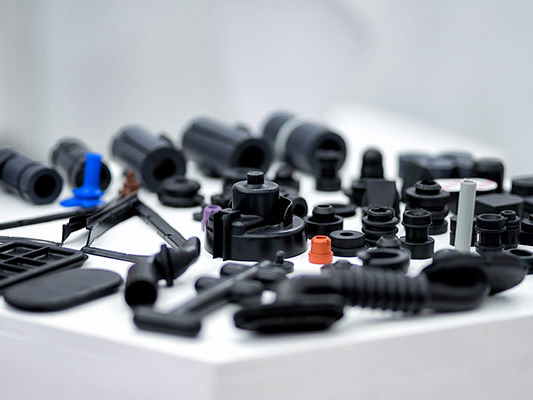
Plastic injection molding improves efficiency by producing repeatable thermoplastic parts from a dedicated mold once the design and process are approved. The process can reduce manual fabrication, repeated machining, and assembly steps when molded features are integrated into the part.
The engineering reason is that molten thermoplastic fills a mold cavity, cools, and is ejected as a defined shape. Efficient production depends on filling balance, cooling control, ejection, material drying if required, cavity layout, and part handling. A mold that fills consistently and cools evenly can support stable production.
The RFQ implication is that buyers should provide the production goal and accepted part condition. A prototype, pilot run, bridge build, and production run may need different tooling, material, and inspection decisions.
Which Part Designs Benefit Most From Injection Molding Efficiency?
Injection molding is strongest when the part has repeated demand, stable geometry, and molded features that reduce later operations. Housings, covers, bezels, clips, ribs, bosses, snaps, connectors, brackets, and enclosures can benefit when wall thickness, draft, gate location, and ejection are reviewed early.
Design details decide whether efficiency is realistic. Uneven walls, deep ribs, sharp corners, thick bosses, weak snap features, hidden undercuts, and difficult cosmetic surfaces can create cycle, defect, or tooling risk. Buyers should mark critical surfaces, load-bearing clips, screw bosses, mating features, and cosmetic zones on the drawing.
Material selection also matters. ABS, PC, ABS-PC, Nylon PA, POM, PPS, and other engineering thermoplastics have different drying, flow, shrinkage, heat, and wear behavior. The RFQ should match the plastic material to the part function, not only to a generic material name.
How Do Tooling, Material, and Cycle Stability Affect Output?
Tooling, material, and cycle stability affect output because each molding cycle repeats the same risks. Gate design, venting, cooling channels, cavity balance, runner design, ejection, mold temperature, melt temperature, pressure control, and material condition all affect production consistency.
Material handling is part of efficiency. Some thermoplastics require drying, and some materials are sensitive to residence time, moisture, shear, or temperature. Colorants, fillers, flame-retardant packages, and recycled content requests can also affect flow, strength, appearance, and defect risk.
Buyers should define whether the priority is appearance, strength, dimensional stability, heat resistance, wear behavior, or assembly fit. The supplier can then review tooling and process conditions against the features that matter most.
Which Quality Controls Protect Injection Molding Efficiency?
Quality controls protect efficiency by preventing repeated production of nonconforming parts. Common controls include first article inspection, dimensional reports, visual criteria, color and texture checks, assembly fit checks, go/no-go gauges, CMM inspection, material verification if required, and defect review.
Injection molding defects should be addressed before scale-up. Short shots, flash, sink marks, voids, burn marks, weld lines, flow marks, warpage, dimensional variation, and poor surface appearance can all reduce yield. The inspection plan should define which defects are cosmetic and which defects affect function.
Buyers should state whether inspection applies after molding, after trimming, after machining, after painting, after plating, after assembly, or after packaging. This prevents confusion between molded-part acceptance and finished-part acceptance.
What RFQ Details Are Needed Before Scaling Injection Molding?
A production injection molding RFQ should include geometry, material, quantity, surface requirements, tolerance priorities, secondary operations, and inspection requirements. These details help the supplier quote the right tooling and production route.
Injection Molding Efficiency Factor | Why It Matters | RFQ Detail Needed | Production Evidence |
|---|---|---|---|
Part design maturity | Tool changes after production approval can affect cost, timing, and validation. | 3D model, 2D drawing, revision status, critical surfaces, wall thickness, ribs, bosses, and draft. | DFM review, tool review, sample approval, and revision control. |
Thermoplastic material | Material flow, shrinkage, drying, heat resistance, strength, and finish affect the molding process. | Material grade, color, texture, filler, flame requirement if any, and operating environment. | Material datasheet review, sample inspection, dimensional report, and functional test if specified. |
Production quantity | Quantity affects tool type, cavity count, inspection plan, and production scheduling. | Prototype quantity, pilot quantity, annual demand, expected production duration, and packaging needs. | Sample plan, production inspection records, and packaging approval if required. |
Finished-part requirements | Painting, plating, printing, inserts, machining, assembly, or packaging can affect final efficiency. | Secondary operations, final surface finish, assembly fit, tolerance state, and report expectations. | Final inspection report, fixture check, visual inspection, and assembly trial if required. |
When Is Injection Molding Not the Most Efficient Route?
Injection molding may not be the most efficient route when the design is changing frequently, the quantity is too low for tooling, the part is needed only for early validation, or the geometry requires many post-molding operations. Rapid tooling, CNC machining, or 3D printing may be more suitable for early-stage projects.
For mature parts, injection molding may still need design changes if wall thickness, undercuts, draft, ribs, bosses, or cosmetic surfaces create production risk. Buyers should address those issues before tool launch rather than relying on production adjustment after the mold is built.
The buyer decision should compare finished-part cost and risk. A molded part may have a higher tooling commitment, but a prototype route may have higher per-part cost and weaker production evidence. The RFQ should state the buying stage clearly.
What Neway Precision Reviews for Injection Molding Efficiency
Neway Precision reviews injection molding efficiency RFQs by checking thermoplastic material, part geometry, wall thickness, ribs, bosses, draft, undercuts, gate location, venting, cooling, ejection, mold type, secondary operations, inspection criteria, quantity, and packaging requirements.
A complete RFQ should include the 3D model, 2D drawing, material grade, color, texture, surface finish, critical dimensions, expected quantity, design maturity, secondary operations, sample approval requirements, inspection reports, assembly requirements, and packaging needs. Clear RFQ data helps determine whether plastic injection molding is the efficient production route or whether rapid tooling, prototyping, or another process should be reviewed first.
Related FAQs
What Considerations Are Essential For Designing Parts For Injection Molding?
What Are The Types And Applicability Of Custom Injection Molding?
How Do You Provide High Precision Custom Injection Molding Services?
Is Rapid Injection Molding Suitable For High-Volume Production?
How Environmentally Sustainable Is Plastic Injection Molding?