How do You Provide High-Precision Custom Injection Molding Services
How does a custom injection molding service support precision RFQs?
Neway Precision provides high-precision custom injection molding services by reviewing the buyer's drawing, material target, part function, production quantity, tolerance requirements, surface requirements, and inspection needs before selecting a molding route. The practical RFQ problem is choosing whether custom injection molding, plastic injection molding, metal injection molding, ceramic injection molding, insert molding, or overmolding can control the required geometry before tooling is built.
That route decision affects mold construction, shrinkage control, gate location, parting line position, secondary machining, surface finishing, and dimensional inspection. Buyers should treat the first review as an engineering check, not only a price request, because small changes to wall thickness, ribs, bosses, inserts, ceramic shrinkage, or sintered metal features can change the most suitable process.
Which injection molding route fits the part material and geometry?
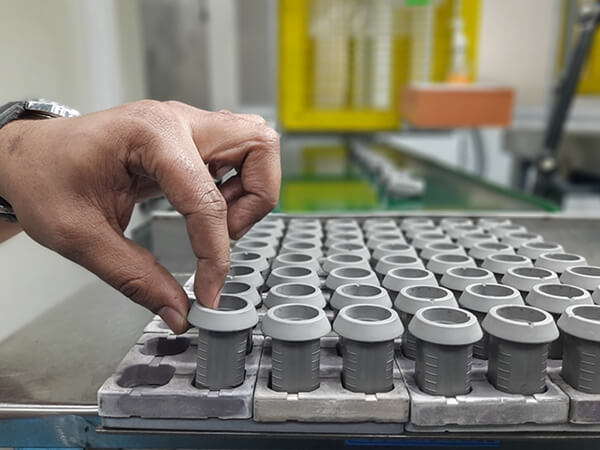
The correct injection molding route depends on the material family, the part size, the feature detail, and the required production stage. Plastic injection molding is normally reviewed for thermoplastic housings, covers, connectors, clips, and functional plastic components. Metal injection molding is reviewed for small complex metal parts that may need debinding, sintering, heat treatment, CNC machining, or surface finishing after molding. Ceramic injection molding is reviewed for zirconia, alumina, or other advanced ceramic components where wear behavior, electrical insulation, temperature exposure, or surface finish must be confirmed.
Material selection should be tied to the buyer's drawing and acceptance criteria. Plastic projects may require a resin grade from PIM material options. MIM projects may require a stainless steel, low-alloy steel, magnetic alloy, or other MIM material. CIM projects may require an alumina, zirconia, or other CIM material. Final material approval remains the buyer's responsibility when the part has regulated, safety-critical, or performance-critical requirements.
Injection Molding Route | Part Types Usually Reviewed | Main Precision Risk | RFQ Details to Confirm |
Plastic injection molding | Housings, covers, clips, connectors, and molded plastic components | Warpage, sink marks, gate vestige, parting line flash, and undercut release | Resin grade, annual quantity, cosmetic surfaces, critical dimensions, and finishing needs |
Metal injection molding | Small complex metal components with fine features or difficult machining access | Sintering shrinkage, distortion, density variation, and datum control | Alloy grade, heat treatment, machined datums, threads, hardness, and dimensional report needs |
Ceramic injection molding | Alumina, zirconia, and other ceramic components with complex molded features | Sintering shrinkage, brittle edge risk, grinding allowance, and surface finish control | Ceramic composition, surface roughness, flatness, inspection method, and acceptance criteria |
Insert molding or overmolding | Plastic parts with metal inserts, soft-touch areas, seals, grips, or multi-material features | Insert movement, bonding failure, material compatibility, and flash around the insert | Insert drawing, substrate resin, overmold material, pull-out test, torque test, or leak test needs |
How are mold design and shrinkage reviewed before tooling?
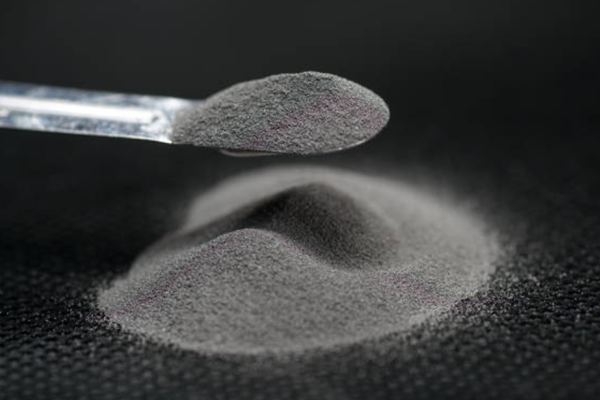
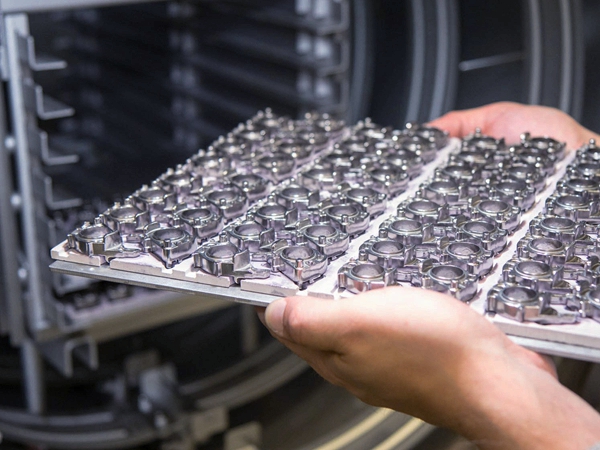
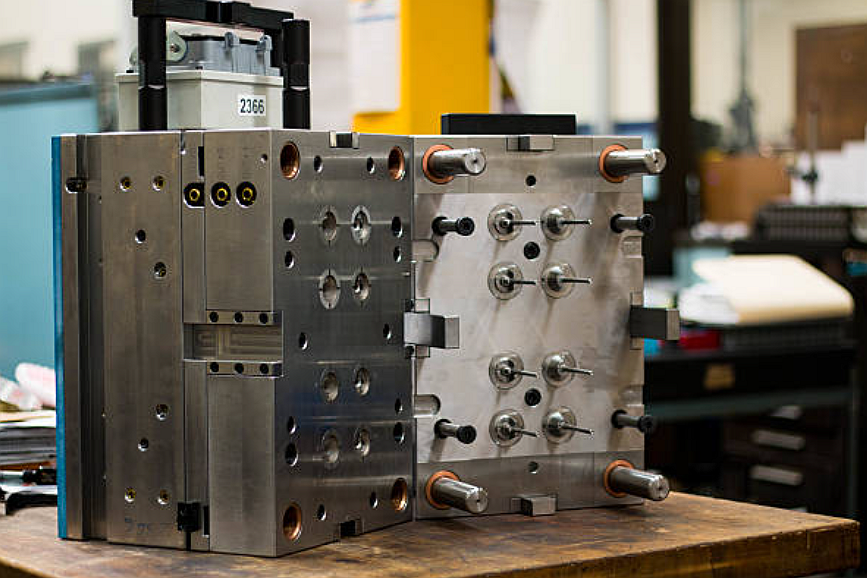
Precision injection molding begins with moldability review before tooling release. For plastic injection molding, the review focuses on draft angle, wall thickness transitions, rib design, boss design, gate location, ejector marks, weld lines, and cosmetic surfaces. For MIM and CIM, the review also considers feedstock flow, debinding path, sintering shrinkage, support during sintering, and whether a molded feature needs post-sintering machining or grinding.
The RFQ implication is direct: a 3D model alone may not show which dimensions are functional, which surfaces are cosmetic, or which datums must be protected. Buyers should identify critical-to-function dimensions, sealing surfaces, threaded holes, bearing seats, electrical insulation areas, and assembly interfaces. This information helps the manufacturing team decide whether tooling adjustment, secondary CNC machining, EDM, grinding, polishing, coating, plating, or assembly support is needed.
When are insert molding and overmolding better than single-shot molding?
Insert molding is useful when a molded plastic part must capture a metal insert, threaded insert, electrical contact, pin, bushing, or reinforcing component inside the molded body. The main engineering questions are insert positioning, plastic flow around the insert, thermal expansion difference, pull-out strength, torque resistance, and whether the insert can tolerate molding temperature and clamping pressure.
Overmolding is useful when a second material is needed for grip, sealing, vibration damping, insulation, appearance, or product protection. The RFQ should define the substrate material, overmold material, bonding requirement, color or texture, exposure environment, and any durability test. Overmolding can simplify assembly, but material compatibility and part geometry must be reviewed before the route is selected.
What inspection evidence supports high-precision molded parts?
Inspection evidence should match the part function, production stage, and buyer acceptance criteria. Common support may include dimensional inspection, CMM report, first article inspection, material certificate, hardness record, surface roughness report, coating thickness report, visual inspection standard, go/no-go gauges, pull-out test, torque test, leak test, or pressure test. The exact inspection package should be defined during quotation because inspection cost and timing can change with the number of critical dimensions and test methods.
For prototype and pilot lots, inspection often focuses on whether the molding route can meet functional dimensions and assembly needs. For production lots, inspection planning should also consider cavity-to-cavity consistency, lot traceability, process controls, packaging requirements, and how nonconforming parts will be reviewed. Buyers should provide acceptance criteria early so the quotation reflects both manufacturing and verification work.
What RFQ information helps start custom injection molding review?
A complete RFQ should include the 2D drawing, 3D model, material grade or material family, expected annual volume, prototype or production stage, critical dimensions, tolerance notes, surface finish requirements, color or texture requirements, insert or overmold details, assembly interfaces, inspection requirements, and any regulatory or application-specific constraints. If the part is still under development, buyers can also mark uncertain features so the manufacturing team can separate design risks from fixed requirements.
This information helps the supplier compare molding with CNC machining, casting, fabrication, 3D printing, or hybrid manufacturing where needed. Some precision parts can be molded near net shape, while datum surfaces, threaded holes, sealing surfaces, or cosmetic areas may still need secondary operations. The best quotation is usually the one that identifies these requirements before tooling, not after trial parts reveal a preventable manufacturing issue.
Related FAQs