What processes suit micro metal structures under 0.3 mm?
Micro metal structures under 0.3 mm need a process choice based on feature geometry, material grade, burr risk, sintering behavior, tool access, inspection method, and production volume. For RFQs involving micro brackets, thin webs, miniature gears, sensor parts, connector details, flow-control inserts, shielding features, or medical device components, buyers should compare MIM, laser cutting, stamping, micro-CNC or EDM, and powder pressing before locking the drawing.
What processes suit micro metal structures under 0.3 mm?
The most suitable process depends on whether the micro metal structure is three-dimensional, flat, rotational, or tolerance-critical. Metal injection molding is usually reviewed for small three-dimensional metal parts with repeated production demand. Laser cutting and sheet metal fabrication are usually reviewed for flat thin features. CNC machining prototyping is usually reviewed for prototype samples, reachable critical faces, and post-machined datums.
Powder pressing can suit simple compacted shapes where the press direction and ejection are practical. Ceramic injection molding is not a metal-forming route, but it may be relevant when the same assembly needs a tiny ceramic insulating or wear component beside the metal structure.
Micro structure type | Process route to review | Where the route helps | RFQ risk to define |
|---|---|---|---|
Three-dimensional micro metal part | MIM | Small complex metal geometry, repeated production, molded ribs, bosses, pockets, and side features | Sintering shrinkage, gate location, wall balance, and secondary machining allowance |
Flat thin metal feature | Laser cutting, stamping, or sheet metal fabrication | Flat shields, springs, contacts, shims, screens, and thin brackets | Kerf, burr, heat-affected edge, grain direction, and flatness |
Prototype or critical datum | Micro-CNC, EDM, or post-machining | Reachable bores, slots, sealing faces, threads, and inspection datums | Tool access, tool breakage, burr control, and setup repeatability |
Simple compacted micro shape | Axial shapes, bushings, small inserts, wear details, and simple profiles | Press direction, density distribution, ejection, and green-part handling |
When should buyers use MIM for micro metal features?
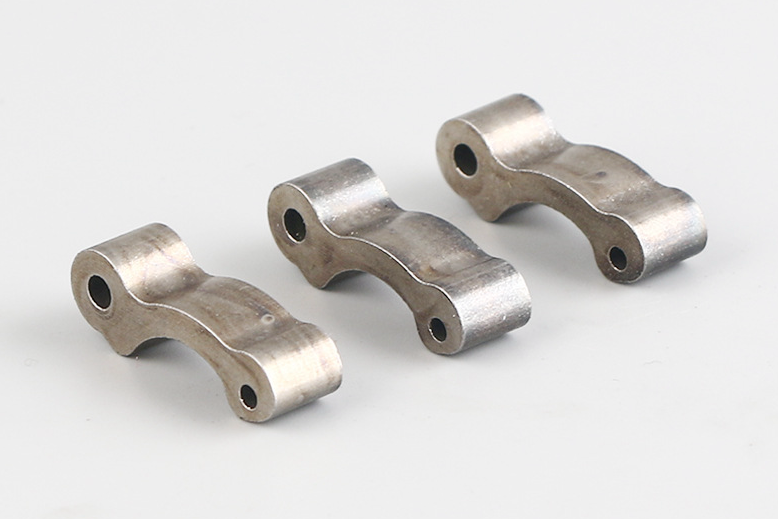
MIM is a strong candidate when the micro metal structure is small, three-dimensional, and repeated in production. MIM can reduce the amount of cutting required for tiny ribs, internal pockets, side openings, complex profiles, and miniature mechanical features.
The engineering reason is that the tool forms the main geometry before debinding and sintering. That helps when CNC tools cannot reach the feature efficiently or when every part would otherwise need slow multi-axis machining. Buyers should still mark which faces, bores, slots, threads, or contact surfaces require secondary machining after sintering. MIM should be quoted with realistic expectations for parting lines, gating areas, ejector marks, sintering shrinkage, and inspection access.
When do laser cutting, stamping, or sheet metal processes fit?
Laser cutting, stamping, and sheet metal routes fit when the micro metal structure is mostly flat. These routes are often considered for electrical contacts, shields, springs, gaskets, flexures, micro brackets, and thin spacers.
The buyer should define material thickness, burr direction, edge quality, flatness, bend line, grain direction, and surface finish. A flat part may not need MIM tooling if the features can be cut or stamped from sheet stock. However, a part with deep bosses, enclosed pockets, multiple levels, or thick-to-thin transitions may move toward MIM or machining instead of a flat sheet process.
When do micro-CNC or EDM routes fit?
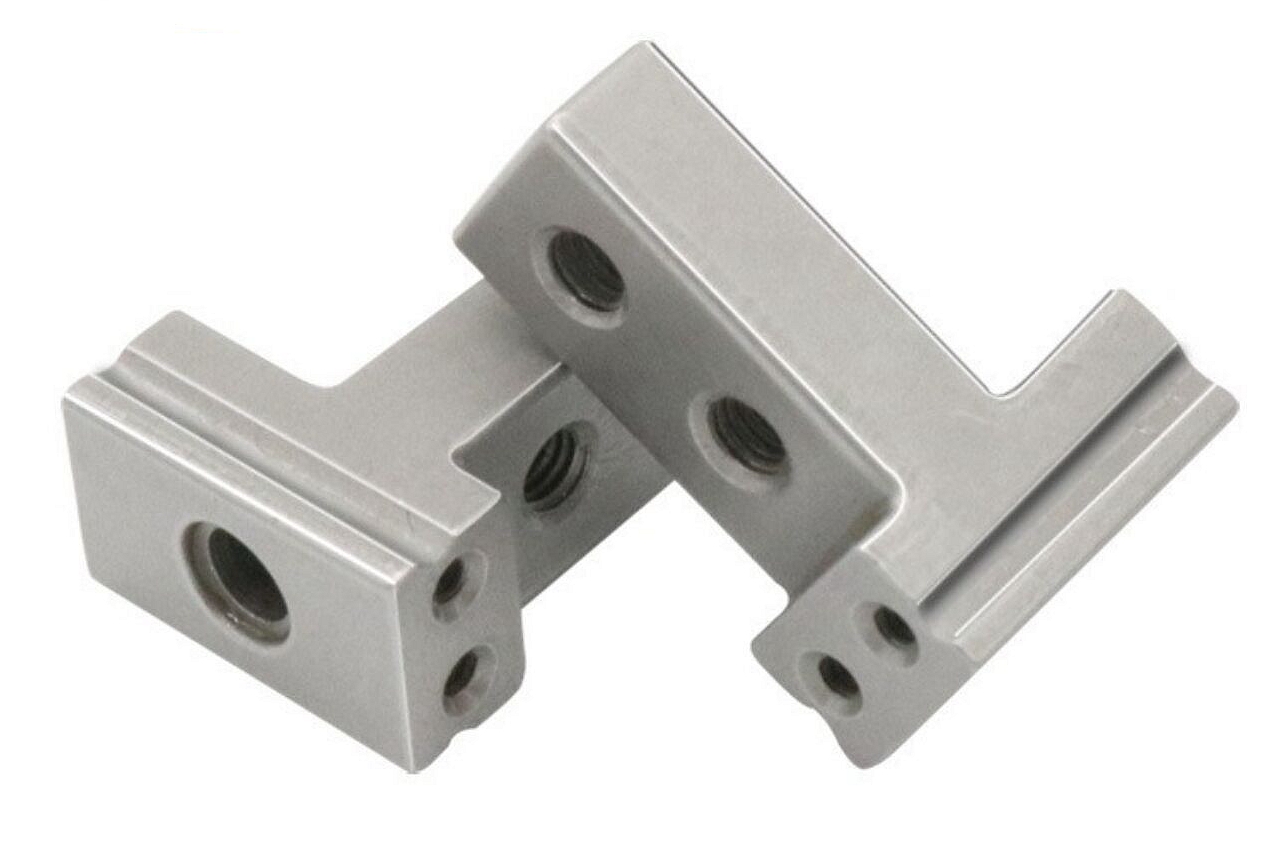
Micro-CNC and EDM routes fit when the buyer needs prototype samples, very localized precision, reachable datum surfaces, or details that must be adjusted during development. These routes are also useful for post-processing MIM parts when a molded feature must become a precise bore, flat, thread, or sealing surface.
The main limitation is tool access. Very small cutters can be sensitive to tool wear, chatter, breakage, and burr formation. Deep slots, enclosed cavities, and narrow internal corners may be difficult to machine and inspect. The RFQ should identify whether machining is the final production method or a bridge route before MIM tooling.
When does powder pressing fit micro structures?
Powder pressing fits micro structures with simple press directions, compacted profiles, and geometry that can be ejected without damaging fragile edges. It may be considered for small inserts, simple bushings, wear pads, and compact powder metallurgy features.
The process is less flexible than MIM for side features and complex three-dimensional shapes. Buyers should define the pressing direction, height-to-width ratio, density requirement, edge strength, and any required finishing. If the part has multiple side holes, undercuts, thin free-standing ribs, or detailed cross-features, MIM or machining may be a more practical review path.
When is CIM relevant and when is it not?
Ceramic injection molding is relevant for ceramic micro components, not metal micro structures. CIM may be useful when the assembly needs a tiny alumina, zirconia, silicon nitride, or silicon carbide insulator, guide, spacer, or wear component.
For a metal structure under 0.3 mm, buyers should not treat CIM as a replacement for MIM. The correct comparison is usually MIM versus micro-CNC, EDM, laser cutting, stamping, or powder pressing. CIM should only enter the RFQ when the part material is ceramic or when the metal assembly includes a directly related ceramic component.
Which materials and finishing steps affect micro metal structures?
Material selection affects whether the micro metal structure can be molded, cut, machined, pressed, sintered, polished, and inspected. Stainless steel grades such as MIM 316L and MIM 17-4 PH may be reviewed for corrosion resistance and strength. Tool steels, magnetic alloys, titanium alloys, and nickel alloys require separate review because powder behavior, debinding, sintering, heat treatment, and finishing can change the final result.
Finishing is especially important for micro features. Deburring, tumbling, electropolishing, passivation, heat treatment, and surface inspection can improve edge quality, corrosion behavior, hardness, or cleanliness, but each operation can also round edges or change small dimensions. Buyers should state which edges are functional and which edges can accept controlled rounding.
What inspection and RFQ details matter?
Inspection planning should be part of the RFQ for micro metal structures under 0.3 mm. A part may be manufacturable but difficult to measure if the drawing does not define datum strategy, gauge access, optical inspection, CMM access, sample sectioning, or functional test methods.
A strong RFQ includes 3D CAD, 2D drawing, material grade, target process, annual volume, prototype quantity, feature cross-sections, critical dimensions, burr limits, surface finish, heat treatment, cleanliness requirements, mating parts, and inspection method. Neway can compare MIM, machining, laser cutting, sheet metal fabrication, powder pressing, finishing, and inspection routes more accurately when the buyer identifies which sub-0.3 mm features control function.
Related FAQs