What weather-resistant traits must outdoor optical parts have, and how to achieve them?
Outdoor optical parts should be designed for UV exposure, moisture, dust, temperature cycling, abrasion, chemical pollution, sealing stress, and optical measurement drift before the buyer selects the material or coating route. This FAQ explains how ceramic injection molding, plastic injection molding, optical polishing, PVD coating, surface finishing, and validation testing apply to outdoor lenses, light guides, protective windows, radomes, lighting optics, and telecom optical covers. The practical RFQ problem is to define which weather-resistant traits must be measured so Neway can review material, tooling, coating, and inspection controls.
Which weather exposure should buyers define first?
Buyers should define UV exposure, humidity, rain or condensation, dust, salt or pollution, temperature cycling, abrasion, cleaning chemicals, and installation orientation. Weather resistance cannot be reviewed from the material name alone.
For telecommunication, lighting solution, and consumer electronics products, outdoor optical parts may need different acceptance criteria. A telecom optical cover may prioritize transmission at a defined wavelength and sealing stability. A lighting lens may prioritize haze, beam consistency, and scratch resistance. A consumer electronics cover may prioritize appearance, coating color, and impact behavior.
Weather exposure entity | Optical risk | RFQ control point |
|---|---|---|
UV exposure | Yellowing, haze increase, coating change, and material embrittlement | Material grade, coating requirement, exposure duration, and post-test optical measurement |
Humidity and condensation | Water ingress, fogging, adhesion loss, and surface contamination | Seal design, coating adhesion, material absorption, and test condition |
Dust and pollution | Surface scattering, cleaning damage, and reduced transmission | Surface finish, cleaning method, protective coating, and inspection method |
Temperature cycling | Stress, warpage, cracking, and refractive index drift | Material route, wall thickness, mounting stress, and measurement condition |
Which material properties matter for outdoor optical parts?
Outdoor optical parts should be specified by transmittance, haze, refractive index, UV aging response, moisture response, impact behavior, scratch risk, and dimensional stability. The buyer should define these properties at the wavelength and environment relevant to the product.
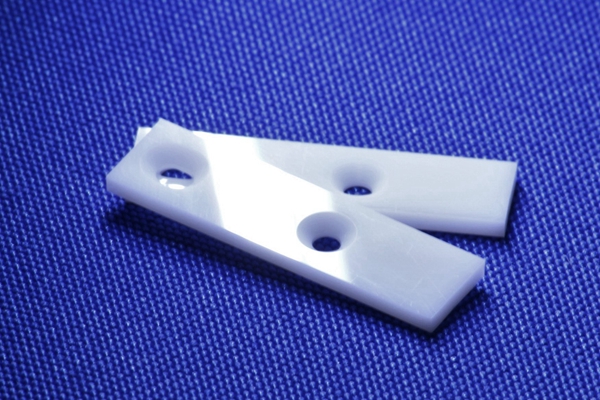
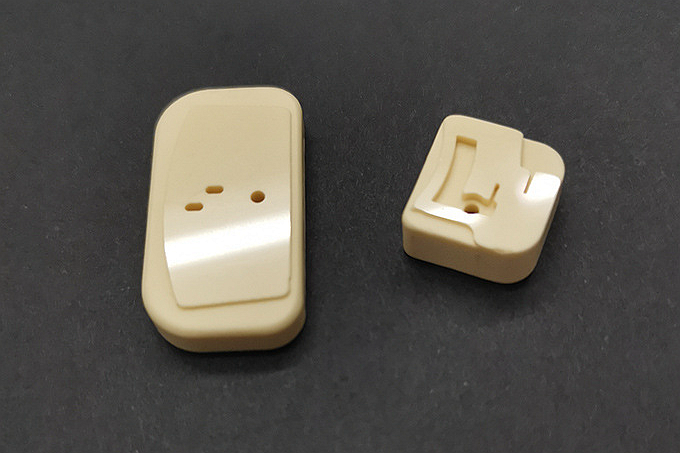
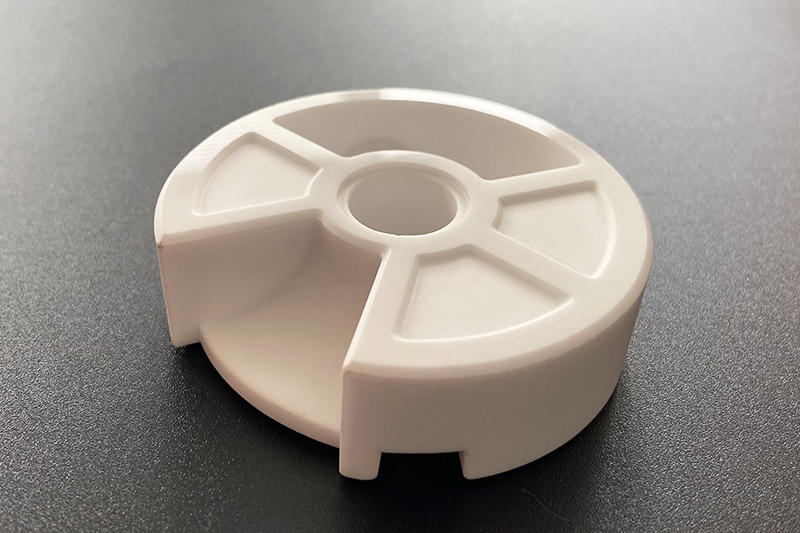
Polycarbonate and PMMA can be reviewed for molded plastic lenses, optical covers, and light guides. Plastic injection molding conditions such as drying, melt temperature, mold temperature, packing, cooling, and handling can affect haze, stress, and surface defects. Ceramic injection molding may be reviewed for ceramic optical windows, protective optical-adjacent components, or lighting and telecom parts where the ceramic material function is specified.
How do plastic and CIM routes differ for weather resistance?
Plastic injection molding can support transparent lenses, covers, and light guides when the resin and coating system match the weather requirement. Plastic optical parts usually require careful control of material drying, mold surface, flow marks, residual stress, and coating compatibility.
Ceramic injection molding can support ceramic optical or optical-adjacent parts where ceramic behavior is required. Alumina, zirconia, silicon carbide, and silicon nitride should be reviewed by optical function, thermal exposure, dielectric behavior, mechanical load, and surface condition. The buyer should specify whether the ceramic part is transmitting light, protecting an optical path, supporting a lens, or isolating a high-temperature lighting structure.
How do surface finish and coatings support weather resistance?
Surface finish and coatings support weather resistance by controlling reflection, abrasion, surface contamination, moisture exposure, and cleaning response. A coating should be specified by optical function and environmental exposure, not only by coating name.
Polishing may be reviewed for mold surfaces, prototype optical surfaces, or selected part surfaces. PVD coating may be reviewed when the design requires controlled thin-film optical layers or protective layers. Surface finishing requirements should identify coated zones, uncoated zones, masking boundaries, and the final inspection state.
What validation tests confirm weather-resistant optical performance?
Validation should compare optical performance before and after the buyer-specified environmental exposure. Useful measurements may include transmittance, haze, refractive index, coating adhesion, surface defects, dimensional fit, sealing condition, and visual appearance.
Prototyping can help buyers compare material, coating, surface finish, and seal design before production tooling. The test plan should state sample condition, exposure condition, measurement method, acceptance criteria, and whether the part is tested alone or inside the final assembly. For outdoor optics, final approval should remain tied to the buyer's product-level validation plan.
Validation item | Optical risk checked | RFQ input needed |
|---|---|---|
UV weathering test | Transmittance shift, haze increase, color change, and coating response | Exposure condition, wavelength range, and post-test acceptance limit |
Humidity or condensation test | Fogging, adhesion loss, seal leakage, and moisture absorption | Humidity condition, assembly state, and inspection method |
Abrasion or cleaning test | Scratch haze, coating wear, and surface contamination | Cleaning method, abrasion condition, and allowed optical change |
Thermal cycling test | Warpage, cracking, stress, and refractive behavior change | Cycle profile, mounting condition, and measurement temperature |
What RFQ details help Neway review outdoor optical parts?
An outdoor optical part RFQ should include 3D CAD, 2D drawing, material preference, optical surface map, wavelength range, transmittance target, haze limit, refractive index requirement, coating stack, weather exposure profile, sealing design, cleaning method, inspection criteria, sample quantity, and production volume. These details allow Neway to review plastic injection molding, ceramic injection molding, polishing, coating, and validation together.
The buyer should also identify which surfaces are optical, which surfaces are sealing features, which surfaces are mounting features, and which surfaces are cosmetic. That separation helps Neway protect optical function without over-controlling non-optical areas.
Related FAQs
How to control transmittance, haze, and refractive index accuracy in lenses?
How to choose substrates for high-power LEDs balancing heat, insulation, and cost?
How does Neway control optical surface defects for lighting needs?
What support does Neway offer from optical simulation to prototype beam validation?
How does Neway verify long-term reliability of thermal management solutions?
What environmental factors must be prioritized in 5G AAU thermal design?
How to select thermal interface material between chip and heatsink?
What tests should be performed on functional prototype parts?