How to choose between liquid and air cooling for various telecom applications?
Telecom cooling should be selected by heat load, power density, available airflow, enclosure size, outdoor exposure, maintenance access, leak tolerance, and validation requirements. This FAQ explains how ceramic injection molding, aluminum die casting, plastic injection molding, metal injection molding, prototyping, and thermal testing support air-cooled heat sinks, liquid-cooled plates, ceramic dielectric interfaces, RF shielding parts, and 5G telecommunication enclosures. The practical RFQ problem is to decide whether air cooling or liquid cooling can meet the thermal target without creating unacceptable manufacturing, reliability, or service risk.
What information decides air cooling vs liquid cooling?
The cooling decision should start with heat load, heat source location, allowable temperature rise, enclosure volume, airflow condition, site exposure, service interval, and failure consequence. Without these inputs, a supplier cannot judge whether air cooling is enough or whether liquid cooling should be reviewed.
For telecommunication equipment, the decision is not only a thermal calculation. Tower weight, wind exposure, dust, condensation, pump serviceability, leak containment, RF shielding, grounding surfaces, and dielectric isolation can all change the manufacturing route. A 5G AAU heat sink, a baseband unit cold plate, and a compact RF module may need different cooling strategies even when the total power appears similar.
Cooling decision entity | Air cooling implication | Liquid cooling implication |
|---|---|---|
Heat load and power density | Requires fin area, airflow path, and thermal interface control | Requires cold plate design, fluid path, and pressure boundary control |
Outdoor exposure | Requires dust, UV, corrosion, and rain protection | Requires leak containment, coolant compatibility, and corrosion control |
Maintenance access | Fan and filter service may be the main risk | Pump, fitting, seal, and coolant service may be the main risk |
RF and electrical isolation | Needs grounding surfaces and shielding continuity | May need ceramic or polymer isolation between fluid paths and electronics |
When is air cooling suitable for telecom equipment?
Air cooling is suitable when fin area, conduction paths, and available airflow can keep the module inside the buyer's thermal limit under the specified environment. Air cooling is often reviewed for outdoor enclosures, small cells, AAU housings, and RF modules where service simplicity and leak avoidance matter.
Aluminum die casting can support air-cooled telecom housings because fins, mounting bosses, thermal pads, and enclosure walls can be integrated into one metal structure. Plastic injection molding may support covers, radomes, and airflow guides when the part does not need to carry major heat. Metal injection molding may support compact brackets, shields, or RF metal features inside the air-cooled assembly.
When should liquid cooling be reviewed?
Liquid cooling should be reviewed when the heat load, enclosure size, noise limit, airflow restriction, or thermal interface requirement makes air cooling difficult to validate. Liquid cooling may support dense baseband hardware, high-power modules, or compact systems where heat must be moved away from the electronics through a controlled fluid path.
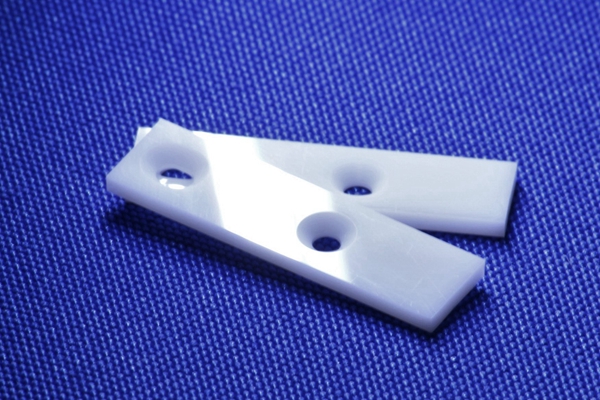
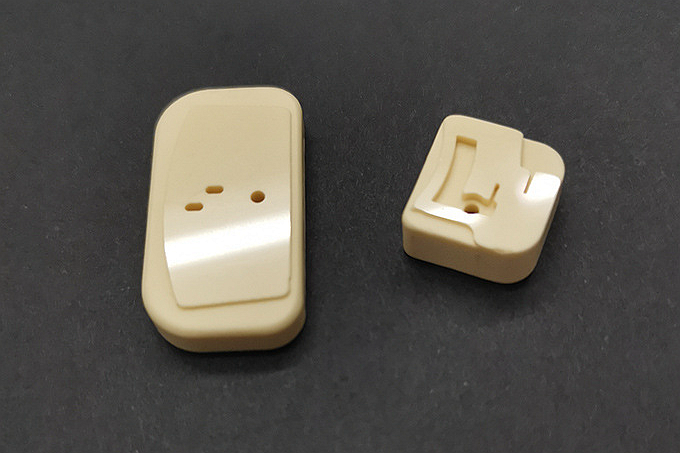
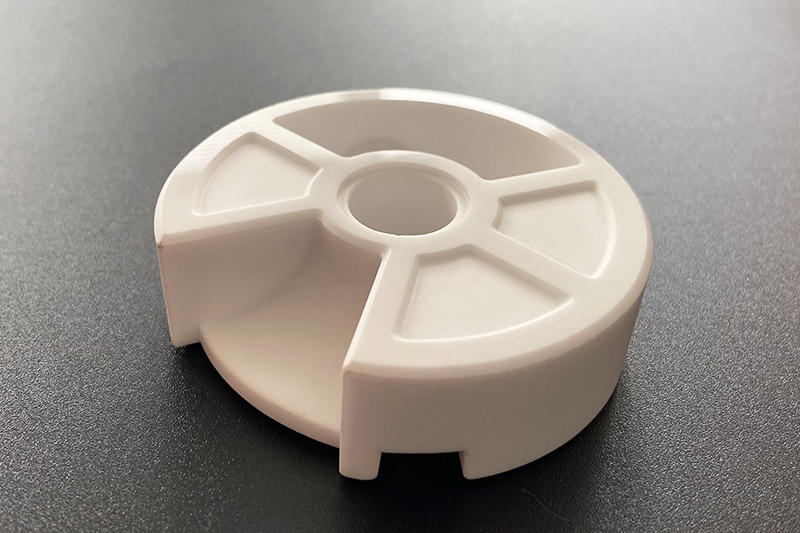
The buyer should review liquid cooling as a system, not as a single cold plate. Fluid path geometry, pressure boundary, sealing, galvanic corrosion, coolant compatibility, leak detection, pump service, and field repair strategy all affect the manufacturing decision. Ceramic parts made by CIM may be reviewed where electrical insulation, dielectric behavior, or wear-resistant interfaces are needed near a cooling path.
How do materials and manufacturing routes affect cooling design?
Materials and manufacturing routes affect cooling design because each route controls geometry, heat transfer, sealing, weight, and inspection differently. The buyer should choose the route after defining the heat path and reliability risks.
Cooling part type | Manufacturing route to review | RFQ control point |
|---|---|---|
Air-cooled heat sink housing | Aluminum die casting | Fin geometry, base flatness, machining allowance, coating, and airflow path |
Dielectric thermal spacer or insulating support | Ceramic injection molding | Dielectric requirement, thermal exposure, shrinkage, and surface condition |
Shield bracket or RF metal feature | Metal injection molding | Grounding land, plating, dimensional control, and thermal-adjacent fit |
Air guide, cover, or radome feature | Plastic injection molding | Heat aging, UV exposure, airflow shape, sealing, and shielding strategy |
Alumina, zirconia, silicon carbide, and silicon nitride should be compared by the actual electrical, thermal, mechanical, and environmental role of the ceramic part. A ceramic material selected for insulation may not be the same material selected for wear resistance or heat-related stability.
What reliability risks differ between air and liquid cooling?
Air cooling risk usually centers on dust, airflow blockage, fan performance, surface contamination, corrosion, and installation orientation. Liquid cooling risk usually centers on seals, pressure boundaries, coolant compatibility, corrosion, pump service, and leak consequences.
The buyer should define which failure mode is more acceptable for the application. A pole-mounted outdoor AAU may favor a simpler cooling path if field access is difficult. A controlled indoor baseband system may accept liquid cooling if service access, leak management, and monitoring are part of the design. Neway can review the manufacturability of housings, ceramic parts, brackets, covers, and interfaces once those reliability priorities are clear.
What prototype tests compare air and liquid cooling options?
Prototype tests should compare temperature rise, thermal resistance, pressure drop, airflow path, sealing, leak behavior, vibration, corrosion exposure, and RF performance where the cooling structure touches RF or grounding surfaces. The same heat load and assembly condition should be used when comparing air-cooled and liquid-cooled options.
Prototyping, CNC machining prototyping, and 3D printing prototyping can help buyers compare fin geometry, cold-plate routing, ceramic isolation, air guide shape, and fixture layout before hard tooling. Prototype results should feed back into material selection, cooling method, surface finish, inspection plan, and production validation.
What RFQ details help Neway review liquid vs air cooling?
A cooling-method RFQ should include the heat source map, total heat load, allowable temperature rise, enclosure size, airflow condition, installation orientation, outdoor exposure, maintenance access, noise requirement, coolant information if liquid cooling is considered, leak tolerance, material preference, RF interface, grounding surfaces, and validation test method. These details allow Neway to compare air cooling and liquid cooling with the same buyer constraints.
The buyer should also identify which features are thermal, which features are electrical, which features are sealing-related, and which features are structural. This separation helps Neway review whether CIM, aluminum die casting, MIM, plastic injection molding, or prototype manufacturing is the right route for each cooling component.
Related FAQs
How to balance lightweight requirements with thermal efficiency in telecom gear?
What environmental factors must be prioritized in 5G AAU thermal design?
How does Neway verify long-term reliability of thermal management solutions?
How to select thermal interface material between chip and heatsink?
Can aluminum die casting be used for heat dissipation components?
What factors most impact natural convection efficiency in heatsink design?
What material and structural solutions enable lightweight high heat dissipation?
What tests should be performed on functional prototype parts?