How to balance lightweight requirements with thermal efficiency in telecom gear?
Lightweight telecom thermal design is balanced by assigning each part a clear thermal, structural, RF, and environmental role before choosing the manufacturing process. This FAQ explains how ceramic injection molding, aluminum die casting, plastic injection molding, metal injection molding, surface finishing, and prototype testing can support AAU housings, dielectric supports, RF brackets, heat spreaders, covers, and telecommunication thermal assemblies. The practical RFQ problem is to decide where mass can be removed without weakening heat flow, RF shielding, dimensional stability, or outdoor reliability.
What does lightweight thermal balance mean for telecom gear?
Lightweight thermal balance means reducing unnecessary mass while preserving the heat path from the heat source to the ambient environment. The buyer should first define the heat source, allowable temperature rise, mounting load, RF shielding requirement, and environmental exposure.
For telecommunication gear, mass reduction can conflict with heat spreading, grounding, sealing, and stiffness. A thinner wall may reduce weight but also reduce conduction area or gasket support. A polymer cover may reduce weight but may need shielding features or thermal isolation. A ceramic component may support dielectric or insulating functions, but the buyer must specify whether the ceramic part is carrying heat, isolating current, supporting RF geometry, or protecting a thermal interface.
Buyer requirement | Thermal design question | Manufacturing implication |
|---|---|---|
Lower assembly weight | Which material can be removed without breaking the heat path? | Use ribs, localized thickness, or alternate materials instead of uniform thinning |
Stable heat dissipation | Where does heat move from chip, module, or RF device to ambient? | Define flatness, thermal interface, coating, and fin geometry controls |
RF shielding and grounding | Which surfaces must remain conductive or tightly assembled? | Separate grounding lands from insulated or coated surfaces |
Outdoor reliability | Which surfaces face UV, water, dust, salt, or pollution? | Review material aging, corrosion protection, sealing, and cleaning access |
Which materials support low weight and thermal control?
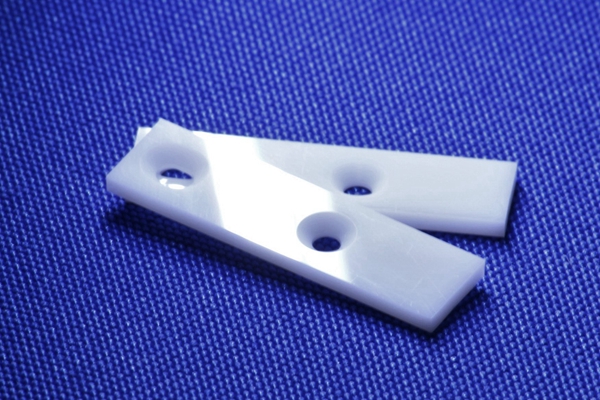
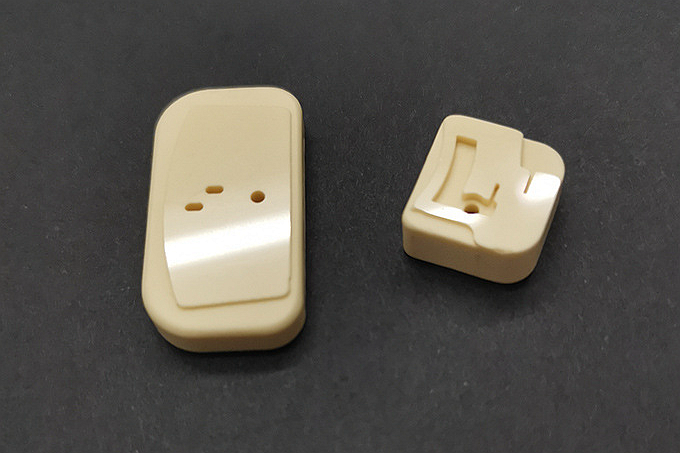
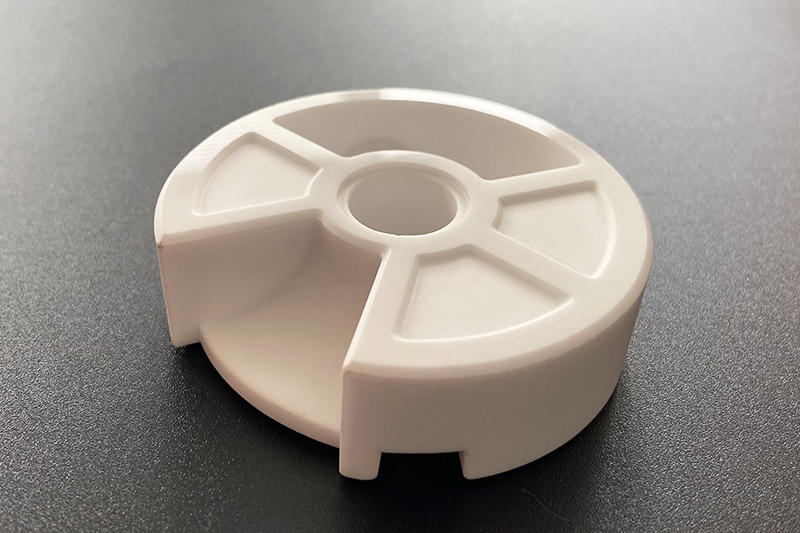
Material selection should follow part function. Aluminum die casting can be reviewed for larger heat sinks, thermal enclosures, and finned housings. Ceramic injection molding can be reviewed for compact dielectric supports, insulating spacers, wear-resistant features, and ceramic thermal or RF interface parts. Plastic injection molding can be reviewed for covers, radomes, and low-load housings when heat and shielding requirements allow.
Common CIM materials should not be treated as interchangeable. Alumina, zirconia, silicon carbide, and silicon nitride have different strength, dielectric, wear, and thermal behavior. The RFQ should identify whether the ceramic part is used for insulation, RF stability, heat spreading, mechanical support, or environmental resistance.
How should geometry carry heat without excess mass?
Geometry should move heat through short, continuous paths while using ribs, bosses, fins, and localized thickness only where the load or thermal path requires them. A lighter part is not automatically thermally efficient if the design removes material from the main conduction path.
For aluminum housings, the buyer should define fin orientation, base thickness, flatness at thermal interface areas, and machining allowance. For CIM parts, the buyer should define wall thickness, ceramic shrinkage control, notch sensitivity, contact area, and assembly preload. For MIM RF brackets or shielding parts, the buyer should define grounding lands, coating zones, and heat-adjacent features that cannot distort during production.
When should CIM, aluminum, MIM, or polymers be selected?
CIM should be selected for telecom parts where ceramic material behavior is part of the function, not only where the buyer wants a lighter part. Aluminum should be reviewed when a larger metal housing or heat sink must spread heat and support enclosure loads. MIM should be reviewed for small metal RF features where complex geometry, shielding, and mechanical strength matter. Polymers should be reviewed for low-weight covers, radomes, and insulating housings when heat and shielding can be managed.
Telecom part type | Process route to review | RFQ control point |
|---|---|---|
Dielectric spacer or ceramic support | Ceramic injection molding | Dielectric requirement, thermal exposure, shrinkage, and surface condition |
Finned thermal enclosure | Aluminum die casting | Heat path, base flatness, fin geometry, and coating requirement |
RF shield bracket or compact metal feature | Metal injection molding | Grounding land, dimensional control, and plating or finishing plan |
Cover, radome, or non-current-carrying housing | Plastic injection molding | UV exposure, heat aging, stiffness, sealing, and shielding strategy |
How should coatings and surface finishes be evaluated?
Coatings and surface finishes should be evaluated by their effect on thermal transfer, corrosion protection, RF grounding, sealing, and part dimensions. A coating can protect an outdoor housing but may also reduce electrical contact or change a precision interface.
Neway reviews surface finishing requirements together with the part function. Heat-transfer surfaces may require flatness and controlled roughness. Grounding lands may need conductive contact. Exposed aluminum surfaces may need corrosion protection. Ceramic or polymer surfaces may require cleaning, sealing, or assembly controls rather than a metal-style finish.
What prototype tests confirm the lightweight thermal balance?
Prototype testing should confirm temperature rise, thermal interface behavior, deflection, assembly fit, RF shielding, grounding continuity, and environmental durability. The buyer should test the lightweight design under the same airflow, mounting, heat load, and orientation expected in use.
CNC machining prototyping can support aluminum or metal thermal samples when geometry and flatness must be checked. 3D printing prototyping can support airflow, packaging, and fixture trials before hard tooling. Prototype results should feed back into the ceramic material, aluminum casting design, polymer selection, surface finish, and inspection plan before production release.
What RFQ details help Neway balance lightweight and thermal requirements?
A telecom thermal RFQ should include the target mass, heat source map, target temperature rise, allowable deflection, RF shielding requirement, grounding surfaces, environmental exposure, material preferences, coating requirements, assembly loads, prototype test results, and expected production volume. These details allow Neway to compare CIM, aluminum die casting, MIM, plastic injection molding, and prototyping routes against the same buyer decision.
The buyer should also identify which features are thermal, which features are structural, which features are RF-critical, and which features are cosmetic. That separation helps Neway remove weight where possible without weakening the heat path, shielding interface, or validation plan.
Related FAQs
What environmental factors must be prioritized in 5G AAU thermal design?
How to choose between liquid and air cooling for various telecom applications?
How does Neway verify long-term reliability of thermal management solutions?
How to select thermal interface material between chip and heatsink?
Can aluminum die casting be used for heat dissipation components?
What material and structural solutions enable lightweight high heat dissipation?
How to balance conductivity, heat, weight, and cost when selecting RF materials?
What tests should be performed on functional prototype parts?