Why are stainless steel parts a good fit for metal injection molding?
Stainless steel parts are a good fit for metal injection molding (MIM) when the buyer needs small complex metal components with corrosion resistance, strength, wear performance, or clean-service requirements at repeat production volume. The practical RFQ problem is to decide whether stainless steel MIM can form the required part geometry while still meeting material grade, tolerance, surface finish, secondary machining, and inspection requirements.
Why do stainless steel materials work well with MIM?
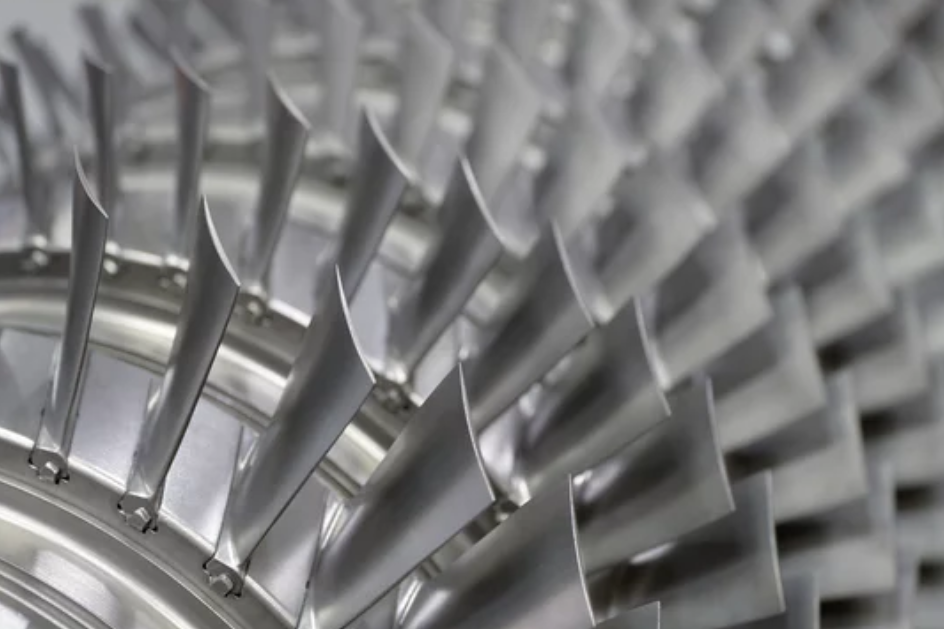
Stainless steel works well with MIM because the material family can support a wide range of small precision parts while the process can form complex near-net-shape geometry. MIM can mold features such as ribs, slots, bosses, teeth, thin sections, and small profiles that may be costly or slow to machine one by one from stainless bar stock.
The stainless steel material decision still matters. Austenitic grades such as 304 and 316L are often reviewed for corrosion resistance. Precipitation-hardening 17-4 PH is often reviewed for strength. Martensitic grades such as 420 and 440C are often reviewed for hardness or wear. Ferritic grades such as 430 and 430L may be reviewed when magnetic response or cost structure matters.
Stainless Steel MIM Requirement | How MIM Supports the Requirement | Buyer RFQ Detail to Define |
|---|---|---|
Small complex geometry | Molds many features near net shape in one part body | 3D CAD, wall thickness, internal features, and functional surfaces |
Corrosion resistance | Uses stainless grades such as 304 or 316L when suitable | Exposure environment, cleaning method, and surface finish requirement |
Strength or hardness | Uses grades such as 17-4 PH, 420, or 440C with suitable heat treatment review | Load, hardness target, heat treatment condition, and wear surface |
High repeat volume | Spreads tooling cost across repeat production parts | Annual volume, first order quantity, and ramp plan |
Dimensional control | Combines shrinkage control with inspection and selective secondary machining | GD&T, critical dimensions, machined features, and report scope |
Which stainless steel MIM part types benefit from near-net-shape molding?
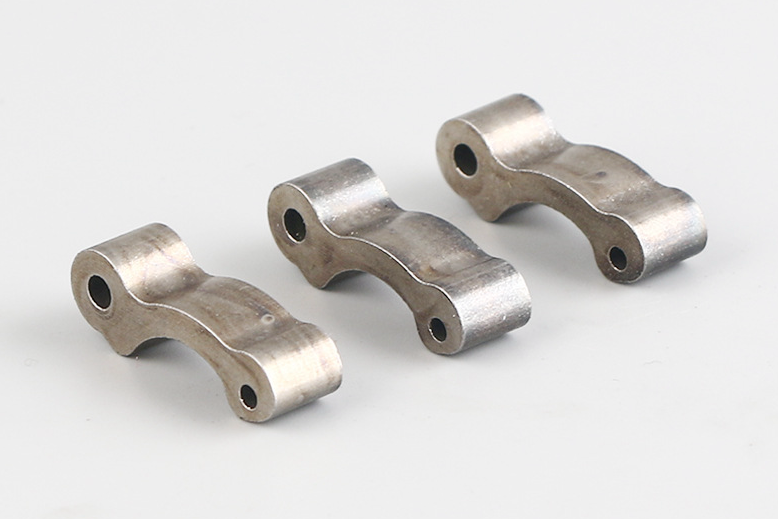
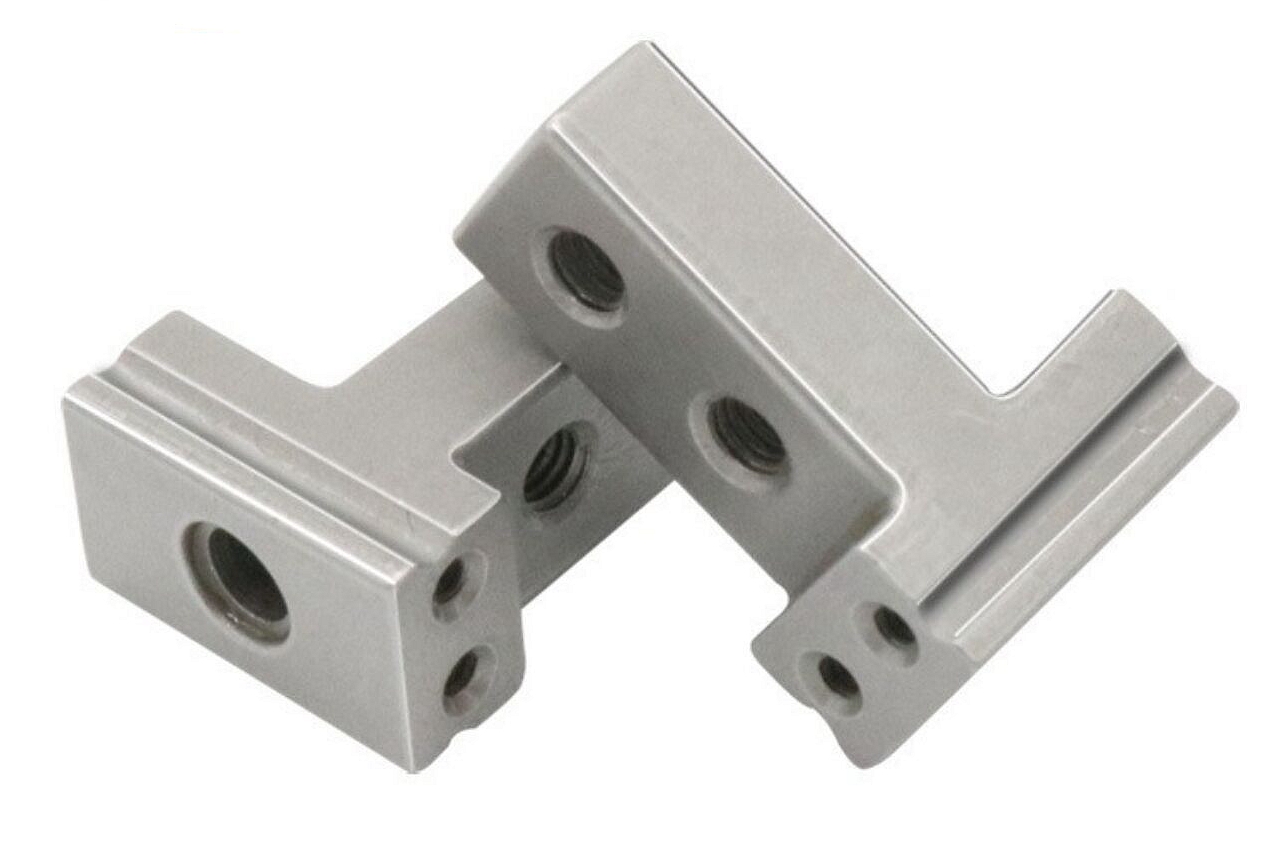
Stainless steel MIM is often useful for small parts that combine complex geometry with repeat production demand. Examples include lock components, medical device components, electronics hardware, power tool parts, miniature brackets, latch parts, hinges, connector bodies, gear-related features, and precision mechanisms.
The benefit comes from near-net-shape molding. Instead of machining away material to create every slot, rib, contour, or internal feature, MIM molds much of the geometry and then uses sintering to create the final metal part. Buyers may still need secondary machining on datums, threads, bores, or sealing surfaces, but the main part body can often be formed efficiently by MIM.
This is why buyers should review both the part shape and the production plan. A simple stainless steel washer may not justify MIM tooling. A small complex stainless steel mechanism with repeated annual volume may be a stronger candidate.
How do corrosion resistance, strength, hardness, and magnetic response affect grade choice?
Grade choice should follow the functional requirement. If corrosion resistance is the main concern, buyers often compare MIM 304 and MIM 316L. If strength is the main concern, MIM 17-4 PH may be reviewed. If hardness or wear resistance is central, MIM 420 or MIM 440C may be relevant. If magnetic response matters, MIM 430 or MIM 430L may need review.
The RFQ should connect the grade to an engineering reason. A buyer should state corrosion environment, load, wear surface, magnetic requirement, temperature exposure, cleaning process, heat treatment need, and surface finish requirement. This helps Neway evaluate whether the stainless steel grade and MIM route support the actual application rather than only matching a material label.
For a grade-by-grade overview, see common stainless steel grades used in OEM metal injection molding services.
How does MIM compare with CNC machining for small stainless steel parts?
MIM is often considered when a stainless steel part is small, complex, and needed in repeat volume. CNC machining can be suitable for prototypes, low volumes, tight machined datums, and simple features, but CNC can become costly when every tiny pocket, slot, or profile must be cut individually from stainless steel stock.
MIM shifts much of the geometry into a mold-based process. Tooling cost is higher upfront, but recurring unit cost can become more attractive when the annual volume supports the mold investment. MIM also reduces material removal compared with machining a complex part from solid material.
The decision should not be made by process name alone. Buyers should compare part geometry, annual volume, tolerance requirements, secondary machining needs, surface finish, inspection scope, and launch timing. Related comparisons include MIM cost advantages compared with CNC machining and how MIM and machining differ for complex internal parts.
When should buyers add secondary machining, finishing, or inspection?
Buyers should add secondary machining when an as-sintered stainless steel MIM feature cannot economically meet a critical tolerance, surface condition, thread, bore, or datum requirement. Reaming, tapping, milling, grinding, or polishing can be applied selectively to the features that control function.
Buyers should add finishing when corrosion resistance, appearance, friction, cleanliness, or contact behavior requires a controlled surface condition. Stainless steel MIM parts may require passivation, tumbling, polishing, electropolishing, or other finishing methods depending on the application.
Inspection should be planned around functional risk. Tight datums, machined bores, threads, sealing surfaces, sliding surfaces, and assembly interfaces may require CMM inspection, gauges, optical review, surface checks, or qualified size reports. Relevant follow-up topics include secondary machining for MIM tolerance improvement and surface finishes for custom stainless steel MIM parts.
What RFQ details help confirm stainless steel MIM suitability?
Neway can confirm stainless steel MIM suitability more accurately when the RFQ includes the 3D CAD file, 2D drawing, stainless grade or property requirement, annual volume, critical dimensions, GD&T, heat treatment condition, corrosion environment, wear condition, magnetic requirement, surface finish notes, secondary machining needs, and inspection report scope.
The buyer should state the manufacturing decision directly. If the decision is MIM versus CNC machining, provide annual volume and complex feature details. If the decision is stainless grade selection, provide corrosion, strength, hardness, wear, and magnetic priorities. If the decision is supplier qualification, provide documentation requirements, quality standard expectations, and launch timing.
A stainless steel part is a good MIM candidate when the material, geometry, volume, tolerance plan, and secondary operations fit the process. The RFQ should make those factors visible before tooling begins.
Related FAQs
Which stainless steel grades are commonly used in OEM metal injection molding services?
Which materials are suitable for metal injection molding MIM?
Can OEM metal injection molding services produce complex stainless steel parts with custom features?
What should OEM buyers provide when requesting a quote for custom stainless steel MIM parts?
What surface finishes are available for custom stainless steel MIM parts?
Can secondary machining improve tolerances for metal injection molded components?
What cost advantages does the MIM process offer compared with CNC machining?
Why are custom metal injection molding services suitable for high-volume production?