Which metal materials are recommended for high-heat-resistant components?
High-heat-resistant metal components should be specified by service temperature, load, oxidation or corrosion exposure, geometry, and manufacturing route. For buyers quoting turbine parts, exhaust hardware, thermal shields, high-temperature internal structures, heat-dissipation features, and small precision metal components, the practical RFQ question is whether nickel-based superalloys, heat-resistant stainless steels, titanium alloys, copper alloys, or coated metal systems can meet the heat requirement through investment casting, metal injection molding, CNC machining, additive manufacturing, or secondary coating.
Which metal materials are recommended for high-heat components?
Nickel-based superalloys are often the first choice for severe heat, oxidation, and creep risk. Heat-resistant stainless steels can fit moderate high-temperature structures where corrosion resistance and cost control matter. Titanium alloys can help when strength-to-weight ratio is important but the temperature range is suitable. Copper alloys are useful when thermal conductivity matters more than long-term strength at extreme heat.
The buyer decision should start with the operating environment, not only the alloy name. Continuous temperature, peak temperature, thermal cycling, mechanical load, airflow, chemical exposure, and inspection requirements all affect material selection.
Material family | High-heat value | Manufacturing routes to evaluate | RFQ information to provide |
|---|---|---|---|
Nickel-based superalloys | Heat strength, oxidation resistance, creep resistance | Investment casting, 3D printing, CNC machining | Temperature cycle, load, coating need, inspection method |
Heat-resistant stainless steels | Corrosion resistance, formability, moderate heat stability | CNC machining, sheet metal fabrication, casting | Grade, surface condition, corrosion medium, finish requirement |
Titanium alloys | Strength-to-weight ratio and corrosion resistance | CNC machining, investment casting, additive manufacturing | Weight target, fatigue risk, heat exposure, final validation test |
Copper alloys | Thermal conductivity and electrical performance | CNC machining, stamping, casting, surface treatment | Conductivity target, contact surface, oxidation control |
Coated metal systems | Surface protection against oxidation, wear, or thermal attack | Thermal coating, PVD, plating, heat treatment | Coating thickness, adhesion need, masked areas, test standard |
When are nickel-based superalloys the right choice?
Nickel-based superalloys are suitable when the component must resist heat, oxidation, creep, and mechanical stress at the same time. Turbine hardware, hot-section brackets, valves, nozzles, and thermal-system components may require alloys such as Inconel 625, Inconel 718, Inconel 738, or related nickel alloys.
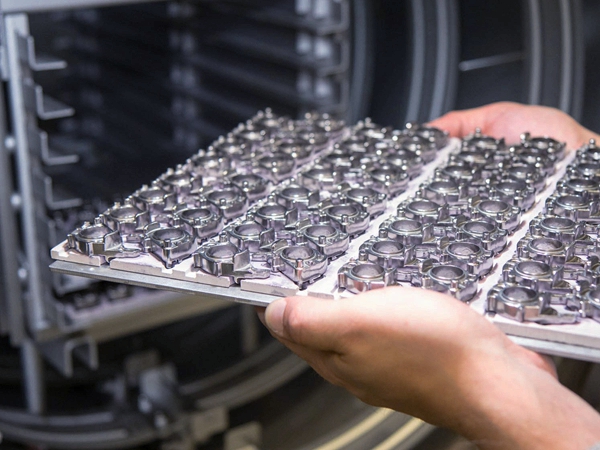
Buyers should link the alloy choice to the manufacturing route. Vacuum investment casting for superalloy parts can support complex hot-section geometry, while Inconel 718 additive manufacturing may support prototype or complex internal-feature evaluation.
When should heat-resistant stainless steel be considered?
Heat-resistant stainless steel should be considered when the component needs corrosion resistance, moderate heat resistance, cleanability, and more economical manufacturability than many superalloys. Stainless steel may fit brackets, covers, shields, housings, clamps, and exposed structures when the thermal load is lower than a hot-section turbine environment.
The RFQ should state stainless grade, sheet or bar form, surface finish, welding or forming needs, and corrosion medium. Stainless steel can be the right answer when the buyer does not need the creep strength and oxidation margin of a nickel-based superalloy.
How do titanium and copper alloys fit high-heat designs?
Titanium alloys fit high-performance designs when weight reduction, corrosion resistance, and mechanical strength are important, but the operating temperature must stay within the alloy's suitable range. Copper alloys fit thermal-management and electrical components where heat transfer, conductivity, and contact performance are central.
For copper busbars, contacts, or thermal spreaders, buyers should define conductivity, surface treatment, oxidation resistance, and contact resistance. For titanium components, buyers should define fatigue load, thermal cycle, machining datums, and inspection method.
Which manufacturing route fits high-heat metal parts?
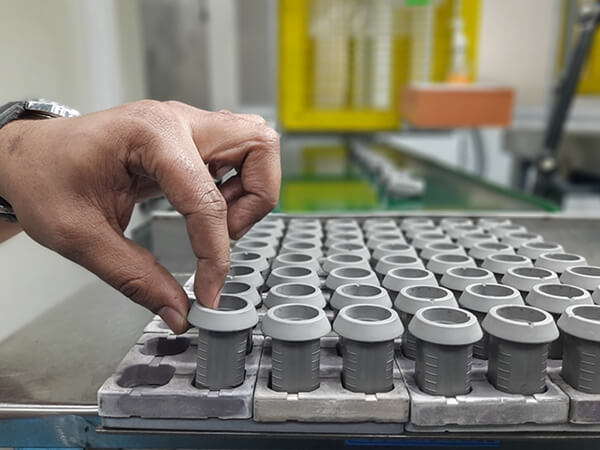
The manufacturing route depends on geometry, volume, alloy, and validation risk. Investment casting nickel-based alloy parts can support complex cast geometry. CNC machining can support precise datums, sealing faces, and threaded features. Metal injection molding can support small complex metal parts when alloy compatibility, shrinkage, density, and post-sintering inspection are acceptable.
The RFQ should separate net-shape requirements from machined features. A cast or MIM part may still need CNC machining for datums, sealing faces, tight holes, or threads.
When do thermal coatings matter for heat-resistant components?
Thermal coatings matter when the base metal needs additional resistance to oxidation, heat flux, wear, or corrosion. A coating cannot fix an unsuitable base alloy, but the right coating system can improve surface durability for a qualified material and geometry.
Buyers should define coating type, coating thickness, masked surfaces, adhesion requirements, and inspection method. Thermal barrier coatings for high-heat parts and thermal coatings for superalloy parts are most useful when the test condition and surface failure mode are clear.
What inspection details should be in a high-heat metal RFQ?
A high-heat metal RFQ should include material grade, temperature exposure, duty cycle, load, environment, drawing revision, critical dimensions, surface finish, coating requirement, heat treatment, nondestructive testing needs, and final validation responsibility. For cast superalloys, buyers may also need microstructure, porosity, and heat-treatment expectations.
Inspection methods may include dimensional inspection, hardness testing, material certificates, coating checks, visual inspection, and application-specific testing. The supplier can manufacture to the defined specification, while the buyer or system owner should validate performance in the final assembly and operating environment.
How should buyers choose the material for a high-heat RFQ?
Buyers should choose the high-heat material by matching thermal load, mechanical load, corrosion exposure, conductivity, weight target, geometry, and production route. Nickel-based superalloys are strong candidates for severe heat and creep. Stainless steels can be practical for moderate heat and corrosion. Titanium alloys help when weight matters. Copper alloys help when heat transfer or conductivity matters.
The best buyer decision is to ask for a material-and-process recommendation, not only a material price. The quotation should explain which alloy, manufacturing route, secondary operation, coating, and inspection plan are needed to make the high-temperature component usable.
Related FAQs
Which materials work best for high-temperature internal structures?
Which materials fit continuous high-temperature internal structures?
What material and structural solutions enable lightweight high-heat dissipation?
What material and coating combos suit turbine parts over 1000C?
How does Neway control superalloy microstructure and properties?
Which materials are best suited for CNC machining in critical applications?