Which materials work best for high-temperature internal structures?
High-temperature internal structures should use a material and process route that match the heat exposure, load, oxidation risk, corrosion risk, insulation need, conductivity need, and part geometry. For RFQs involving internal brackets, hot-zone spacers, heat shields, sensor mounts, thermal-management supports, or compact equipment structures, buyers should compare metal injection molding, precision casting, investment casting, ceramic injection molding, and selected plastic injection molding materials before freezing the drawing.
Which materials work best for high-temperature internal structures?
There is no single material that works for every high-temperature internal structure. Nickel-based superalloys, cobalt alloys, heat-resistant stainless steels, engineered ceramics, and high-performance thermoplastics solve different RFQ problems.
Metal alloys are usually considered when the internal structure must carry mechanical load, accept threaded or machined features, or survive repeated assembly. Engineered ceramics are usually considered when electrical insulation, oxidation resistance, thermal stability, or low conductivity is more important than ductility. High-performance thermoplastics are considered only when the service temperature, load, and aging requirements stay within the selected resin's rating.
Material family | Where it helps | Process routes to review | RFQ risk to define |
|---|---|---|---|
Nickel-based superalloys | Hot internal metal parts with strength, oxidation resistance, and creep concerns | Metal injection molding, precision casting, investment casting nickel-based alloy | Heat cycle, load path, machining datum, and inspection method |
Cobalt alloys and heat-resistant steels | Wear, corrosion, and repeated thermal cycling in compact metal structures | Cobalt alloy injection molding, MIM, casting, and machining | Wear surface, corrosion media, hardness target, and mating part material |
Engineered ceramics | Insulating spacers, shields, guides, and hot-zone supports | Ceramic injection molding and ceramic secondary finishing | Thermal shock, edge chipping, flatness, and assembly load |
High-performance thermoplastics | Insulating internal supports where heat exposure is limited by resin rating | Continuous temperature, peak temperature, flame requirement, and creep under load |
When should buyers choose nickel-based superalloys?
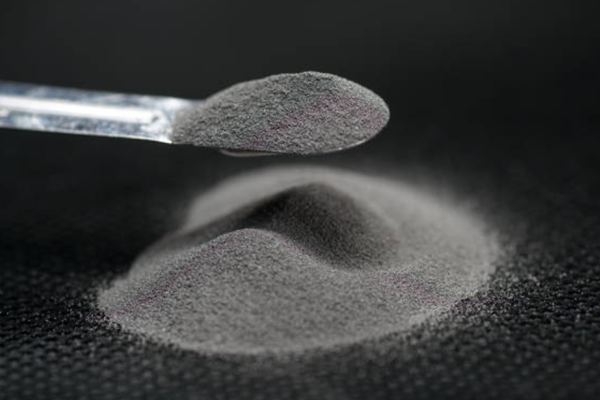
Nickel-based superalloys are a strong candidate when a high-temperature internal structure must remain metallic, carry load, and resist oxidation during thermal cycling. Buyers often review Inconel 625, Inconel 713LC, and Inconel 738 when the part needs metal strength in a hot internal environment.
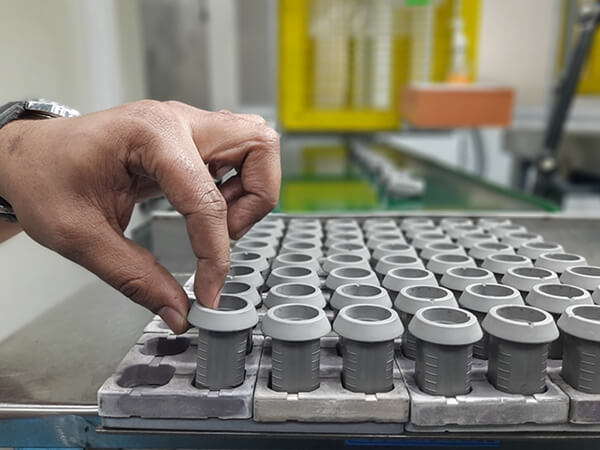
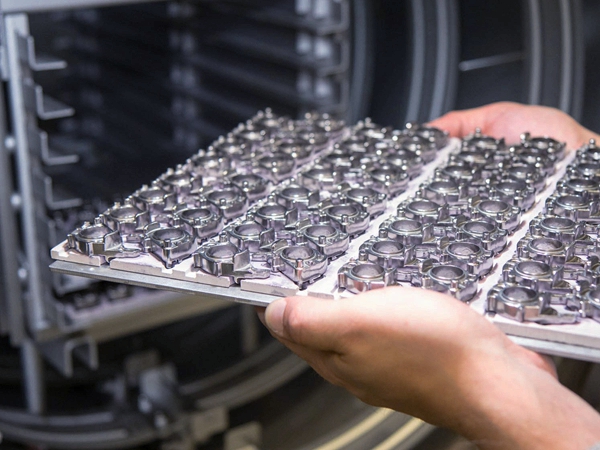
The process decision depends on geometry and volume. MIM materials may fit small complex brackets, pins, guides, retainers, and sensor supports where tooling can be justified. Precision casting and investment casting may fit thicker hot-zone parts, impellers, housings, or structural components that need cast superalloy capability. RFQ drawings should identify machined surfaces, threaded holes, datum targets, and inspection requirements because superalloy parts often need secondary machining after forming.
When do cobalt alloys and heat-resistant steels make sense?
Cobalt alloys and heat-resistant steels make sense when wear, corrosion, hardness, magnetic behavior, or cost must be balanced against heat resistance. These metal families can be practical for compact internal mechanisms, furnace fixtures, valve-related details, wear pads, and hot mechanical supports.
For a cobalt alloy RFQ, the buyer should define the mating material, sliding surface, lubricant exposure, corrosion media, and hardness requirement. For a heat-resistant steel RFQ, the buyer should define whether the part is mainly a structural bracket, a heat shield, a spring-like feature, or a precision datum component. The same high-temperature material can perform differently after heat treatment, machining, polishing, or coating, so the secondary operations should be reviewed before tooling approval.
When are engineered ceramics better than metals?
Engineered ceramics are often better than metals when the high-temperature internal structure needs electrical insulation, oxidation resistance, dimensional stability, or low thermal conductivity instead of ductility. Ceramic parts can be useful for insulating sleeves, hot-zone spacers, sensor guides, thermal barriers, and precision supports near electronics or heating elements.
Common ceramic candidates include alumina ceramic, zirconia ceramic, silicon carbide, and silicon nitride. The RFQ should show fragile edges, minimum wall thickness, contact points, assembly load, and surface finish. Ceramic injection molding can form small complex ceramic structures, but ceramic components still need realistic edge radii, handling allowances, and inspection planning.
When can high-performance polymers be used?
High-performance thermoplastics can be used when the internal structure needs insulation, low weight, molded detail, and moderate high-temperature exposure within the resin's validated limit. PEI, PEEK, PPS, and related engineering resins are often reviewed for internal supports, clips, frames, connectors, covers, and non-load-bearing shields.
The RFQ problem is not only melt temperature or short-term peak heat. Buyers should specify continuous service temperature, thermal cycling, flame or smoke requirements, chemical exposure, wall thickness, insert loading, and creep under screw load. If the internal structure carries sustained load near heat, metal or ceramic may be safer for evaluation than a thermoplastic part with insufficient creep margin.
How do heat treatment and thermal coatings affect material choice?
Heat treatment and coatings can change whether a high-temperature material is manufacturable for the final application. Heat treatment can adjust hardness, strength, stress relief, and microstructure, while thermal coatings and thermal barrier coatings can reduce oxidation, wear, or direct heat exposure.
These operations should be included in the RFQ instead of added after quotation. A coating can change dimensions, masking requirements, surface roughness, and inspection planning. Heat treatment can also affect distortion, hardness range, and final machining sequence. Buyers should state the required coating area, uncoated datum surfaces, masking zones, and acceptance tests.
What tests should confirm high-temperature internal structures?
High-temperature internal structures should be validated with tests that match the actual failure mode. Dimensional inspection alone is not enough when the part faces heat cycles, oxidation, vibration, assembly load, or electrical insulation requirements.
Typical review items include material certificate checks, hardness testing for metal parts, dimensional inspection after heat treatment, coating thickness measurement, surface roughness checks, thermal cycling tests, oxidation or corrosion exposure, pull-out testing for inserts, dielectric or insulation checks for ceramics and polymers, and assembly fit checks after secondary operations. The buyer should define which tests are required for prototype samples and which tests continue during production.
What RFQ details help select high-temperature materials?
A high-temperature internal structure RFQ should define the operating environment before asking for a material recommendation. The most useful RFQ details are continuous temperature, peak temperature, cycle duration, mechanical load, contact material, corrosion media, electrical insulation requirement, thermal conductivity target, allowable weight, part size, tolerance-critical areas, and annual volume.
Neway can compare MIM, casting, ceramic injection molding, plastic injection molding, machining, coating, and inspection routes when the drawing and application notes define these decision points. Clear RFQ inputs reduce the risk of choosing a material that can be formed into the shape but cannot meet heat, load, assembly, or reliability expectations in the finished product.
Related FAQs
Which metal materials are recommended for high-heat-resistant components?
Which materials are suitable for Metal Injection Molding (MIM)?
How to balance conductivity, heat, weight, and cost when selecting RF materials?
How to choose substrates for high-power LEDs balancing heat, insulation, and cost?
How does Neway verify long-term reliability of thermal management solutions?
What parameters are vital for thermal design in high-power LED luminaires?
How to balance lightweight design with thermal performance in lighting systems?