Cost-Effectiveness: How 3D Printing Reduces Upfront Manufacturing Costs
3D Printing Upfront Cost RFQ Decision: This article explains how buyers can evaluate 3D printing prototyping for reducing upfront manufacturing cost on visual prototypes, functional prototypes, low-volume parts, fixture aids, lightweight housings, ducts, brackets, and early metal or polymer components. The practical RFQ problem is deciding whether additive manufacturing reduces tooling, design-change, material, inspection, and post-processing cost for the actual prototype stage.
3D printing can reduce upfront cost when buyers need physical parts before investing in hard tooling, production fixtures, molds, or die sets. That cost advantage is strongest when design revisions are expected, geometry is complex, or demand is uncertain. Buyers should still compare total prototype cost, including material, build orientation, support removal, finishing, inspection, and future production transition.
When Does 3D Printing Reduce Upfront Manufacturing Cost?
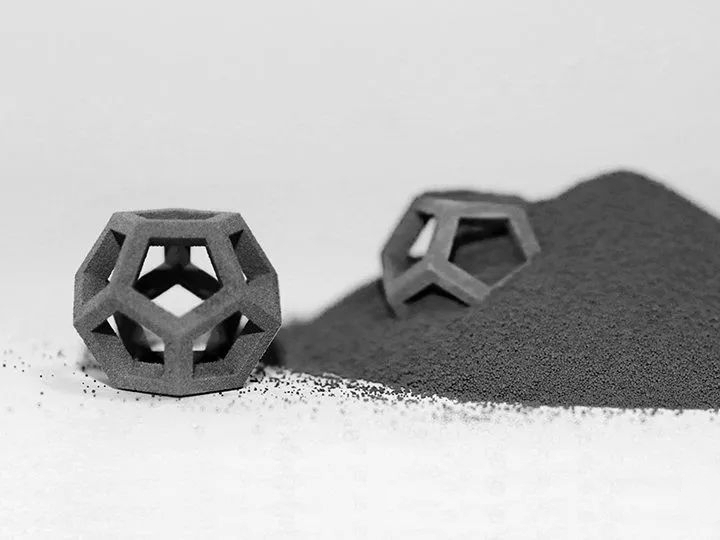
3D printing reduces upfront manufacturing cost when the buyer needs samples or low-volume parts without committing to production tooling. Additive manufacturing builds parts directly from digital files, so the buyer can review form, fit, function, and assembly risk before funding a mold, fixture, die, or production machining plan.
The cost decision should be tied to project stage. Early design review may need a visual prototype. Engineering validation may need a functional prototype with defined material and test criteria. Bridge production may need repeatable parts while a later production route is still being reviewed. Each stage changes the cost comparison.
Buyers should not evaluate 3D printing only by part price. The RFQ should compare the full cost of learning, revision, testing, and transition. A printed prototype may be cost-effective if it prevents premature tooling or identifies design changes early.
Which Cost Drivers Should Buyers Compare Before RFQ?
Buyers should compare tooling cost, design-change cost, material cost, build cost, support removal, surface finishing, dimensional inspection, testing, and downstream production risk. Some of these costs are paid directly in the quote. Other costs appear later if the prototype does not answer the right engineering question.
A complete RFQ should state prototype purpose, material requirement, production stage, quantity range, inspection need, surface finish, and future process intent. If the prototype is only for shape review, cost should focus on fast physical feedback. If the prototype is for functional testing, cost should include material behavior, build direction, post-processing, and acceptance criteria.
Cost Driver Entity | 3D Printing Cost Effect | RFQ Detail Needed |
|---|---|---|
Production tooling | Avoids early commitment to molds, dies, or dedicated fixtures | Prototype stage, expected revisions, and future manufacturing route |
Design revision | Supports repeated design checks from updated digital files | Revision status, flexible features, and validation goal |
Post-processing | Can increase cost when support removal, finishing, or machining is required | Cosmetic faces, functional surfaces, and finish requirement |
Inspection and testing | Can add necessary cost for functional prototypes | Critical dimensions, test method, and required records |
How Does Prototype Type Change The Cost Decision?
Prototype type changes the cost decision because each prototype answers a different buyer question. A visual prototype checks appearance, scale, and handling. A fit-check prototype checks mating parts, mounting holes, clearances, clips, and packaging. A functional prototype checks material behavior, stiffness, heat, airflow, fluid path, or mechanical interaction.
3D printing is often cost-effective for visual and fit-check prototypes because the buyer can avoid tooling while the design is still changing. Functional prototypes require more careful material and process selection. The buyer should define whether the printed part must support a test or only support design review.
For a deeper prototype planning view, buyers can review rapid prototyping with 3D printing and the broader prototyping service route.
Which 3D Printing Process Fits A Cost-Sensitive Prototype?
The process should fit the cost-sensitive prototype goal. FDM may be suitable for early form, fit, and fixture work. MJF may support functional polymer prototypes with complex geometry and repeatable batches. DMLS and SLM may support metal prototypes when the buyer needs metal behavior, integrated channels, or complex geometry that is difficult to machine.
Process choice should not be based only on the lowest printed part price. A lower-cost process may not provide the material behavior, finish, or dimensional control needed for the test. A higher-cost process may be justified if the prototype prevents a more expensive design error before tooling or production release.
Buyers can compare additive process options with the 3D printing process classification guide.
How Do Materials And Post-Processing Affect Total Cost?
Materials and post-processing can change total cost significantly because printed parts may need support removal, sanding, bead blasting, dyeing, painting, sealing, heat treatment, CNC machining, tapping, inserts, or assembly. These operations may be necessary for functional validation or appearance review, but they should be defined before quotation.
Material choice should follow prototype purpose. ABS and other polymer options may support early form and fit review. Aluminum and AlSi10Mg may support metal additive discussions when metal behavior is needed. The RFQ should state required properties such as strength, stiffness, temperature exposure, conductivity, weight, surface appearance, or chemical exposure.
Buyers should separate cosmetic surfaces from functional surfaces. A prototype for appearance may require finishing on visible faces. A prototype for assembly may require accurate holes, threads, and mating surfaces. A prototype for testing may require more inspection and post-processing records.
When Is 3D Printing Not The Lowest-Cost Route?
3D printing may not be the lowest-cost route when part quantity is high, material requirements are not supported by available processes, tolerances are dominated by machined datums, surface finish requires extensive manual work, or the future production route is already fixed. In those cases, CNC machining, injection molding, casting, or rapid tooling may deserve review.
The decision should compare the part's full path. If a printed prototype requires extensive machining of every functional feature, CNC machining may be more practical. If the design is stable and production quantity justifies tooling, injection molding may become relevant for plastic parts. If geometry and material requirements favor additive manufacturing, 3D printing may remain the better early-stage route.
Buyers should include future process intent in the RFQ so the supplier can identify features that may be difficult to transfer from printed prototype to production.
Which Cost Risks Should Buyers Resolve Before Printing?
Buyers should resolve cost risks before printing because unclear requirements can turn a low-cost prototype into a costly revision cycle. Common risks include missing 2D drawings, unclear material requirements, undefined critical dimensions, unmarked cosmetic surfaces, unsupported thin walls, hidden powder-removal issues, and missing test criteria.
A cost-focused RFQ should include enough information for the supplier to identify geometry, material, and post-processing risks before the part is built. If the supplier flags a design issue, the buyer can revise the model before printing rather than after receiving a part that cannot support the planned review.
3D Printing Cost Risk | Cost Impact | Buyer RFQ Action |
|---|---|---|
Unclear prototype purpose | May select the wrong process, material, or finish | State visual, fit-check, functional, or bridge-production use |
Undefined critical dimensions | May require reprinting or added inspection after delivery | Provide a drawing and mark functional dimensions |
Unplanned finish requirement | May add sanding, painting, sealing, or machining cost | Identify cosmetic faces and functional surfaces before quotation |
Future production mismatch | May validate a geometry that is difficult to mold, machine, or cast later | State the intended production route if known |
What Should A Cost-Focused 3D Printing RFQ Include?
A cost-focused 3D printing RFQ should include the 3D model, 2D drawing if dimensions matter, prototype purpose, material requirement, sample quantity, production stage, critical dimensions, surface finish, post-processing scope, inspection records, test plan, and future manufacturing route. The RFQ should also identify features that may be revised for cost or manufacturability.
Buyers should state which cost they are trying to reduce: tooling cost, design iteration cost, sample cost, testing cost, inventory risk, or transition risk. That distinction helps the supplier recommend a process and material that match the actual business and engineering problem.
3D printing can reduce upfront manufacturing cost when the buyer uses the prototype to answer the right question before committing to tooling or production. A clear RFQ helps connect cost control with practical design validation.
Related FAQs