Al2O3 Alumina Ceramic Injection Molding: Properties and Applications
This article explains Al2O3 alumina ceramic injection molding as a ceramic injection molding (CIM) route for small ceramic parts that need electrical insulation, wear resistance, thermal stability, or chemically stable surfaces. The practical RFQ problem is deciding whether alumina powder feedstock, molded part geometry, debinding, sintering shrinkage, secondary finishing, and inspection evidence can meet the buyer's drawing, material grade, and application requirements.
Al2O3 Alumina CIM Material and RFQ Decision
Al2O3 alumina is a ceramic material used when buyers need a hard, electrically insulating, wear-resistant, and chemically stable ceramic component. In ceramic injection molding, alumina powder is compounded with binder into feedstock, molded into a green part, debound, and sintered into the final ceramic part.
For an RFQ, the buyer should define the alumina grade or purity requirement, part geometry, critical dimensions, surface finish, electrical or thermal requirement, inspection method, and operating environment. A generic request for alumina ceramic may be too broad because alumina purity, grain structure, sintering behavior, and finishing requirements can change the manufacturing route.
Alumina Properties That Affect Ceramic Injection Molded Parts
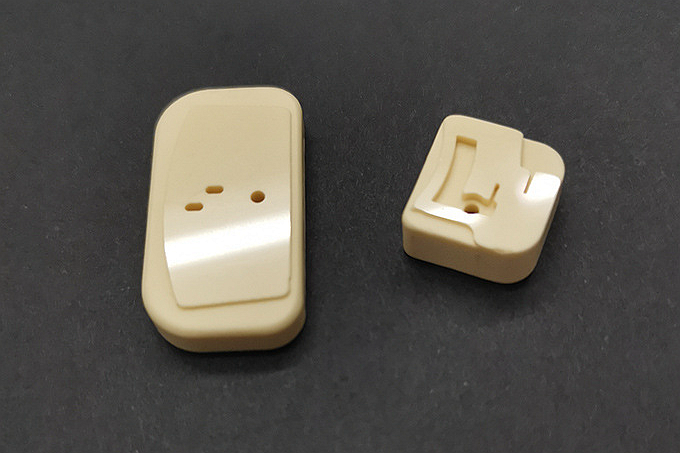
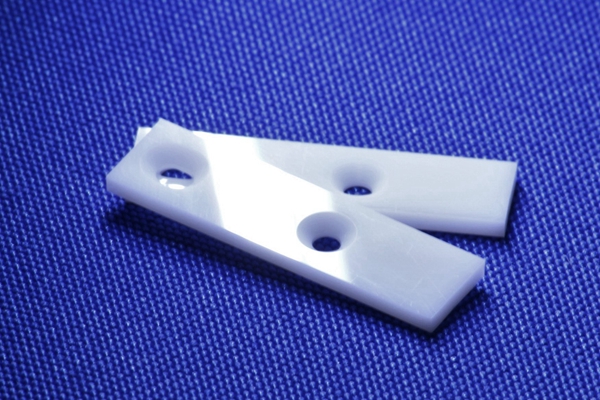
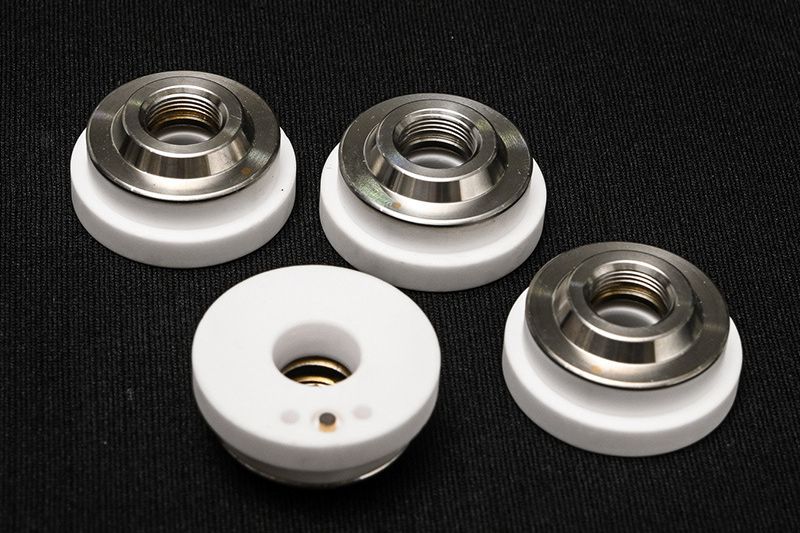
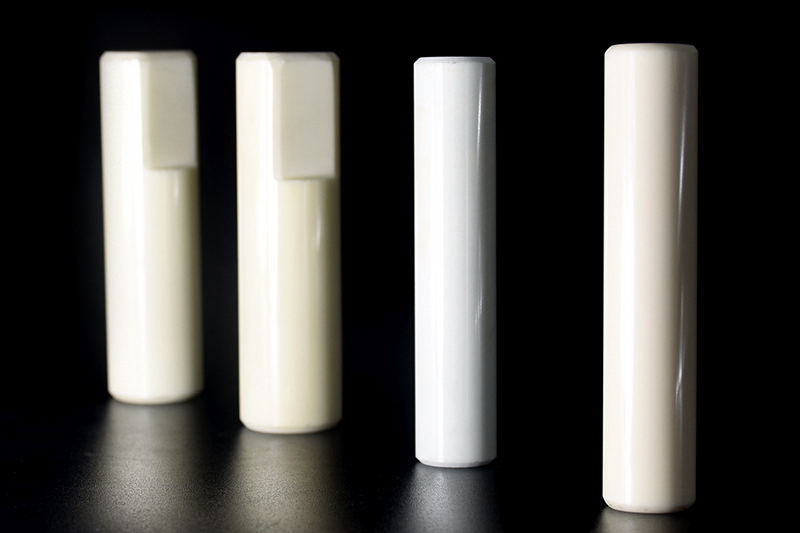
Alumina is commonly selected for hardness, wear resistance, dielectric behavior, chemical stability, and high-temperature stability. These properties make Alumina Al2O3 useful for insulating components, guides, sleeves, nozzles, small structural ceramic parts, and wear-facing parts when the design is suitable for CIM.
Alumina is also brittle compared with metals and many polymers. Sharp inside corners, sudden wall transitions, unsupported thin features, and impact-loaded structures need careful review. Buyers should avoid assuming that a ceramic part can copy a metal part geometry without design changes. Ceramic material behavior, mold filling, debinding, sintering support, and finishing risk all need to be considered together.
Alumina CIM Feedstock, Molding, Debinding, and Sintering
The CIM process starts with alumina powder and binder compounding. Feedstock quality affects mold filling, surface condition, debinding stability, and sintering shrinkage. The injection molding step forms the green part, but the final ceramic dimensions are controlled later through debinding, sintering, fixture support, and inspection feedback.
Debinding removes binder before high-temperature sintering. If binder removal is uneven, the part can crack, blister, or distort. During sintering, ceramic particles densify and the part shrinks. Sintering shrinkage is expected, so tooling compensation and process validation are part of the manufacturing plan.
CIM Stage | What Happens to Alumina Parts | Manufacturing Risk | Buyer Requirement to Confirm |
|---|---|---|---|
Feedstock preparation | Alumina powder and binder are compounded | Powder loading and particle distribution affect molding and shrinkage | Material grade, purity requirement, and application environment |
Injection molding | Feedstock fills the mold cavity and forms a green ceramic part | Gate marks, flow lines, thin features, and trapped air can affect quality | Critical surfaces, cosmetic faces, and feature priority |
Debinding | Binder is removed while the part remains fragile | Cracking, residue, and deformation can appear before sintering | Wall thickness, internal geometry, and acceptance criteria |
Sintering | Alumina densifies into the final ceramic component | Shrinkage, warpage, porosity, and fixture marks must be controlled | Critical dimensions, inspection method, and secondary finishing needs |
Alumina CIM Design Risks, Shrinkage, and Secondary Finishing
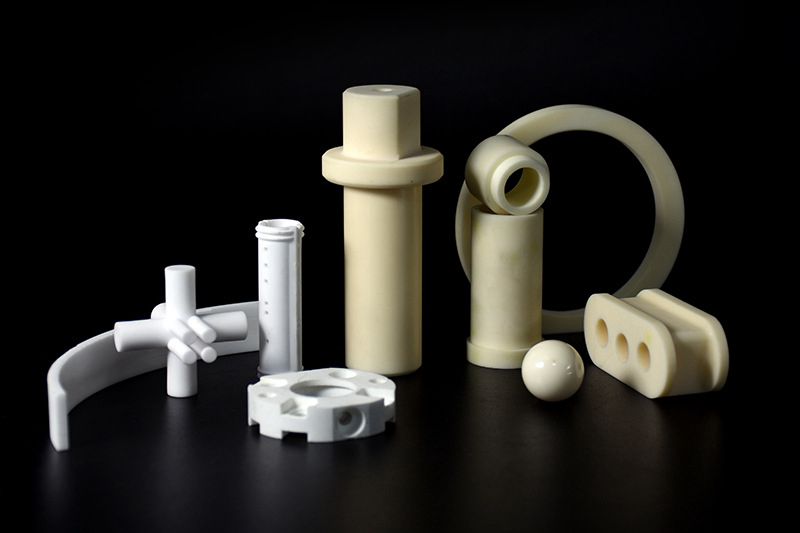
Alumina CIM is suitable for small complex ceramic parts, but the design should respect ceramic processing limits. Thin walls, deep blind holes, long unsupported features, sharp transitions, and tight flatness requirements can increase molding, debinding, and sintering risk.
Some features may need secondary finishing after sintering. Grinding, lapping, polishing, laser marking, coating, metallization, or assembly may be reviewed depending on the drawing. If a sealing surface, bearing surface, optical surface, or electrical contact area is critical, the buyer should identify it before quotation.
Alumina CIM Compared With Zirconia, SiC, Hot Pressing, and Powder Pressing
Alumina is not the only ceramic material available for injection molding. CIM materials can include alumina, zirconia, alumina-zirconia, silicon carbide, and silicon nitride. Zirconia may be considered when toughness is a priority. Silicon carbide may be considered for wear, temperature, or corrosion conditions. Alumina is often reviewed when insulation, wear resistance, and dimensional ceramic parts are the main focus.
Process choice also matters. CIM fits complex small ceramic geometries that need molded shape capability. Hot pressing sintering or powder pressing may fit simpler shapes or different density requirements. CNC grinding or finishing may still be needed after sintering when functional surfaces require tighter control.
Buyer Requirement | Possible Ceramic Route | Reason to Consider Alumina CIM | Reason to Review Another Route |
|---|---|---|---|
Small ceramic insulator with complex features | Alumina CIM | Molded feedstock can form small repeated ceramic geometry | Very tight finished surfaces may need grinding or another process |
Higher toughness ceramic component | Zirconia CIM or alumina-zirconia | Alumina may still fit if insulation and wear are primary | Zirconia may be reviewed when fracture resistance is more important |
Simple pressed ceramic shape | Powder pressing or hot pressing | CIM may be unnecessary if the geometry is press-friendly | Pressing can be more suitable for simple axial shapes |
Alumina CIM Applications and Validation Boundaries
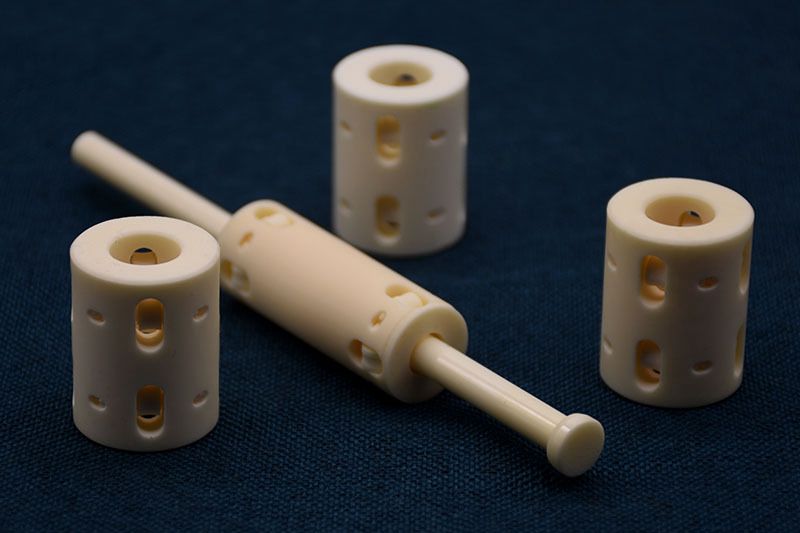
Alumina CIM may be reviewed for electrical insulators, ceramic guides, wear sleeves, sensor parts, small pump or valve components, lighting and electronics parts, and thermal-management-related components. The application should drive the material grade, surface finish, and inspection plan rather than the material name alone.
For medical, implant-related, or other regulated applications, alumina ceramic parts should be considered only when buyer specifications, qualification requirements, documentation, and acceptance criteria are defined. Final validation remains the buyer's responsibility. The same cautious review applies when alumina components are used near high voltage, high temperature, corrosive media, or safety-related assemblies.
Inspection Evidence for Alumina Ceramic Injection Molded Parts
Inspection for alumina CIM parts should connect material, geometry, and function. Common evidence may include dimensional reports, CMM inspection, visual inspection, density checks, hardness or wear-related checks when specified, surface roughness reports, dielectric or insulation tests when required, and buyer-defined functional tests.
The inspection plan should be agreed before production release. If the part has small holes, thin ribs, sealing surfaces, or assembly features, the RFQ should identify which dimensions are critical and which inspection method is acceptable.
Related FAQs