Advanced Lighting Thermal Management Components
Lighting Thermal Management RFQ Decision: This article explains how buyers can specify aluminum die casting, precision casting, sheet metal fabrication, and CNC machining prototyping for LED heat sinks, lighting housings, thermal brackets, substrate carriers, sheet metal air guides, and machined thermal interfaces. The practical RFQ problem is deciding which heat path, aluminum alloy, surface finish, machined flatness requirement, and validation evidence should be quoted before the buyer confirms thermal and optical behavior in the lighting assembly.
Lighting thermal management components are not just metal shapes around an LED. The component may spread heat from an LED board, create a natural convection path, hold an optical module, protect electronics, or carry a decorative housing surface. Buyers should describe the thermal function and assembly role in the RFQ so the supplier can quote the correct casting, machining, fabrication, and inspection scope.
Which Lighting Thermal Component Is Being Quoted?
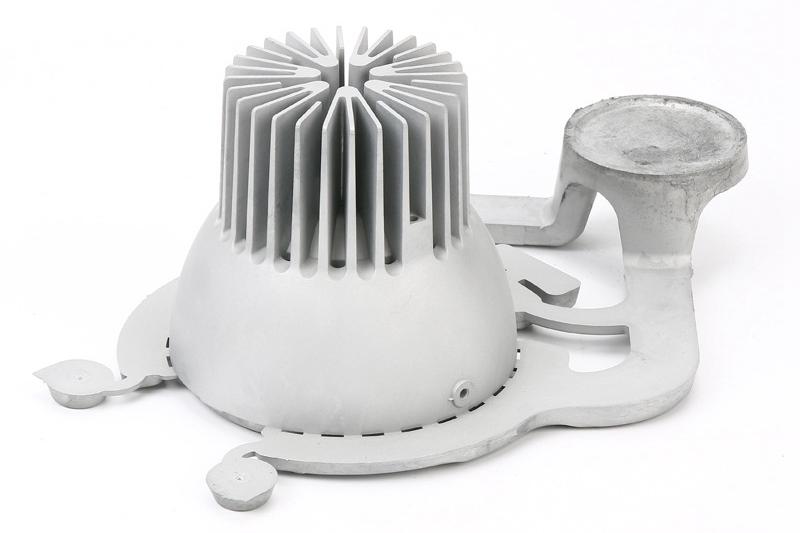
The component type determines the manufacturing route. Aluminum die casting can support LED heat sinks, lamp housings, fin structures, and integrated mounting bosses. CNC machining prototyping can support early flatness checks, thermal interface trials, and machined heat sink samples before production tooling. Sheet metal fabrication can support reflectors, air guides, mounting plates, and enclosure covers where bending and finish matter. Precision casting can be reviewed for metal lighting structures with complex geometry.
The RFQ should state whether the part is a passive heat sink, a lighting housing, a substrate carrier, a thermal bracket, an air guide, or a prototype fixture. Buyers should also identify the heat source, optical module interface, fastener locations, cosmetic surfaces, and surfaces that must remain uncoated for thermal contact.
Lighting Part Type | Manufacturing Route To Review | RFQ Risk To Clarify | Inspection Evidence |
|---|---|---|---|
LED heat sink or lamp housing | Aluminum die casting plus CNC machining | Fin geometry, wall thickness, porosity-sensitive areas | Dimensional report and machined-surface inspection |
Thermal interface plate | CNC machining prototype or precision machining | Flatness, surface finish, mounting pattern | CMM report and surface finish record |
Sheet metal air guide | Sheet metal fabrication | Bend accuracy, airflow clearance, coating scope | Fit check and coating inspection |
Lighting structural bracket | Precision casting or aluminum die casting | Load path, optical alignment, corrosion protection | First article report and material record |
When Should Buyers Use Aluminum Die Casting For LED Heat Sinks?
Aluminum die casting should be reviewed when the lighting component needs integrated fins, housing geometry, ribs, mounting bosses, cable passages, and repeatable production. The RFQ should define fin direction, heat-source location, LED board interface, machining stock, wall thickness, and any areas where porosity could affect machining or sealing.
Die-cast heat sinks often need CNC finishing on LED board seats, gasket surfaces, and mounting datums. Buyers should mark these surfaces on the drawing and state the required report type. If the design is still changing, a CNC-machined prototype can help validate interface flatness and assembly clearances before die-casting tooling is released.
How Should Active And Passive Cooling Requirements Be Compared?
Active and passive cooling should be compared by heat load, available airflow, enclosure space, noise limits, maintenance expectation, and environmental exposure. Passive cooling depends on fin area, natural convection path, material conductivity, and thermal interface quality. Active cooling depends on air guide geometry, fan placement, pressure drop, and assembly constraints.
The RFQ should identify whether the supplier is quoting a passive heat sink, an air guide, a lighting enclosure, or a prototype for thermal testing. If the buyer already has thermal simulation data, the RFQ should include the heat-source map and interface assumptions. Manufacturing evidence can document flatness, fin geometry, coating, and material; the buyer's thermal test confirms the assembly-level cooling decision.
Which Materials And Surface Finishes Matter For Lighting Thermal Parts?
Material choice should connect thermal conductivity, weight, corrosion exposure, appearance, and tooling route. Aluminum alloys are common for die-cast heat sinks and housings. Sheet metals can support reflectors, air guides, and covers when formed geometry and finish are important. Steel or stainless steel may appear in brackets where stiffness or corrosion resistance matters more than heat spreading.
Surface finish should be separated by function. A cosmetic exterior may need powder coating or anodizing, while a thermal interface may need controlled flatness and a different finish. Buyers can use internal references for anodized aluminum parts, powder coating, and as-machined surface finishes when specifying coated and uncoated zones.
What Inspection Evidence Should Lighting Buyers Request?
Inspection evidence should focus on thermal interfaces, optical mounting datums, and assembly surfaces. CMM inspection can verify heat sink mounting patterns, LED board seats, and bracket datums. Surface finish checks can support thermal contact surfaces and coated appearance zones. Material records can support alloy confirmation for aluminum die-cast or machined parts.
Buyers should request different evidence for prototypes, first articles, and production lots. A prototype report may focus on machined flatness and fit. A first article report may include key dimensions, surface finish, and coating scope. A production lot report may focus on sampling for critical-to-quality dimensions. CMM dimensional inspection can support the release of machined interfaces and lighting structure datums.
RFQ Requirement | Specific Manufacturing Detail | Buyer Decision Supported |
|---|---|---|
LED board interface | Flatness, roughness, coating mask, mounting hole position | Thermal contact and assembly review |
Fin structure | Fin height, spacing, draft, die-cast wall thickness | Passive cooling route and tooling review |
Air guide | Sheet metal bend, clearance, fastener location, coating | Active cooling airflow and enclosure fit |
Lighting housing exterior | Coating type, corrosion exposure, cosmetic surface boundary | Surface finish and outdoor-use validation planning |
What Should Buyers Include In A Lighting Thermal RFQ?
A lighting thermal RFQ should include CAD files, drawings, heat-source map, LED board interface, target process, aluminum alloy or sheet metal grade, surface finish, coating mask areas, fin geometry, airflow direction, optical module datums, prototype purpose, and inspection reports. For aluminum die casting, buyers should define wall thickness, fin features, machining allowance, and surfaces that require CNC finishing. For sheet metal fabrication, buyers should define bend tolerances, airflow clearances, fastening points, and coating requirements.
Important decisions should be stated directly. If passive cooling is the main path, specify fin geometry and natural convection assumptions. If active cooling is being evaluated, specify fan location, air guide clearance, and test purpose. If surface finish affects heat transfer or appearance, separate thermal interface surfaces from coated exterior surfaces in the drawing.
Related FAQs
What parameters are vital for thermal design in high-power LED luminaires?
How should lightweight design be balanced with thermal performance in lighting systems?
How should buyers choose active vs passive cooling for lighting applications?
How should long-term reliability be verified for lighting thermal solutions?
What factors most affect natural convection efficiency in heatsink design?
Can aluminum die casting be used for heat dissipation components?
What surface finishes are available for aluminum die casting services?