Advanced Ceramics Injection Molding Services | Order Custom CIM Parts Online
This article explains advanced ceramic injection molding services for buyers evaluating custom CIM parts made from alumina, zirconia, silicon carbide, silicon nitride, or blended technical ceramic materials. The practical RFQ problem is deciding whether ceramic injection molding can meet the part geometry, material property, shrinkage control, debinding and sintering route, secondary finishing, and inspection evidence required for a custom ceramic component.
The short answer is that CIM is a strong candidate when a ceramic part needs small complex geometry, repeatable production, and material performance that cannot be achieved with plastic or metal substitutes. Buyers should still review material grade, wall thickness, molded features, critical surfaces, post-sintering grinding, surface finish, and inspection method before quotation because advanced ceramic parts change dimension and density during sintering.
Neway provides related ceramic injection molding support and material references for CIM materials when buyers need a process review before production release.
Advanced Ceramic Injection Molding RFQ Decision for Custom CIM Parts
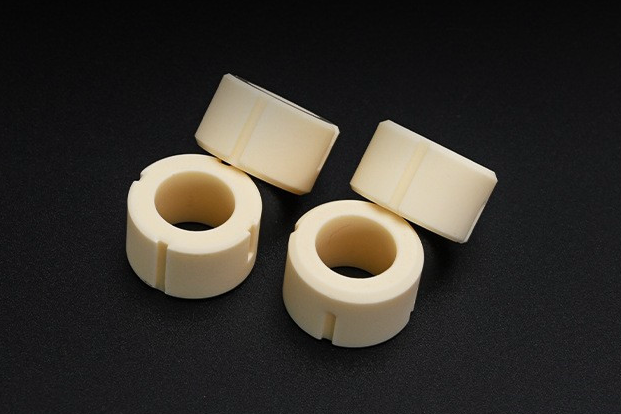
Advanced ceramic injection molding should be considered when the design needs ceramic performance and molded geometry at the same time. Typical RFQ candidates include insulating bushings, wear sleeves, ceramic guides, pump and valve accessories, sensor housings, heat-exposed supports, and compact technical ceramic parts with repeated features.
The manufacturing reason is that CIM shapes ceramic powder feedstock in an injection mold, then removes binder and sinters the ceramic to final density. This route can form details that would be difficult to machine from a fired ceramic blank, but it also requires tooling compensation for shrinkage, controlled debinding, stable sintering support, and clear inspection planning.
Buyer Question | CIM Service Answer | RFQ Information Needed |
|---|---|---|
Is the part geometry suitable? | CIM fits small complex ceramic parts with repeated molded details | STEP file, 2D drawing, wall sections, holes, slots, ribs, and draft expectations |
Which ceramic material is required? | Alumina, zirconia, silicon carbide, silicon nitride, and blended ceramics serve different functions | Material grade, operating environment, insulation, wear, thermal, chemical, or toughness requirement |
Which surfaces control performance? | Post-sintering grinding or polishing may be needed on functional surfaces | CTQ dimensions, sealing faces, bores, mating surfaces, roughness, and visual criteria |
Which production stage is being quoted? | Prototype, validation, and production stages may need different tooling and inspection plans | Sample quantity, annual volume, ramp schedule, revision risk, and packaging requirement |
What Advanced Ceramic Materials Can Be Molded by CIM?
Advanced ceramic materials should be selected by part function, not by material name alone. Alumina Al2O3 is often reviewed for electrical insulation, wear resistance, and chemical stability. Zirconia ZrO2 is often reviewed when toughness, surface quality, or dense ceramic behavior matters. Silicon carbide SiC is often reviewed for wear, thermal conductivity, and harsh-environment resistance. Silicon nitride Si3N4 is often reviewed for strength, thermal shock resistance, and demanding mechanical applications.
The RFQ implication is that buyers should describe the working environment. Load, sliding contact, dielectric requirement, chemical exposure, heat cycling, mating material, and cleaning requirement can change the best ceramic material. A supplier cannot select between alumina, zirconia, silicon carbide, and silicon nitride from part shape alone.
Relevant material pages include alumina Al2O3 ceramic injection molding, zirconia ZrO2 injection molding, silicon carbide SiC ceramic injection molding, and silicon nitride Si3N4 injection molding.
CIM Material | Common Buyer Requirement | Part Features to Review | RFQ Evidence to Define |
|---|---|---|---|
Alumina Al2O3 | Electrical insulation, wear resistance, chemical stability, and thermal capability | Insulating walls, bores, spacers, sleeves, and mating faces | Material grade, roughness, cleaning, dimensional report, and visual criteria |
Zirconia ZrO2 | Toughness, dense surface, wear behavior, and cosmetic ceramic surfaces | Thin edges, polished surfaces, sliding interfaces, and impact-sensitive areas | Surface finish, edge condition, color requirement, and functional test |
Silicon Carbide SiC | Wear resistance, thermal conductivity, chemical resistance, and harsh service environments | Sealing faces, sliding parts, fluid-contact features, and heat-exposed zones | Media exposure, surface condition, flatness, and inspection method |
Silicon Nitride Si3N4 | Strength, thermal shock resistance, and demanding mechanical service | Load paths, contact areas, thin sections, and stress concentration points | Load condition, thermal cycle, fracture-risk review, and dimensional evidence |
How the CIM Process Changes Tooling, Shrinkage, and Inspection
CIM process planning starts with ceramic powder feedstock. The molded green part is larger than the final part because debinding and sintering remove binder and densify the ceramic. Tool design must compensate for this shrinkage, and the process must control support, distortion, and final density.
The production stages are feedstock preparation, injection molding, debinding, sintering, and secondary finishing. Each stage can affect part quality. Poor filling can create weak features. Debinding issues can create cracks or contamination. Sintering variation can affect size, density, and flatness. Grinding or lapping after sintering can improve critical surfaces but also adds cost.
The buyer should ask which dimensions are intended to be as-sintered and which dimensions require finishing. This distinction helps avoid over-specifying noncritical surfaces while still protecting bores, sealing faces, grooves, and mating interfaces.
Part Geometry, Secondary Finishing, and Production Volume Questions
Part geometry determines whether CIM tooling is practical. Small complex parts with repeated features usually make better CIM candidates than very large simple shapes. Thick-to-thin transitions, blind holes, long unsupported spans, sharp internal corners, and thin edges should be reviewed before tooling.
Secondary finishing can include diamond grinding, lapping, polishing, laser marking, cleaning, drilling, or assembly. Because fired ceramics are hard, late design changes can be expensive. Buyers should identify datum surfaces, press-fit areas, sealing faces, visible faces, and any surface that must interact with metal, glass, polymer, fluid, or electrical contacts.
Production volume also matters. CIM tooling can be justified when the design needs repeated ceramic parts and near-net shape reduces finishing burden. For simple low-volume ceramic shapes, powder pressing, hot pressing, or machining from ceramic stock may be more practical. The comparison article on custom ceramic parts manufacturing by CIM, powder pressing, or hot pressing can help buyers frame that decision.
When CIM, Powder Pressing, Hot Pressing, or Machining Fits Better
Choose CIM when the custom ceramic part has complex small geometry, repeated production demand, and enough value in near-net molding to justify tooling. Choose powder pressing when the part geometry is simpler and can be formed efficiently from powder in a pressing process. Choose hot pressing when the material and performance target require that route. Choose ceramic machining or grinding when the quantity is low, the shape is simple, or the final surfaces must be generated from a fired blank.
The buyer decision should compare material, geometry, production quantity, finishing, and inspection evidence together. A design that looks easy in CAD may be difficult during debinding or sintering if wall thickness changes sharply. A dimension that looks tight on a drawing may be better controlled by secondary grinding than by the molded route alone.
For basic process background, see what ceramic injection molding is and where it applies.
RFQ Checklist for Advanced Ceramic Injection Molding Services
A useful CIM RFQ should let the supplier evaluate material, tooling, shrinkage, sintering, finishing, and inspection before quoting. The goal is to define the ceramic part's function and critical surfaces, not to over-specify every nonfunctional surface.
RFQ Item | Why It Matters for Advanced Ceramic CIM | Recommended Buyer Input |
|---|---|---|
Material requirement | Alumina, zirconia, silicon carbide, and silicon nitride have different molding and sintering behavior | Material grade, acceptable alternatives, operating environment, and property requirement |
Geometry data | Tooling and shrinkage compensation depend on the full 3D shape | STEP file, 2D drawing, revision, wall thickness, holes, slots, ribs, and draft notes |
Critical dimensions | Functional surfaces may require grinding, lapping, or tighter inspection | CTQ dimensions, datums, bores, flatness, roundness, sealing faces, and mating surfaces |
Surface condition | Wear, insulation, sealing, bonding, and cosmetic requirements can change finishing cost | Roughness, edge condition, cleaning, visible surfaces, and chipping limits |
Production demand | Tooling choice and inspection plan depend on quantity and revision stability | Prototype quantity, annual demand, ramp timing, revision risk, and packaging needs |
Inspection evidence | Delivered ceramic parts need the correct dimensional and functional checks | CMM report, gauge check, optical inspection, surface report, or functional test plan |
With these details, the supplier can recommend CIM, another ceramic forming route, or a hybrid plan with molded geometry and post-sintering finishing on critical features.
Related FAQs