What are the key advantages of plasma cutting in industrial applications?
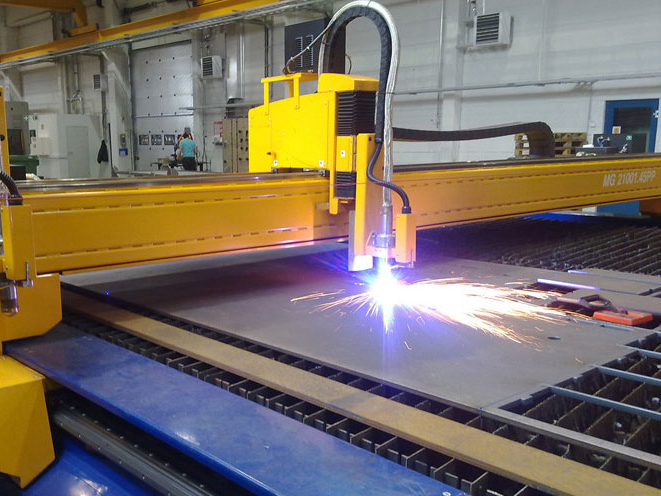
Plasma cutting offers industrial buyers practical advantages when conductive metal sheet or plate must be cut into brackets, frames, guards, base plates, equipment panels, and weldment blanks before forming, welding, coating, machining, or inspection. The RFQ decision is whether plasma cutting gives the right balance of material compatibility, cutting speed, edge quality, route flexibility, and secondary cleanup for the part requirement.
What advantages matter most in industrial plasma cutting?
The main advantages of plasma cutting are material flexibility, practical cutting speed on conductive metals, flexible profile cutting, compatibility with fabrication workflows, and the ability to prepare custom blanks for later production stages. These advantages are strongest when the part is a metal plate or sheet component with profiles, holes, slots, or weld edges that can tolerate the planned edge condition.
Industrial buyers should treat advantages as route-specific benefits, not generic promises. Plasma cutting can be useful for one bracket, guard, or base plate while laser cutting, stamping, machining, or another route may be better for a different feature on the same assembly.
Plasma cutting advantage | Industrial value | Common part types | Buyer check before RFQ |
|---|---|---|---|
Conductive metal compatibility | Supports carbon steel, stainless steel, aluminum, copper, brass, and selected alloys | Panels, guards, brackets, plates, weldment blanks | Confirm grade, thickness, coating, and surface condition |
Flexible profile cutting | Creates custom contours without dedicated hard tooling | Base plates, gussets, frames, mounting patterns | Mark critical holes, slots, and datum edges |
Production route flexibility | Connects cutting with bending, welding, coating, and machining | Fabricated assemblies, machine guards, equipment covers | Provide downstream process and inspection requirements |
Useful cutting speed | Supports practical throughput for many sheet and plate jobs | Repeated brackets, kits, structural plates | Compare total route time, not only torch travel speed |
Manageable secondary finishing | Can be paired with deburring, sandblasting, coating, or machining | Visible panels, weld-ready blanks, coated parts | Define edge acceptance and cosmetic faces |
How does plasma cutting support multi-material industrial work?
Plasma cutting supports multi-material work because the process cuts electrically conductive metals rather than only one narrow material family. Carbon steel base plates, stainless steel guards, aluminum covers, copper plates, brass parts, and selected specialty-alloy blanks can all be reviewed for plasma cutting when the material grade and thickness are suitable.
The buyer should still separate each material in the RFQ. Carbon steel, stainless steel, aluminum, and copper do not share the same heat behavior, edge condition, or finishing need. Listing the material grade, thickness, and surface requirement for each part number helps the supplier choose process settings and identify when another route may be more appropriate.
Why is cutting speed an advantage for industrial parts?
Cutting speed is an advantage when the plasma cutting route reduces the total time from material blank to usable part. This can help projects with repeated brackets, structural plates, equipment guards, and welded frames, especially when the parts do not require extremely fine details or cosmetic edges that would add heavy cleanup.
Buyers should compare total route speed. Programming, material handling, nesting, dross removal, bending, welding, coating, and inspection all affect the real production result. A fast cut can lose its advantage if the RFQ does not define edge cleanup, hole quality, flatness, or downstream fabrication steps.
How does plasma cutting fit with sheet metal fabrication?
Plasma cutting fits well with sheet metal fabrication when the cut blank is part of a larger route that includes bending, welding, fastening, surface finishing, or assembly. The process can prepare custom profiles and plate blanks before these later steps.
For fabricated parts, the buyer should provide bend lines, weld locations, assembly datums, and cosmetic faces. These details help the supplier decide where plasma-cut edge quality matters and where later forming or welding will control the final result. If a part requires fine slots or small holes, selected features may need laser cutting or machining.
How do edge quality and finishing affect the advantage?
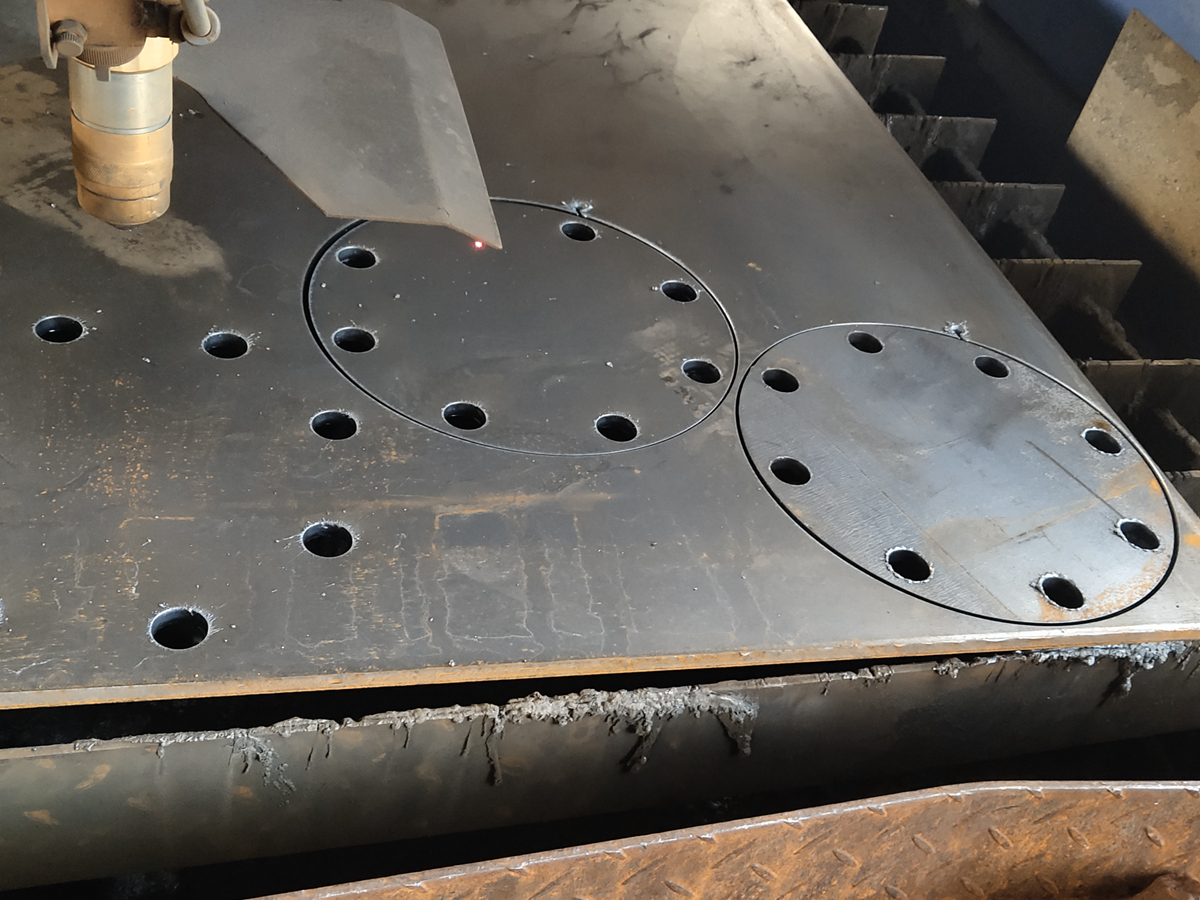
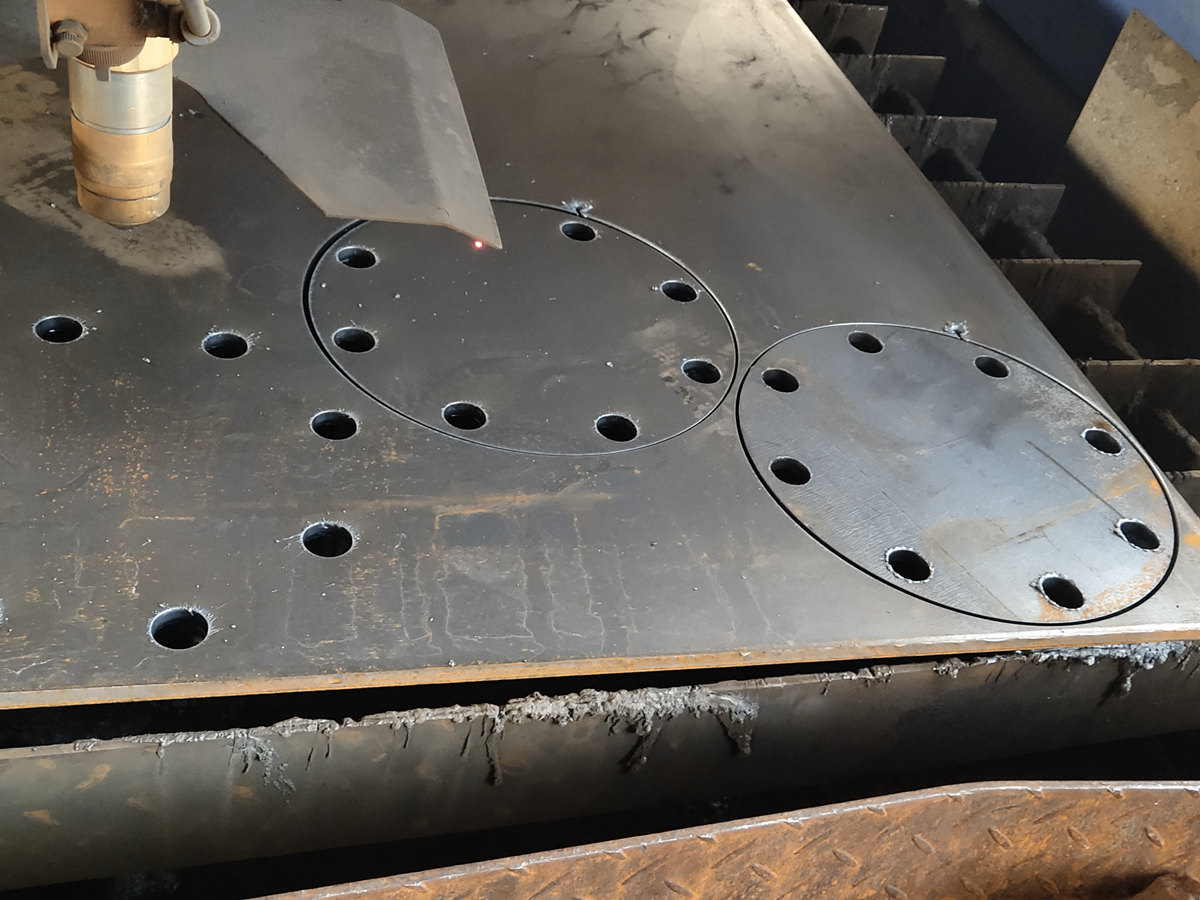
Edge quality and finishing decide whether plasma cutting remains advantageous after the cut is complete. Dross, bevel, heat tint, and burrs may be acceptable on some rough blanks but unacceptable on visible covers, sealing surfaces, or precise assembly features.
Buyers should define whether the part ships as-cut or needs deburring, sandblasting, powder coating, machining, or polishing. The advantage is clearer when the cutting route and secondary finishing are quoted together instead of treated as separate assumptions.
Which industrial applications benefit from plasma cutting?
Automotive, energy, industrial equipment, lighting, and telecommunication applications can benefit when the design uses conductive sheet or plate parts. Typical parts include brackets, racks, guards, fixture plates, equipment covers, structural plates, and fabricated assemblies.
Regulated or safety-critical applications need additional qualification. Plasma cutting can prepare a metal blank, but the buyer remains responsible for final validation, documentation, and acceptance criteria for the finished application.
When is plasma cutting not the best advantage?
Plasma cutting may not be the best route when the part requires very small holes, fine slots, thin cosmetic sheet, strict surface finish, nonconductive materials, heat-sensitive materials, or minimal heat affected zones. In those cases, laser cutting, machining, stamping, waterjet cutting, or another process may reduce total rework.
This limitation does not remove the value of plasma cutting. It simply means the advantage depends on matching the process to the material, part geometry, edge requirement, and production stage. A good RFQ gives the supplier enough detail to make that comparison.
What RFQ details help buyers capture plasma cutting advantages?
A useful RFQ should include material grade, thickness, CAD files, drawing revision, quantity, toleranced features, hole sizes, edge finish, bend lines, weld edges, surface treatment, cosmetic surfaces, and inspection method. These details show where plasma cutting adds value and where secondary operations are required.
The strongest buyer decision is to quote the complete route, not only the cutting step. When cutting, deburring, bending, welding, coating, and inspection are considered together, the advantages of plasma cutting can be evaluated against the actual industrial part requirement.
Related FAQs