Can MIM medical parts match the mechanical properties of machined components?
MIM medical parts can meet many mechanical requirements normally assigned to machined components, but only when the buyer defines the alloy grade, part type, critical dimensions, heat treatment condition, inspection method, and validation plan before quotation. This FAQ compares metal injection molding with CNC machining for surgical instrument components, medical tool links, miniature jaws, housings, clamps, and precision mechanisms. The practical RFQ problem is deciding which features can remain as-sintered MIM features, which features need secondary machining, and which tests must prove strength, fatigue behavior, corrosion resistance, and dimensional stability for the intended medical device use.
When can MIM medical parts meet machined part requirements?
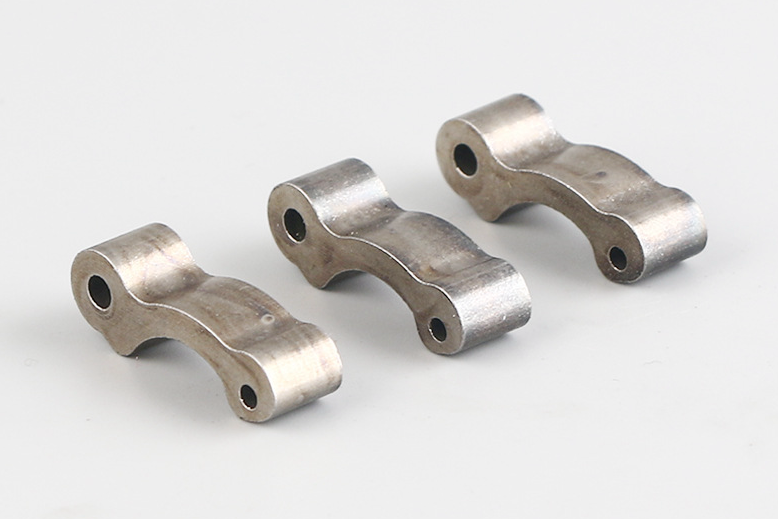
MIM is most likely to meet machined-part requirements when the component is small, complex, and produced in enough volume to justify tooling. Medical device buyers often review MIM for instrument jaws, ratchets, forceps links, implant trial components, miniature gears, latch parts, and metal inserts because the process can form complex shapes before sintering. CNC machining may still be better for very low volume parts, large solid parts, extremely tight datum surfaces, or features that need direct machining from wrought bar stock.
The buyer should treat "match" as a requirement-by-requirement decision, not as a general statement. A MIM 17-4 PH linkage may satisfy strength and geometry requirements after heat treatment, while a precision bearing surface on the same linkage may still need post-sinter machining. A MIM 316L handle feature may support corrosion resistance and cleanability, while a cutting edge may require a different stainless steel grade, grinding route, or validation program. The RFQ should identify each mechanical requirement instead of asking whether MIM is simply equal to machining.
Neway can review material choice, MIM tooling, sintering behavior, secondary machining, surface finishing, and inspection planning for medical device components, but the buyer or device manufacturer remains responsible for final medical validation, labeling, and regulatory approval of the finished device or instrument system.
Which MIM materials are commonly reviewed for medical components?
MIM 316L is commonly reviewed when corrosion resistance, surface finish, and cleanability are more important than high hardness. This grade can be considered for surgical instrument handles, housings, non-cutting jaws, clamps, and external medical tool features. Buyers should specify passivation, electropolishing, surface roughness, and corrosion test expectations when the MIM 316L component will face repeated cleaning or steam sterilization.
MIM 17-4 PH is commonly reviewed when higher strength is needed from a precipitation-hardening stainless steel route. This material can be relevant for miniature links, latch parts, hinge parts, ratchet features, and load-bearing medical tool components. The RFQ should state the heat treatment condition, hardness target, critical load case, and dimensional inspection plan because heat treatment and sintering shrinkage both affect the final part.
MIM CoCrMo ASTM F75, MIM 420, and MIM 440C may be reviewed for specific wear, hardness, or medical material requirements, but those materials should be selected only after the buyer defines the intended use, contact condition, cleaning route, corrosion exposure, and validation evidence. Medical material suitability is not decided by alloy name alone.
How do MIM and CNC machining differ for mechanical properties?
CNC machining starts from wrought bar, plate, or forged stock, so the machined component inherits the base material's established properties and grain structure. MIM starts from metal powder and binder, then uses molding, debinding, and sintering to create the final metal structure. This means MIM performance depends heavily on powder selection, feedstock control, debinding stability, sintering density, heat treatment, and final inspection.
The engineering implication is simple: MIM can be a strong route for complex geometry, but the RFQ must define the mechanical property evidence. Buyers should ask for the material grade, heat treatment route, density or process control evidence where relevant, hardness testing, tensile or fatigue testing when required, and dimensional reports for critical features. For medical components, the buyer should also define whether tests are for prototype comparison, design verification, process validation, or production release.
Buyer decision | MIM medical component consideration | Machined medical component consideration | RFQ evidence to define |
|---|---|---|---|
Strength and load capacity | Depends on alloy, sintering density, heat treatment, and geometry | Depends on wrought material grade, machining direction, and heat treatment | Load case, hardness range, tensile or fatigue test requirement, and sample quantity |
Dimensional control | Sintering shrinkage must be planned into tooling and process control | Direct machining can hold datum surfaces more easily for low volume | Critical-to-function dimensions, datum scheme, CMM report, and post-machining features |
Complex geometry | Near-net-shape molding can reduce machining for small undercuts, teeth, slots, and textured features | Complex internal shapes may require multiple setups or assembly | 3D model, parting line limits, wall thickness, gate area, and secondary operation allowance |
Medical surface condition | May require deburring, passivation, electropolishing, machining, or grinding after sintering | May require deburring, polishing, passivation, and cleaning after machining | Surface roughness, burr limits, corrosion test, cleaning requirement, and cosmetic standard |
This table should help buyers choose the comparison basis. The correct question is not whether MIM is stronger than machining. The useful question is whether a specific MIM alloy and process route can meet the same mechanical, dimensional, and surface acceptance criteria for a specific medical part.
Which secondary operations help MIM parts approach machined features?
Secondary operations are often the bridge between near-net-shape MIM geometry and machined-part requirements. Heat treatment can adjust strength and hardness for stainless steel grades such as MIM 17-4 PH or martensitic stainless steels. Passivation can support stainless steel corrosion resistance after machining or handling. Electropolishing can improve surface smoothness and cleanability on stainless steel components when the geometry permits controlled material removal.
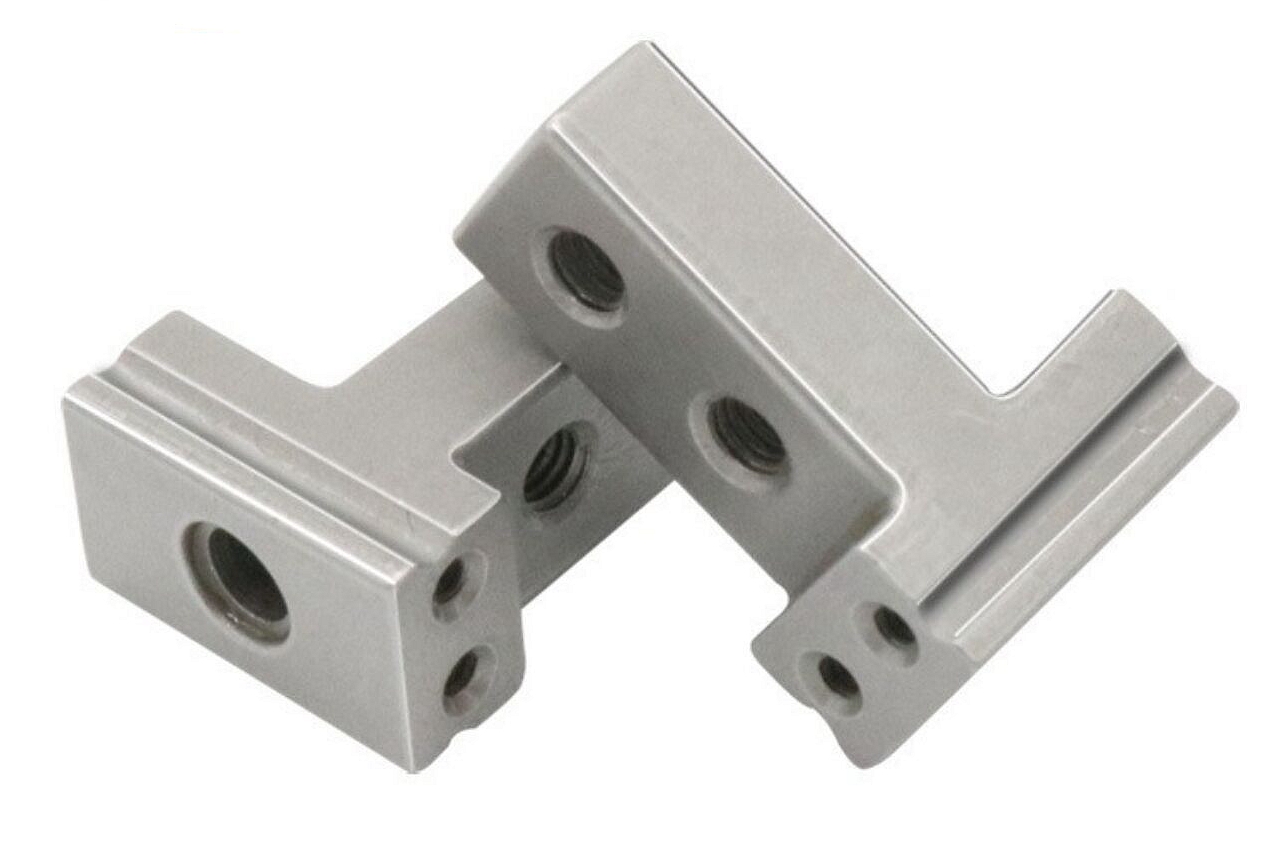
Secondary machining is important when the MIM component includes tight datum faces, threaded holes, sealing faces, pivot bores, blade seats, or bearing surfaces. Buyers can use CNC machining prototyping to confirm the geometry and then reserve secondary machining only for features that need tighter tolerances than as-sintered MIM can hold. This approach can reduce unnecessary machining while keeping the mechanical and dimensional requirements visible.
The RFQ should identify which features are allowed to remain molded and which features must be machined, ground, lapped, polished, passivated, or inspected individually. Without that split, suppliers may quote very different process routes for the same drawing, and the buyer may receive samples that look similar but do not answer the same performance question.
What inspection methods compare MIM and machined medical parts?
Mechanical comparison should be based on measurable acceptance criteria. For medical MIM components, buyers commonly request dimensional inspection, CMM reports for datum features, hardness testing after heat treatment, surface roughness inspection, visual burr inspection, corrosion testing where specified, and process traceability records. For critical applications, the buyer may also request tensile testing, fatigue testing, torque testing, wear testing, or functional cycling on representative parts.
Inspection planning should separate prototype learning from production control. Prototype testing can show whether MIM geometry, assembly fit, and mechanical behavior are promising. Production control must then define batch-level inspection frequency, critical-to-quality dimensions, gauge strategy, sampling plan, lot traceability, and nonconformance rules. For medical device work, the buyer's quality system and regulatory pathway define the final evidence package.
Neway can support component-level measurement and manufacturing evidence, but Neway should not be treated as the final approval authority for medical device performance. The buyer should connect component inspection results with design verification, sterilization or cleaning validation, packaging validation, and any required regulatory documentation for the finished medical product.
What RFQ information helps Neway judge MIM versus machining?
A useful RFQ includes 2D drawings, 3D CAD files, material grade preference, expected annual volume, prototype quantity, part weight target, critical dimensions, tolerance class, datum scheme, mechanical load case, surface finish requirement, heat treatment condition, inspection report format, and any cleaning or sterilization exposure that affects material choice. Buyers should also mark patient-contact, user-contact, and non-contact regions when those categories affect validation or surface finishing decisions.
If the buyer is comparing MIM against machining, the RFQ should include the current machined component drawing and the performance problem the buyer wants to solve. Common reasons include reducing multi-axis machining cost, forming small teeth or undercuts, improving repeatability in higher volume, reducing assembly parts, or improving grip geometry. Neway can then identify where MIM is appropriate, where CNC machining should remain, and where a hybrid MIM plus secondary machining route is the better quote.
The buyer should approve the process route only after samples answer the defined question: strength, fatigue behavior, corrosion resistance, surface finish, dimensional consistency, assembly fit, or production economics. That direct decision structure makes MIM medical part evaluation clearer than a broad claim that MIM can or cannot match machined components.
Related FAQs
What materials and surface treatments suit steam-sterilized surgical instruments?
How are tight tolerance components controlled during the MIM shrinkage process?
Can secondary machining improve tolerances for metal injection molded components?
What quality inspection methods are used for tight tolerance MIM components?
How does Neway support ISO 13485 and medical device quality requirements?