Complexity Freedom: Unlocking Design Potential with 3D Printing Capabilities
3D Printing Complex Geometry RFQ Decision: This article explains how buyers should evaluate 3D printing prototyping for complex parts such as lightweight brackets, internal-channel ducts, manifolds, lattice structures, conformal fixtures, curved housings, functional polymer prototypes, and metal printed components. The practical RFQ problem is deciding which complex features add product value and which features create material, support removal, surface finish, inspection, or post-processing risk.
3D printing can make complex geometry easier to prototype because additive manufacturing builds parts layer by layer from digital models. That capability can support internal channels, part consolidation, organic surfaces, lightweight ribs, and lattice regions. Buyers still need to define process, material, feature purpose, tolerance zones, surface finish, and test method before treating a complex printed design as ready for validation.
Which Complex Geometries Benefit From 3D Printing?
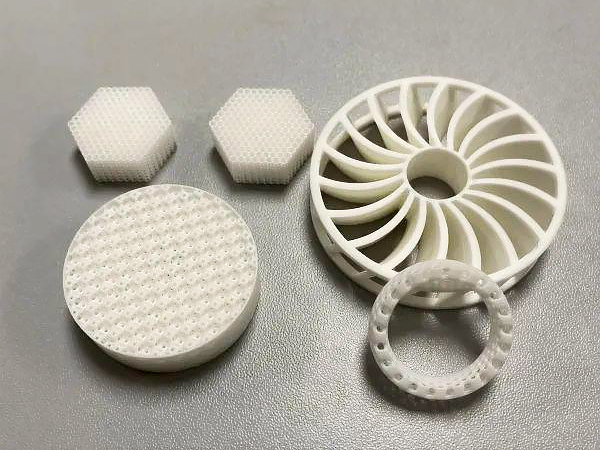
Complex geometries benefit from 3D printing when the design uses features that are difficult to machine, mold, cast, or assemble from separate parts. Internal channels, lattice structures, curved transitions, integrated clips, conformal surfaces, lightweight ribs, and consolidated assemblies are common examples.
The buyer should identify why each complex feature exists. A lattice may reduce weight or tune stiffness. An internal channel may guide air, liquid, wiring, or heat. A consolidated bracket may reduce assembly steps. If a complex feature does not support fit, function, weight, flow, heat transfer, or assembly, the feature may add risk without adding value.
For general process context, buyers can compare 3D printing routes with the existing 3D printing process classification guide.
How Should Buyers Match Complex Features To 3D Printing Processes?
Buyers should match complex features to 3D printing processes by material, build orientation, feature size, surface expectation, and post-processing access. FDM may support early form studies and fixture prototypes. MJF may support functional polymer prototypes with complex internal shapes. DMLS and SLM may support metal parts with internal channels or integrated features when metal properties are needed.
The RFQ should describe the feature purpose and the validation plan. A curved appearance model may need surface finishing rather than metal printing. A functional duct may need pressure or flow review. A metal manifold may need support removal, powder removal, heat treatment, machining of sealing faces, and inspection of critical ports.
Complex Feature Entity | 3D Printing Opportunity | RFQ Risk To Define |
|---|---|---|
Internal channel | Builds enclosed flow paths without multi-part assembly | Powder removal, cleaning access, leakage test, and inspection method |
Lattice structure | Reduces weight or adjusts stiffness in selected zones | Cell size, load direction, cleanability, and validation criteria |
Part consolidation | Combines brackets, clips, ducts, or housings into fewer components | Assembly interface, repairability, tolerance stack, and post-processing access |
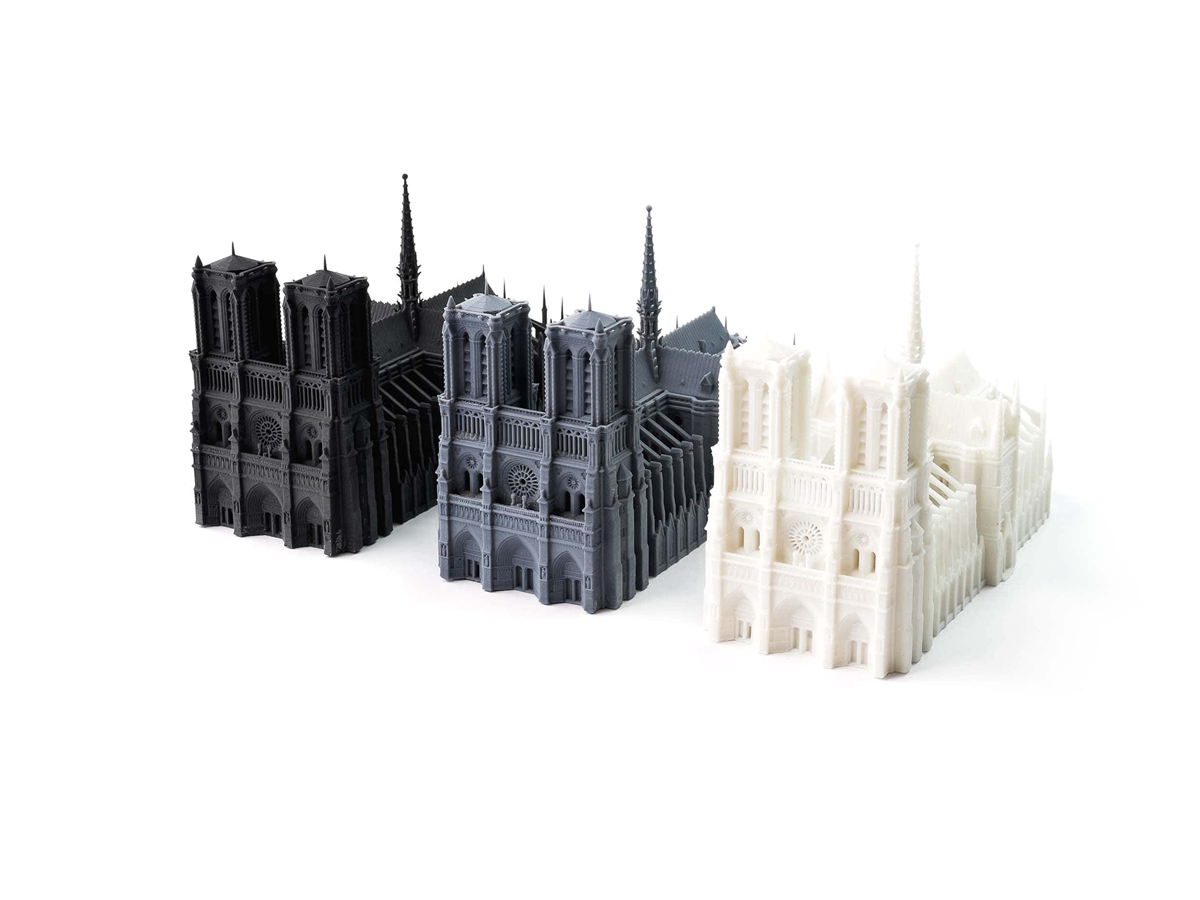
Curved organic surface | Supports ergonomic, aerodynamic, or packaging-driven shapes | Surface finish, build orientation, support marks, and cosmetic face control |
How Do Materials Affect Complex 3D Printed Parts?
Materials affect complex 3D printed parts because each material and process combination has different strength direction, heat behavior, surface texture, finishing response, and inspection risk. Polymer prototypes may be useful for form, fit, ergonomic review, fixtures, ducts, and clips. Metal printed prototypes may be useful for heat, strength, or integrated geometry when the buyer needs metal behavior.
The RFQ should state material grade, required property, allowable substitute, surface requirement, and test condition. If the buyer needs aluminum behavior, material pages such as aluminum for 3D printing and AlSi10Mg for metal 3D printing may support material discussion. If a polymer prototype is enough for early design review, ABS for 3D printing may be part of the process review.
Buyers should be cautious when comparing printed material behavior with wrought, cast, molded, or machined material behavior. The RFQ should ask how build direction, post-processing, and inspection relate to the planned validation use.
What Design Rules Still Matter With 3D Printing Freedom?
Design rules still matter because 3D printing has process limits. Wall thickness, unsupported spans, build orientation, overhangs, escape holes, support access, powder removal, surface finish, warpage, and feature resolution all affect whether a complex design can be printed and cleaned successfully.
Buyers should define minimum wall areas, critical interfaces, cosmetic surfaces, and enclosed volumes. If a feature requires trapped powder removal or support removal, the RFQ should show access openings or allow the supplier to propose design changes. If a surface will mate with another part, the RFQ should specify whether secondary CNC machining, drilling, tapping, inserts, sealing, sanding, or polishing is required.
Design complexity should be purposeful. A complex shape is more valuable when the buyer can connect that shape to flow, weight, stiffness, packaging, ergonomics, heat transfer, or assembly reduction.
How Should Buyers Plan Inspection For Complex Printed Features?
Buyers should plan inspection around the features that control fit and function. Complex internal structures may not be easy to inspect with simple hand tools. External dimensions, hole positions, mating faces, sealing surfaces, threads, and functional interfaces should be identified before the quote.
Inspection may include visual review, dimensional inspection, pin gauges, thread gauges, coordinate measuring machine checks, surface roughness review, sectioning, leakage testing, flow testing, or other buyer-defined validation. The supplier needs to know which checks are required and which checks are the buyer's responsibility after prototype delivery.
If an internal channel or lattice cannot be fully inspected with the available method, the RFQ should state the acceptable evidence for prototype evaluation. This may include process review, sample inspection, or targeted testing defined by the buyer.
Which Defects And Post-Processing Risks Should Buyers Review?
Common 3D printing risks include warpage, support marks, incomplete fusion, porosity, rough internal surfaces, trapped powder, delamination, dimensional variation, surface texture mismatch, and damage during support removal. The specific risk depends on the process, material, geometry, and build orientation.
Post-processing can reduce some risks but may introduce new requirements. Heat treatment, support removal, bead blasting, sanding, polishing, sealing, dyeing, painting, CNC machining, tapping, and inserting hardware all affect part condition. Buyers should define which surfaces are functional, which surfaces are cosmetic, and which surfaces can accept visible build or support marks.
3D Printing Risk | Complex Feature Affected | Buyer RFQ Action |
|---|---|---|
Trapped material | Internal channels, enclosed cavities, and lattice regions | Define escape holes, cleaning expectations, and validation method |
Support mark | Curved surfaces, overhangs, and cosmetic faces | Mark cosmetic surfaces and acceptable finishing route |
Dimensional variation | Mating holes, slots, sealing surfaces, and assembly interfaces | Specify critical dimensions and inspection records |
Material behavior uncertainty | Load paths, hinges, clips, and high-stress regions | State test condition, build direction concern, and acceptance criteria |
How Should Buyers Compare 3D Printing With CNC Or Tooling?
Buyers should compare 3D printing with CNC machining, casting, molding, or rapid tooling by feature value, material requirement, tolerance need, production quantity, and validation stage. 3D printing may be appropriate for complex prototypes, internal channels, lightweight structures, and design iteration. CNC machining may be more appropriate for tight machined datums, production-like surface finish, and wrought material behavior.
The best process may change as the project matures. A printed prototype may validate shape and routing. A CNC prototype may validate machined interfaces. A casting, molding, or rapid tooling route may be reviewed after design intent stabilizes. Buyers should include future production intent in the RFQ so the supplier can flag features that may be difficult to transfer later.
For broader prototype route comparison, buyers can review metal parts prototype manufacturing route selection.
What Should A Complex 3D Printing RFQ Include?
A complex 3D printing RFQ should include the 3D model, 2D drawing if dimensions matter, process preference if known, material requirement, prototype purpose, critical dimensions, functional surfaces, cosmetic surfaces, internal-channel requirements, support-removal concerns, post-processing scope, inspection records, and test plan. The RFQ should also identify which complex features are fixed and which features may be revised for printability.
Buyers should state whether the part is a visual prototype, functional prototype, assembly sample, test fixture, or metal validation part. The supplier can then review process options, material behavior, build orientation, support strategy, and post-processing before quotation.
3D printing design freedom is strongest when complex features are connected to clear product functions. A clear RFQ helps the supplier distinguish useful complexity from avoidable manufacturing risk.
Related FAQs
What are the limitations of 3D printing in industrial applications?
Can 3D printed parts achieve the same strength as traditionally manufactured parts?
What files and specifications are needed for custom 3D prototyping services?
What is the difference between a visual prototype and a functional prototype?