What factors determine the precision of plasma cutting?
Plasma cutting precision is determined by torch condition, nozzle and electrode wear, arc stability, torch height control, cutting current, gas selection, material thickness, surface condition, CNC motion, nesting strategy, and inspection method. This FAQ explains how these factors affect custom plasma-cut plates, brackets, frames, guards, holes, slots, and sheet metal fabrication blanks during RFQ review.
What factors determine the precision of plasma cutting?
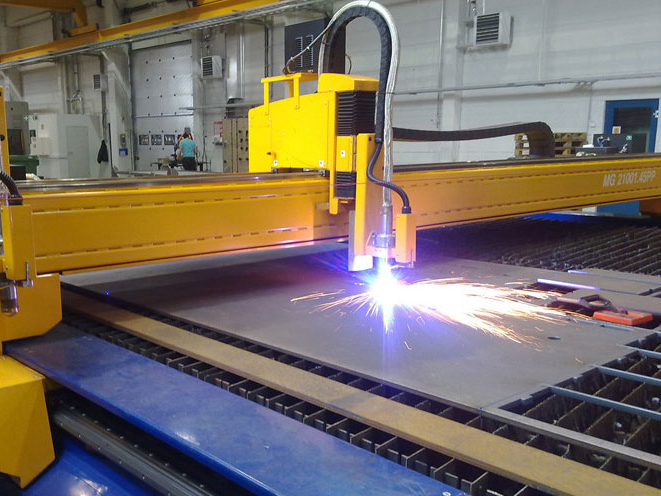
Plasma cutting precision depends on both the machine setup and the part requirement. The same plasma cutting process may produce acceptable results for a heavy frame blank but require extra review for small holes, tight slots, fine profiles, or welded assemblies.
The buyer should define what “precision” means for the part. Edge squareness, hole quality, dross level, bevel, flatness, kerf width, and dimensional accuracy are different requirements, and each one may need a different control method or secondary operation.
Precision factor | Manufacturing effect | RFQ detail buyers should provide |
|---|---|---|
Torch, nozzle, and electrode condition | Affects arc stability, kerf shape, bevel, and cut consistency | Edge quality requirement, hole quality, and inspection criteria |
Torch height control | Controls arc length, cut angle, dross, and edge repeatability | Material flatness, plate condition, and critical dimensions |
Current, gas, and cut speed | Influences penetration, dross, heat-affected zone, and edge roughness | Material grade, thickness, coating, and acceptable dross level |
CNC motion and programming | Affects corners, small holes, slots, lead-ins, and lead-outs | 2D drawing, hole sizes, slots, contours, and datum references |
Nesting and thermal control | Reduces distortion, local overheating, and part movement | Flatness, long narrow profiles, part spacing, and production quantity |
How do torch consumables and height control affect plasma cutting accuracy?
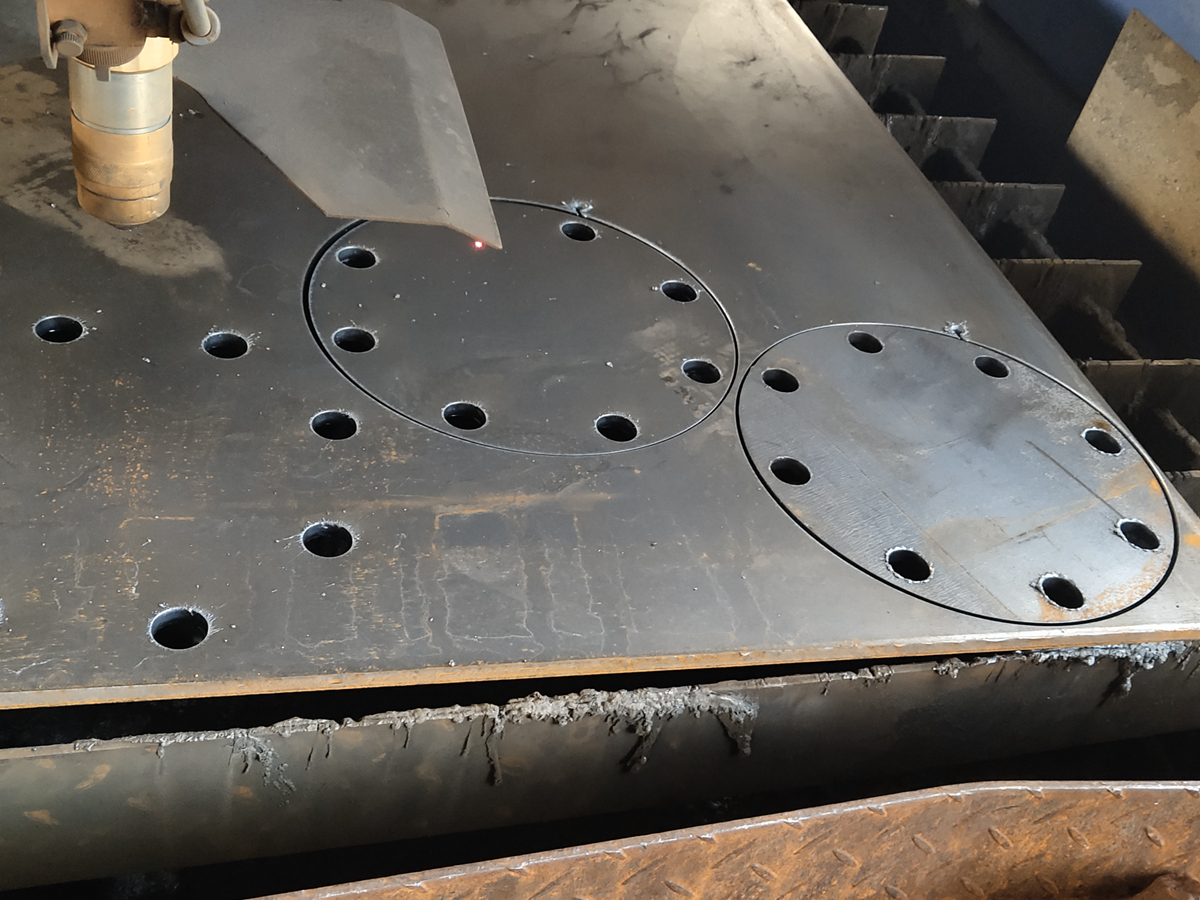
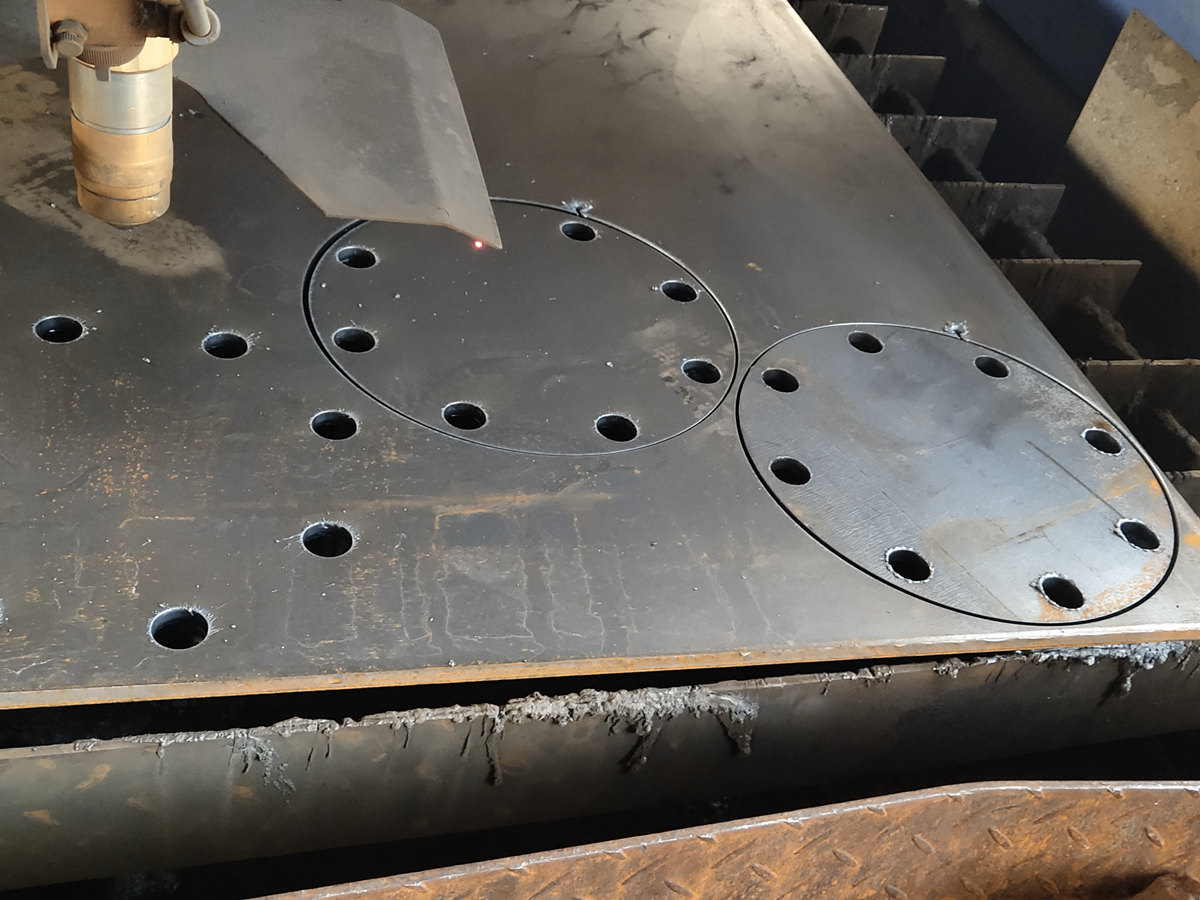
Torch consumables affect plasma arc shape. Worn nozzles, electrodes, shields, or swirl components can create arc wander, wider kerf, rougher edges, and inconsistent bevel. Torch height control matters because the arc must stay stable as the torch moves over the plate.
Buyers should identify whether small holes, straight edges, or bevel-sensitive profiles are critical. If these features are important, the RFQ should request inspection of those features rather than relying only on general dimensional tolerance notes.
How do material thickness, gas, and cutting parameters change precision?
Material thickness, metal grade, surface scale, coating, and conductivity affect plasma cutting precision. Carbon steel, stainless steel, aluminum, copper, brass, and coated steel do not cut the same way. Gas selection, cutting current, speed, and pierce strategy must match the material and thickness.
The RFQ should include material grade, thickness, surface condition, coating, and downstream process. If the plasma-cut part will be welded, machined, painted, or assembled into an energy, automotive, or equipment application, edge condition and documentation may matter as much as profile size.
How do CNC motion, lead-ins, and nesting affect plasma-cut part quality?
CNC motion control affects how the torch enters corners, cuts holes, changes direction, and exits the profile. Lead-in and lead-out placement can protect functional edges. Nesting affects heat buildup, part movement, material use, and distortion.
Buyers should mark critical edges, hole patterns, slots, tab areas, and cosmetic surfaces on the drawing. A supplier can then choose better lead-in positions, cut sequence, nesting spacing, and inspection points for the parts that matter most.
When does plasma cutting need secondary machining for precision?
Plasma cutting may need secondary machining when holes, slots, flat datums, mating faces, or threaded features require tighter control than the plasma-cut edge can provide. CNC machining, drilling, reaming, tapping, grinding, or deburring may be needed after cutting.
This is common when a plasma-cut blank becomes part of a welded assembly, equipment frame, fixture plate, or structural bracket. Buyers should separate plasma profile requirements from machined feature requirements in the RFQ so the quotation includes the full manufacturing route.
What RFQ information helps improve plasma cutting precision?
A useful RFQ includes the 2D drawing, material grade, thickness, quantity, hole sizes, slot widths, edge quality, dross allowance, bevel limit, flatness requirement, weld preparation, coating, secondary machining, and inspection method. Buyers should identify which dimensions are critical-to-quality and which edges can accept normal cutting variation.
With those details, the supplier can decide whether plasma cutting alone is suitable or whether laser cutting, machining, grinding, or another process should be added. Precision is best controlled when the drawing, material, process route, and inspection method all point to the same finished-part requirement.
Related FAQs