How Significant Are the Cost Savings Associated with Insert Molding?
Cost savings from insert molding can be significant when molded-in inserts reduce secondary assembly, purchased hardware, adhesive bonding, manual alignment, inspection rework, or part-count complexity, but there is no universal savings percentage that applies to every project. This FAQ helps buyers evaluate insert molding costs for threaded inserts, terminals, bushings, shafts, pins, connector housings, reinforced brackets, and metal-plastic assemblies. The practical RFQ problem is comparing total manufacturing cost instead of assuming that insert molding automatically reduces the unit price.
How Significant Are the Cost Savings Associated with Insert Molding?
Insert molding can save cost when the molded-in insert replaces several downstream operations. The strongest savings cases usually involve high repeatability needs, many assembled parts, manual insert installation, adhesive curing, fixture alignment, or repeated quality problems from post-mold assembly.
The cost result depends on insert price, resin selection, tooling investment, insert loading method, production volume, scrap risk, inspection requirements, and the value of reduced assembly. Buyers should ask for a quote that separates these cost drivers rather than asking for a single general savings claim.
Which costs can insert molding reduce?
Insert molding can reduce assembly labor, separate fastening operations, adhesive application, post-mold insert installation, fixture handling, inventory complexity, and part-number management. It can also reduce rework when the mold locates inserts more consistently than a manual assembly process.
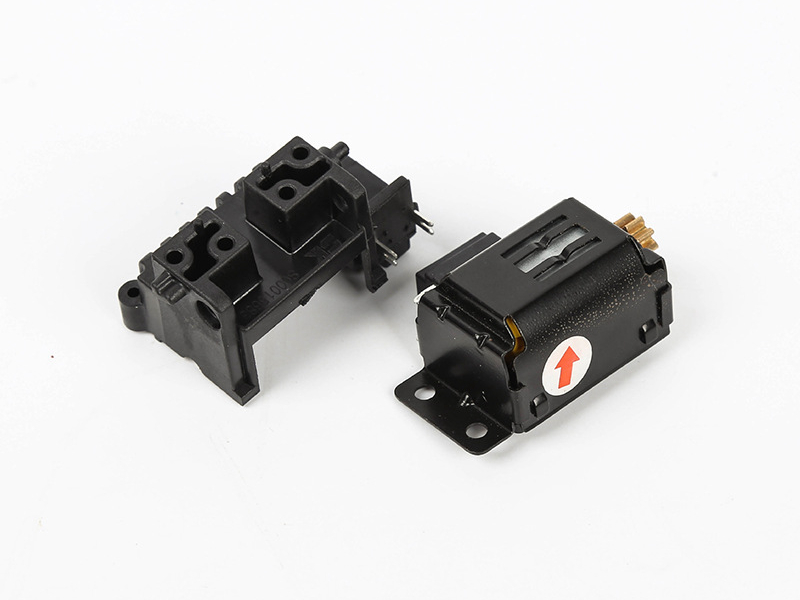
For example, a molded connector housing with terminals placed during molding may reduce later terminal alignment work. A plastic bracket with molded-in threaded inserts may reduce separate heat-set insert installation. The value comes from fewer manufacturing steps and more controlled insert location, not from the insert material alone.
Which costs can insert molding add?
Insert molding can add cost through insert sourcing, insert inspection, mold complexity, insert-loading equipment, longer setup, operator training, automation, and added quality checks. Scrap can also become more expensive if a molded part contains a valuable metal, ceramic, or electronic insert.
This is why low-volume or unstable designs may not show immediate cost savings. If the design is still changing, post-installed inserts or separate assembly may be more flexible until the buyer has confirmed the insert geometry, material, and production demand.
How does production volume affect insert molding cost savings?
Production volume affects whether tooling and process-control costs can be spread across enough parts. High-volume projects often have a stronger case for insert molding because assembly savings, fewer handling steps, and repeatable insert placement can accumulate across many production runs.
Low-volume projects can still benefit when insert location, durability, or function is more important than the lowest unit price. Buyers should state prototype quantity, launch quantity, annual volume, and product life so the manufacturer can recommend prototype tooling, bridge tooling, or production tooling.
How should buyers compare insert molding with traditional assembly costs?
Buyers should compare the full route: insert purchasing, molded plastic part cost, secondary assembly labor, fixtures, rejected parts, inspection, packaging, and supplier management. A traditional method may look cheaper per operation but cost more after handling, rework, and quality variation are included.
Cost category | Insert molding effect | Traditional assembly cost to compare | RFQ information needed |
|---|---|---|---|
Assembly labor | May reduce separate insert installation and alignment | Manual pressing, bonding, fastening, heat setting, fixture time | Current assembly steps, labor time, setup method |
Tooling and process control | May increase mold complexity and insert-loading controls | Simpler mold plus separate assembly fixtures | Volume, automation plan, insert loading method |
Scrap and rework | Can reduce assembly variation but scrap may include insert value | Rejected assembled parts, loose inserts, bonding defects | Reject history, inspection criteria, insert cost |
Inventory and purchasing | May reduce separate part numbers and line-side handling | Multiple components, fasteners, adhesives, and subassemblies | Bill of materials, supplier count, packaging needs |
Durability and warranty risk | Can improve retention when geometry and materials are correct | Loose inserts, cracked bosses, adhesive aging, misalignment | Torque, pull-out, load, vibration, environment |
When is insert molding not the lowest-cost choice?
Insert molding may not be the lowest-cost choice when volume is low, the design is still changing, the insert is easy to install later, the tool would become too complex, or the insert cannot tolerate molding conditions. It may also be less practical when repairability or post-mold adjustment is important.
Buyers should consider post-installed inserts, screws, clips, adhesives, or separate subassembly when those methods meet the functional requirement with lower risk. Insert molding is most valuable when it solves a clear assembly, durability, alignment, or quality problem.
What RFQ information supports an insert molding cost review?
A useful cost RFQ should include CAD files, insert drawings, resin material, insert material, annual volume, launch volume, current assembly route, current bill of materials, labor steps, inspection requirements, torque or pull-out targets, electrical requirements, cosmetic standards, and known defect history. Buyers should ask the supplier to separate tooling, insert cost, molding cost, loading cost, inspection cost, and secondary operations.
This information lets the manufacturer compare insert molding with traditional manufacturing methods using the buyer's real cost drivers. The best cost decision is the route that meets function, quality, and volume needs with controlled risk.
Related FAQs
Can insert molding reduce production costs compared to traditional methods?
How does insert molding compare to traditional manufacturing methods?
What is insert molding and how does it simplify manufacturing?
What are the main challenges when implementing insert molding?
What are the common challenges in insert molding and how can they be resolved?