
Securing Success: How Insert Molding Improves Reliability in Component Design
Insert Molding Reliability RFQ Decision explains how the insert molding process can improve reliability for plastic components that need threaded inserts, terminals, bushings, pins, shafts, or reinforcement features. The buyer decision is whether the insert should be molded into the plastic part during production instead of being pressed, bonded, staked, or fastened after molding. The practical RFQ problem is that insert position, material pairing, load direction, retention geometry, resin coverage, and inspection criteria must be defined before insert molding reliability can be evaluated.
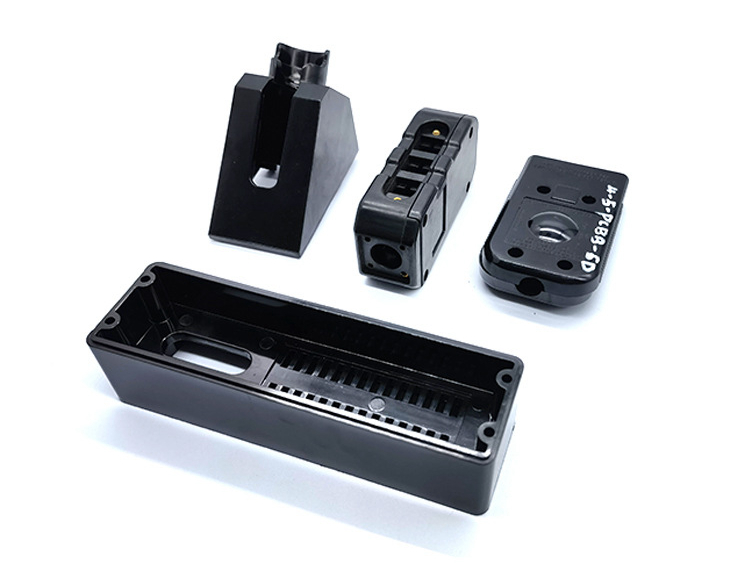
How Does Insert Molding Improve Component Reliability?
Insert molding can improve component reliability by placing a stronger or more functional insert inside the molded plastic during the molding process. The insert can support threads, electrical contact, wear resistance, load transfer, alignment, or reinforcement where plastic alone may not meet the part requirement.
Reliability depends on how the insert and plastic work together. The molded resin must hold the insert in the correct position, surround the insert without voids or cracks, and maintain the required function during assembly and use. If the insert shifts, rotates, pulls out, or cracks the surrounding resin, the insert molded part may fail even when the part looks acceptable.
The RFQ should identify the reliability problem directly. A threaded insert may need torque and pull-out resistance. A terminal may need position and electrical continuity. A bushing may need wear control and alignment. A reinforcement insert may need load transfer without local cracking.
Which Reliability Requirements Should Be Defined Before Quotation?
Reliability requirements should be defined before quotation because insert molding changes both the part structure and the production process. The supplier needs to understand which insert features are critical and how those features will be inspected.
Reliability Requirement | Insert Molding Risk | RFQ Detail Needed |
|---|---|---|
Threaded assembly reliability | Insert pull-out, thread damage, or insert rotation | Thread standard, torque requirement, pull-out requirement, and assembly method |
Electrical connection reliability | Terminal shift, flash on contact area, or insulation issue | Terminal drawing, exposed contact area, continuity check, and position tolerance |
Wear surface reliability | Bushing misalignment, uneven resin support, or poor mating fit | Datum surfaces, mating part, wear condition, and critical dimensions |
Structural reinforcement reliability | Stress concentration, cracking, or weak resin coverage | Load direction, insert geometry, wall thickness, and validation requirement |
A reliable insert molded design starts with a clear function for each insert. Without that function, tooling, material, and inspection choices become assumptions.
How Do Insert and Resin Materials Affect Reliability?
Insert and resin materials affect reliability because metal, plastic, and resin materials respond differently to heat, load, moisture, chemicals, and assembly stress. Material mismatch can create cracking, looseness, corrosion risk, or dimensional variation.
Common plastic materials include ABS, nylon PA, PC, PP, POM, PPS, and PEEK depending on strength, heat exposure, dimensional stability, and chemical environment. Inserts may be brass, steel, stainless steel, aluminum, copper alloy, or engineered plastic depending on thread, contact, wear, or reinforcement needs.
Material review should include molding temperature, insert surface condition, resin flow, wall thickness, and use environment. A reliable material pairing is one that supports the part function and can be processed repeatably through plastic injection molding with the insert in place.
What Design Features Keep Inserts Reliable?
Reliable insert molded parts need geometry that holds the insert mechanically and distributes stress into the plastic. Insert retention should not depend only on a smooth surface surrounded by resin unless the load is very low and the application allows it.
Knurls, grooves, shoulders, flanges, holes, undercuts, and surface features can help the resin lock around the insert. Adequate wall thickness around the insert helps reduce cracking and sink risk. Smooth transitions help avoid stress concentration. Clear datum surfaces help hold the insert in the tool during molding.
Insert Molding Design Feature | Reliability Function | Failure Mode Controlled |
|---|---|---|
Knurl or groove on insert | Improves mechanical retention in the molded resin | Insert pull-out or rotation |
Shoulder or flange | Controls axial position and load distribution | Insert height variation or local cracking |
Controlled wall thickness | Supports resin flow and stress distribution | Sink, voids, cracking, or weak knit lines |
Defined shutoff and holding surface | Keeps the insert stable during molding | Insert shift, flash, or position error |
Which Production Risks Affect Insert Molded Reliability?
Production risks include missing inserts, reversed inserts, insert contamination, insert movement, damaged threads, resin flash on functional surfaces, and inconsistent resin coverage. These risks should be controlled before production release.
The tool must hold the insert securely while resin flows around it. The molding process must fill around the insert without excessive pressure on the insert or incomplete packing around critical features. Insert loading must be repeatable, especially when the part contains multiple inserts or insert orientation matters.
For applications in automotive, consumer electronics, medical device, or industrial products, the buyer should define product-specific validation requirements. Neway can review manufacturability and process control, while final application validation remains tied to the buyer's specification.
How Should Insert Molded Reliability Be Inspected?
Reliability inspection should match the insert function. A threaded insert may need position, thread quality, torque, and pull-out checks. An electrical terminal may need position, continuity, insulation, and exposed contact review. A bushing may need inner diameter, alignment, and mating fit checks.
Visual inspection should cover flash, exposed sharp edges, sink, cracks, void indicators, contamination, and resin coverage. Dimensional inspection should cover datum alignment, insert height, concentricity, hole location, and critical assembly dimensions. Functional inspection should follow the buyer's drawing or validation plan.
The RFQ should state whether the buyer needs sample reports, dimensional inspection, functional checks, or specific production control records. Clear criteria help avoid late-stage disputes about whether an insert molded part is reliable enough for release.
When Is Insert Molding Not the Best Reliability Route?
Insert molding may not be the best reliability route when the insert must be replaceable, when the insert material cannot tolerate molding conditions, or when the plastic around the insert cannot provide enough support. In those cases, post-mold insertion, mechanical fastening, adhesive bonding, or a different part architecture may be more suitable.
Insert molding can also be challenging when inserts are very small, very thin, difficult to orient, sensitive to heat, or located close to thin plastic walls. Buyers should review those conditions early because they can affect tool design, insert loading, sampling, and inspection cost.
The decision should be practical: choose insert molding when integrated insert location and molded retention improve reliability; compare other routes when serviceability, flexibility, or simpler assembly is more important.
What Neway Precision Reviews for Component Reliability?
Neway Precision reviews insert molded component reliability by connecting insert material, resin grade, load direction, insert retention, tooling concept, molding sequence, and inspection criteria. The review focuses on whether the insert can be placed and held consistently through sampling and production.
A complete RFQ should include the part drawing, insert drawing, resin requirement, insert material, critical dimensions, assembly load, operating environment, production volume, and acceptance criteria. This information helps compare insert molding with post-mold insertion, overmolding, heat staking, adhesive bonding, or another manufacturing route.
Reliable insert molding starts with a clear definition of what the insert must do. Once the insert function is clear, the material, geometry, tooling, and inspection decisions can be reviewed with less guesswork.
Related FAQs
How does insert molding improve the reliability of components?
What types of materials are most suitable for insert molding?
Are there limitations or challenges associated with insert molding?
What are the common challenges in insert molding and how can they be resolved?
What is insert molding and how does it differ from traditional molding processes?