What Is Insert Molding, and How Does It Simplify Manufacturing?
Insert molding is a plastic injection molding process that places a preformed insert inside the mold before resin is injected around the insert to form one integrated component. This FAQ explains how insert molding can simplify manufacturing for threaded bosses, terminals, connector housings, bushings, shafts, pins, reinforced brackets, and metal-plastic assemblies. The practical RFQ problem is deciding whether molded-in inserts can reduce secondary assembly while still meeting load, alignment, electrical, cosmetic, and inspection requirements.
What Is Insert Molding, and How Does It Simplify Manufacturing?
Insert molding is a hybrid molding process in which a metal, ceramic, plastic, or electronic insert is loaded into a mold and then surrounded by molten plastic. After cooling, the insert and molded resin become a single component with the insert held by molded geometry, material shrinkage, mechanical locking, or a combination of retention features.
Insert molding can simplify manufacturing when it replaces separate insert installation, adhesive bonding, screws, clips, press-fitting, heat staking, or manual alignment. The process does not remove the need for engineering control; it moves the main control points into mold design, insert loading, resin flow, and post-molding inspection.
What happens during the insert molding process?
The insert molding process starts with insert preparation. Inserts may be machined, stamped, cast, molded, or made by metal injection molding. The insert is then placed into the mold manually or by automation. Plastic resin is injected around the insert, the part cools, and the molded component is ejected and inspected.
Each stage affects manufacturing reliability. Insert cleanliness, insert orientation, mold location features, resin temperature, injection pressure, cooling, and ejection can all affect retention, flash, dimensional accuracy, and surface appearance.
Which assembly steps can insert molding reduce?
Insert molding can reduce separate installation steps when a threaded insert, terminal, bushing, pin, shaft, contact, or reinforcement feature would otherwise be installed after molding. It can also reduce fixture use, alignment checks, adhesive curing, hardware handling, and part-number management when the product design supports molded-in integration.
For buyers, the relevant question is whether the insert must be installed at a precise location and retained for the full service life. If the insert can be added later without alignment, load, sealing, or quality problems, a traditional post-installation method may remain practical.
How does insert molding simplify part count and supply-chain control?
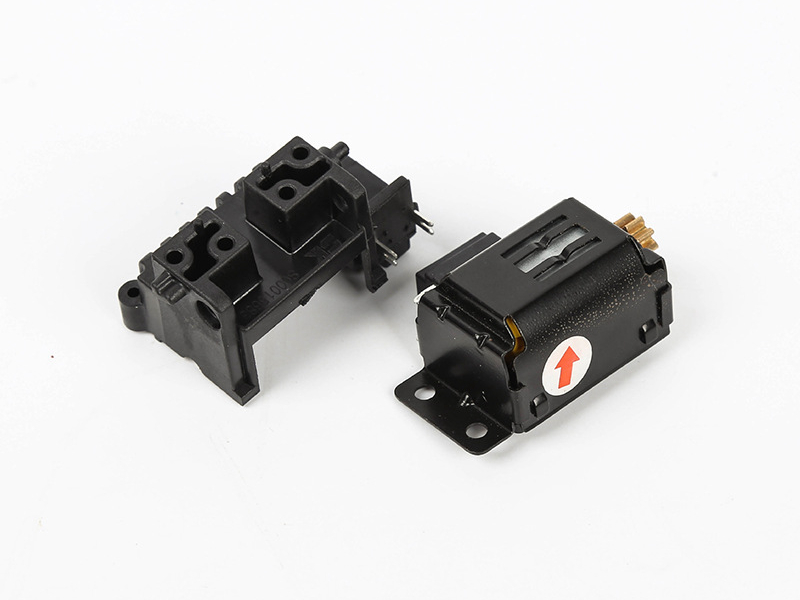
Insert molding can combine several separate components into one supplied part. A connector housing may include terminals, a plastic bracket may include threaded inserts, and a control component may include a metal shaft or bushing. Reducing separate items can simplify purchasing, receiving inspection, line-side handling, and assembly documentation.
The supply chain still needs control over insert sourcing and quality. Buyers should clarify whether inserts are supplied by the buyer or sourced by the molder. Insert drawings, material certificates when required, plating details, packaging method, and incoming inspection criteria should be defined before production.
How does insert molding improve repeatability?
Insert molding can improve repeatability when the mold locates the insert more consistently than a manual assembly process. The mold can control insert position, surrounding plastic geometry, and relationship between insert and molded features. This can be useful for connectors, switches, threaded bosses, and alignment features.
Repeatability depends on stable insert dimensions, mold holding features, resin flow, and inspection checks. Buyers should define critical datums, exposed insert surfaces, functional dimensions, and acceptance tests so the manufacturer can design a process that controls the right features.
How does insert molding compare with overmolding and traditional assembly?
Insert molding usually refers to molding plastic around a preformed insert. Overmolding usually refers to molding one material over a previously molded substrate or component, often to add soft-touch, sealing, grip, or protective function. Traditional assembly installs separate parts after molding by bonding, fastening, pressing, welding, or clipping.
The right method depends on function. Insert molding fits molded-in hardware, terminals, and reinforcement. Overmolding fits multi-material surfaces and soft-contact features. Traditional assembly fits serviceable or changing designs where post-mold flexibility matters.
Manufacturing route | What it integrates | Buyer decision it supports | Main RFQ risk to define |
|---|---|---|---|
Insert molding | Metal, ceramic, electrical, or plastic inserts inside molded resin | Reduce secondary insert installation and improve insert location | Insert shift, flash, retention, pull-out, torque, electrical exposure |
Overmolding | Second material over a substrate or base part | Add grip, sealing, protection, cushioning, or appearance features | Material bonding, soft-material flow, surface quality, shrinkage |
Traditional assembly | Separate parts joined after manufacturing | Allow repairability, design flexibility, or lower initial tooling complexity | Alignment variation, loose hardware, adhesive control, extra handling |
What RFQ information is needed for an insert molding quote?
A useful insert molding RFQ should include molded part CAD, insert drawings, resin material, insert material, annual volume, prototype quantity, insert supply responsibility, exposed surfaces, critical dimensions, load conditions, torque or pull-out targets, electrical requirements, cosmetic standards, and inspection methods. Buyers should also explain the current assembly method if the project is being converted from a traditional route.
This information helps the manufacturer decide whether insert molding truly simplifies the manufacturing route. It also helps separate real assembly simplification from cases where insert molding would only add tooling complexity without solving a functional or production problem.
Related FAQs
What is insert molding and how does it differ from traditional molding processes?
How does insert molding compare to traditional manufacturing methods?
What is the difference between insert molding and overmolding?
Can insert molding reduce production costs compared to traditional methods?
What are the main challenges when implementing insert molding?