What Are the Materials Available for 3D Printing Service?
3D printing service material selection depends on the additive manufacturing process, the prototype part type, the required test, and the buyer's RFQ decision. The practical RFQ problem is choosing a printable material that can prove the needed function, appearance, fit, thermal behavior, or mechanical risk without pretending that every printed material behaves like a molded, machined, cast, or stamped production part.
What material families are available for 3D printing service?
Common 3D printing material families include thermoplastics, photopolymer resins, elastomer-like materials, metal powders, and ceramic or ceramic-filled materials depending on the selected printing process and supplier capability. Buyers should confirm actual material availability before quotation because each 3D printing route has its own material set.
The material decision should start with the prototype's job. A visual prototype may need color, smoothness, and detail. A functional prototype may need strength, temperature resistance, thread performance, sealing behavior, or assembly fit. A pre-production sample may need inspection data, secondary machining, surface finishing, or material documentation.
3D printing material family | Common examples or options | Prototype question it can support | RFQ risk to confirm |
|---|---|---|---|
General thermoplastics | PLA, ABS, PETG, polypropylene-like materials | Form, fit, packaging, fixture, and early concept checks | Heat resistance, impact behavior, surface finish, and dimensional stability |
Engineering thermoplastics | Nylon or PA, PC, PEI-like high-temperature materials where available | Functional prototypes, brackets, housings, clips, and durable test parts | Moisture absorption, build orientation, warpage, and material data |
Flexible or elastomer-like materials | TPU and flexible resin-like options | Gaskets, grips, protective covers, seals, and flexible fit checks | Hardness, compression behavior, tear resistance, and aging behavior |
Photopolymer resins | Rigid, tough, clear, high-detail, or temperature-resistant resins | Fine detail, appearance models, small housings, and fit checks | Curing behavior, brittleness, UV exposure, and long-term stability |
Metal materials | Stainless steel, aluminum, titanium, and other printable metals where available | Metal functional prototypes, lightweight parts, thermal parts, and load tests | Build direction, heat treatment, density, surface roughness, and inspection method |
Ceramic or ceramic-filled materials | Ceramic-like or filled systems depending on process availability | Heat exposure, insulation, wear, or appearance samples | Shrinkage, brittleness, firing or curing route, and tolerance capability |
Composite or filled polymers | Glass-filled, carbon-filled, mineral-filled, or reinforced materials where available | Stiffer prototypes, lightweight structures, and functional test samples | Anisotropy, surface finish, tool wear for post-machining, and strength direction |
When should buyers use plastic materials for 3D printed prototypes?
Plastic 3D printing materials are often suitable for appearance models, ergonomic samples, enclosure prototypes, brackets, clips, fixtures, covers, and early assembly checks. The buyer should choose the plastic material based on the test condition rather than only the material name.
PLA and similar easy-printing plastics may support fast shape review and packaging checks, but those materials may not represent a final engineering plastic. ABS, PETG, nylon, polycarbonate, TPU, and other engineering or flexible options can support more demanding functional checks when the printing route and material data match the application.
The RFQ should state whether the plastic prototype must resist heat, impact, moisture, chemicals, bending, repeated assembly, or outdoor exposure. These requirements affect material selection, print orientation, wall thickness, infill or density planning, and whether secondary finishing or post-machining is needed.
When should buyers consider metal materials for 3D printing service?
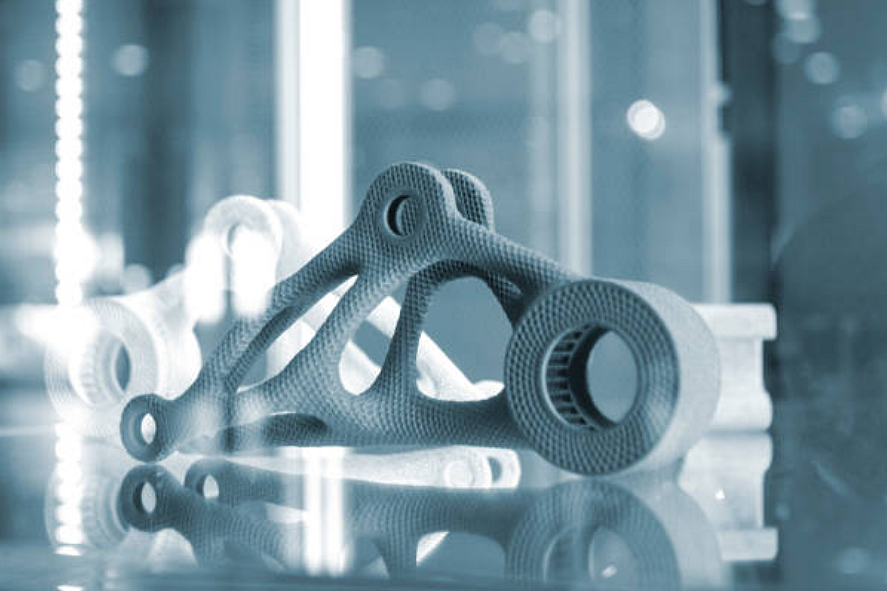
Metal 3D printing materials should be considered when the prototype needs metal behavior, complex geometry, internal channels, lightweight structures, or features that are difficult to machine from solid stock. Stainless steel, aluminum, titanium, and other printable metals may be relevant depending on the selected process and supplier capability.
Metal printed prototypes often need careful planning for build orientation, support removal, heat treatment, surface finishing, and inspection. A printed metal part may also need CNC post-machining on sealing faces, threaded holes, bearing seats, datum surfaces, or precision interfaces.
Buyers should not select metal 3D printing only because the final part is metal. If the prototype requires dense stock material, machined tolerance, or a production-like CNC surface, CNC machining may be a better validation route. If the prototype requires complex internal geometry or shape freedom, metal 3D printing may answer the buyer's risk more directly.
How should buyers evaluate resins, ceramics, and specialty 3D printing materials?
Photopolymer resins are useful when the prototype needs fine detail, smooth appearance, small features, clear sections, or display quality. Resin parts should be evaluated carefully for curing behavior, brittleness, heat resistance, UV exposure, and long-term stability if the part will be tested beyond visual or fit review.
Ceramic, ceramic-filled, and composite materials may support special requirements such as heat exposure, insulation, stiffness, wear behavior, or specific appearance. These materials are process-dependent, so the buyer should confirm printability, post-processing, shrinkage, finishing, and measurement expectations before approving the quote.
Specialty materials should be tied to a specific test. If the material is only selected because it sounds advanced, the prototype may become more expensive without improving the engineering decision. The RFQ should explain the property that must be validated.
How should the prototype function guide 3D printing material selection?
The prototype function should guide the material selection before the buyer requests a quote. A visual prototype needs different material properties from a fixture, a flexible gasket sample, a metal bracket, a heat-exposed component, or a fluid-flow test model.
For fit and assembly checks, dimensional stability and tolerance expectations may matter more than ultimate strength. For functional testing, the buyer should evaluate mechanical load, thermal exposure, chemical exposure, wear, electrical behavior, and repeated assembly. For customer-facing samples, color, surface finish, layer visibility, and coating compatibility may matter more than strength.
When the printed prototype will influence production tooling, the buyer should tell the supplier the future process. A prototype that stands in for an injection molded part, CNC machined part, die cast part, or sheet metal part may need different wall thickness, surface finish, hole planning, and inspection notes.
What material information should buyers provide in a 3D printing RFQ?
A strong 3D printing RFQ should include the 3D CAD file, quantity, target material or material family, prototype purpose, functional surfaces, required color or appearance, mechanical test needs, thermal or chemical exposure, dimensional inspection requirements, secondary operations, and any approved substitute materials.
Buyers should also state whether the prototype needs post-processing such as support removal, curing, heat treatment, sanding, bead blasting, polishing, painting, coating, sealing, tapping, insert installation, or CNC machining of critical surfaces. Post-processing can decide whether the selected material is practical for the prototype's final use.
The safest material selection method is to match the printable material to the exact prototype risk. A printed material does not need to prove every production requirement, but the printed material must prove the requirement that the buyer is using the prototype to evaluate.
Related FAQs