Expanding Industry Applications of 3D Printed Parts in Modern Manufacturing
3D Printed Parts Application Decision: This article explains how buyers can evaluate 3D printing prototyping for modern manufacturing parts such as concept prototypes, fit-check models, jigs, fixtures, ducts, housings, lightweight structures, medical device prototypes, aerospace-related development parts, and low-volume custom components. The practical RFQ problem is deciding whether printing process, material, build orientation, dimensional accuracy, surface finish, post-processing, and validation evidence can support the intended application.
How Are 3D Printed Parts Expanding In Manufacturing?
3D printed parts are expanding in manufacturing because additive manufacturing can build parts directly from digital models without hard tooling. This makes 3D printing useful for design validation, functional prototypes, assembly fixtures, custom tooling, lightweight geometry, internal channels, and limited production parts when the material and validation plan are suitable.
The process is not a universal replacement for CNC machining, injection molding, die casting, or stamping. 3D printing has strengths in iteration speed and geometry freedom, but printed parts still need review for material behavior, anisotropy, surface roughness, dimensional variation, support removal, porosity, and post-processing.
Buyers should define whether the 3D printed part is a visual model, fit-check sample, functional prototype, manufacturing aid, or production-intent part. Each application has a different inspection level and risk profile.
Which 3D Printing Materials And Processes Fit Industrial Parts?
Material and printing process should be selected together. FDM, SLA, SLS, MJF, DMLS, SLM, and other additive processes create different surface quality, layer behavior, strength direction, heat resistance, and post-processing needs.
3D Printing Material Or Process | Typical Manufacturing Use | RFQ Confirmation Needed |
|---|---|---|
Concept housings, fit-check prototypes, fixtures, and general plastic samples | Confirm heat exposure, surface finish, layer direction, and functional load. | |
Durable plastic prototypes, enclosures, and engineering samples subject to buyer validation | Confirm impact requirement, transparency need, tolerance priority, and post-processing. | |
Flexible prototypes, seals, grips, cushioning features, and ergonomic samples | Confirm hardness, flexibility, tear risk, support marks, and functional test method. | |
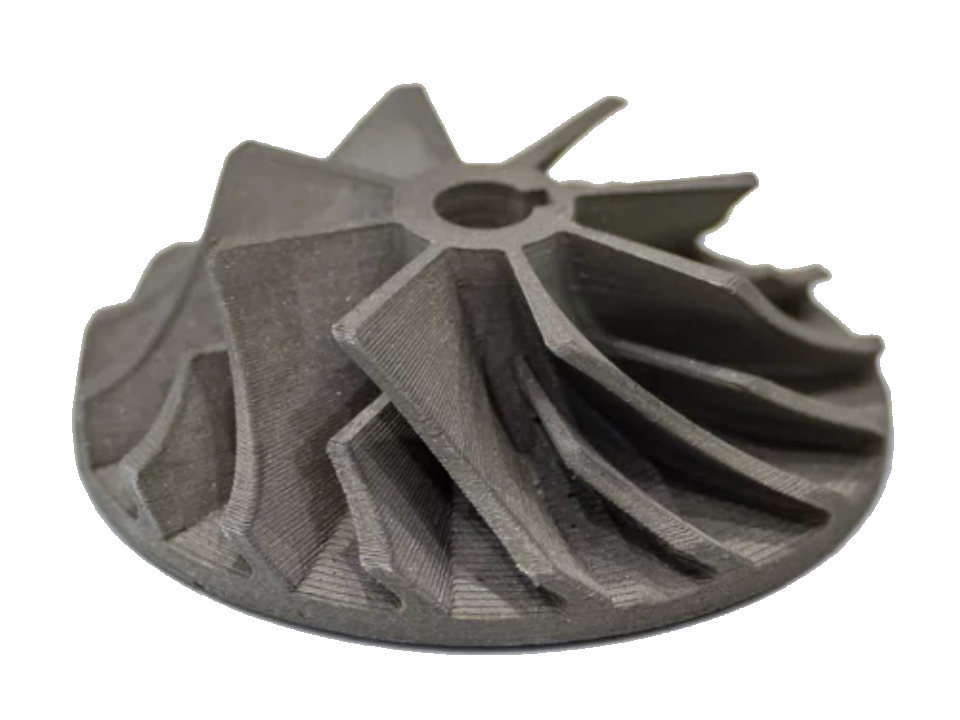
Metal powder bed fusion | Complex metal prototypes, lattice structures, channels, heat exchangers, and development parts | Confirm material, build orientation, support removal, heat treatment, machining, and NDT needs. |
Inconel 718 or other nickel alloy printing | Heat-resistant development parts and turbine-related or energy-related prototypes | Confirm alloy standard, heat treatment, surface finishing, and buyer qualification criteria. |
Lightweight prototypes, thermal components, brackets, and complex metal development parts | Confirm alloy, density requirement, machining allowance, and inspection evidence. |
Buyers should not select a material name only because it appears familiar. The same CAD geometry can behave differently depending on printing process, layer orientation, heat treatment, and finishing route.
Which Industries Use 3D Printed Parts And What Must Be Validated?
3D printing supports many industries, but each industry uses printed parts for different reasons. Some use additive manufacturing for prototypes, some for jigs and fixtures, and some for selected production-intent parts after validation.
Industry Or Application | Common 3D Printed Part | Buyer Validation Requirement |
|---|---|---|
Aerospace-related development | Lightweight brackets, ducts, fixtures, test parts, and complex metal prototypes | Define material traceability, NDT, heat treatment, inspection, and qualification responsibility. |
Medical and laboratory device development | Ergonomic prototypes, housings, guides, fixtures, and device development samples | Define cleaning exposure, biocompatibility requirements if applicable, and buyer validation criteria. |
Automotive and e-mobility | Fit-check parts, airflow ducts, brackets, thermal components, fixtures, and test hardware | Define heat exposure, vibration, dimensional fit, and test plan. |
Electronics and consumer products | Enclosure prototypes, button samples, brackets, cable routing guides, and assembly fixtures | Define cosmetic surfaces, snap-fit behavior, screw boss strength, and assembly checks. |
Industrial equipment and automation | Jigs, end-of-arm tooling, gauges, covers, manifolds, and replacement development parts | Define load case, wear contact, chemical exposure, and inspection method. |
For regulated or safety-related uses, printed parts should be evaluated only against buyer-defined specifications and validation plans. A successful prototype does not automatically approve the same part for production use.
What Part Types Benefit Most From 3D Printing?
3D printing is most useful when the part benefits from fast iteration, tooling-free production, complex geometry, customization, or reduced assembly. It is also useful when the buyer needs to test design intent before committing to molding, casting, or machining tooling.
Part Type | Why 3D Printing May Fit | Manufacturing Risk To Review |
|---|---|---|
Concept and fit-check prototypes | Fast design iteration and assembly review before tooling or machining release | Printed material may not match final production material behavior. |
Jigs, fixtures, and gauges | Custom shop-floor aids can be built quickly for assembly or inspection support | Review wear, dimensional stability, heat exposure, and calibration method. |
Internal channels and ducts | Additive manufacturing can create curved passages that are difficult to machine | Confirm cleanout, surface roughness, leak test, and inspection access. |
Lattice or lightweight structures | Material can be placed where stiffness or weight reduction is required | Confirm load direction, fatigue concern, print orientation, and validation method. |
Custom ergonomic parts | Low-volume personalized or user-fit components can be produced without hard tooling | Confirm surface finish, cleaning, wear, and acceptance criteria. |
The part type should drive process selection. A cosmetic prototype and a pressure-containing metal part require very different levels of material review and testing.
What Limitations Should Buyers Control In 3D Printed Parts?
3D printing limitations include anisotropic strength, layer lines, surface roughness, support marks, internal porosity, residual stress, warping, powder removal, dimensional variation, moisture sensitivity, and post-processing dependence. These limitations do not make the process unsuitable, but they must be matched to the application.
3D Printing Limitation | Application Risk | Buyer Control Point |
|---|---|---|
Layer direction | Mechanical behavior may vary by orientation | Define load direction and test orientation. |
Surface roughness | Can affect sealing, sliding, cosmetic appearance, and coating | Define roughness requirement and finishing process. |
Support removal | Can leave marks or restrict internal features | Identify critical surfaces and inaccessible passages. |
Porosity or incomplete fusion in metal parts | Can affect strength behavior, leak resistance, and fatigue-sensitive areas | Define density, CT, X-ray, sectioning, or pressure test needs if required. |
Dimensional variation | Can affect assembly fit, holes, threads, and mating surfaces | Define machined surfaces and post-print inspection method. |
Buyers should define which surfaces and features are critical before printing. This helps decide build orientation, support placement, machining allowance, and inspection requirements.
When Should Buyers Compare 3D Printing With CNC Or Rapid Molding?
3D printing should be compared with CNC machining prototyping, rapid molding, injection molding, casting, and sheet metal fabrication when the part may move from prototype to production.
Manufacturing Route | Best Fit | When To Choose Another Route |
|---|---|---|
3D printing | Design iteration, complex geometry, fixtures, low-volume custom parts, and prototype validation | When production material behavior, surface finish, or repeatability requires another process. |
CNC machining | Machined datum surfaces, precise holes, metal or plastic billet parts, and functional prototypes | When the geometry has internal channels, lattice structures, or needs faster design iteration. |
Rapid molding | Prototype or pilot molded parts using production-intent resin | When tooling-free iteration is still more important than molded material behavior. |
Injection molding or die casting | Stable production parts with tooling investment and repeatable volume | When the design is still changing or quantity does not justify tooling. |
The buyer should plan the transition early. A 3D printed prototype may confirm geometry, but production may require molding, casting, machining, or a hybrid route.
Which Post-Processing And Inspection Steps Matter?
3D printed parts often need post-processing. Common steps include support removal, sanding, blasting, dyeing, painting, polishing, sealing, heat treatment, stress relief, HIP for selected metal parts, CNC machining, tapping, inserts, coating, cleaning, and assembly.
Inspection evidence may include dimensional reports, first article inspection, CMM reports, CT or X-ray for selected metal parts, density checks, hardness tests, surface roughness reports, material certificates, heat-treatment records, leak tests, pressure tests, and functional assembly trials.
The inspection plan should match the application. A visual prototype may need only fit and appearance review. A metal part with internal channels may need cleanout and pressure testing. A fixture may need dimensional verification and repeatability checks.
What Should A 3D Printing RFQ Include?
A useful 3D printing RFQ should include the CAD model, drawing, material requirement, process preference if known, intended use, load direction, critical surfaces, surface finish, dimensional requirements, post-processing, quantity, and inspection evidence. The RFQ should state whether the part is visual, functional, prototype, fixture, or production-intent.
RFQ Information | Why It Matters For 3D Printed Parts | Buyer Confirmation Needed |
|---|---|---|
CAD model and drawing | Defines geometry, critical dimensions, datum surfaces, and post-machined features | Confirm revision, critical dimensions, and inspection method. |
Material and process | Controls strength direction, surface quality, temperature behavior, and post-processing | State material grade, process preference, and final use environment. |
Build orientation and critical surfaces | Affects support marks, layer direction, roughness, and dimensional variation | Identify load direction, visible surfaces, sealing areas, and machined surfaces. |
Post-processing scope | Controls final finish, strength behavior, dimensions, and appearance | List heat treatment, machining, polishing, coating, cleaning, or assembly needs. |
Inspection and validation | Connects printed part performance to measurable evidence | State whether FAI, CMM, CT, density, roughness, leak, or functional tests are required. |
3D printed parts are expanding across modern manufacturing because they help buyers test geometry, function, and production concepts earlier. The strongest applications define material behavior, process limits, post-processing, and validation before the printed part is treated as production-ready.
Related FAQs