What are the main differences between 3D printing and CNC machining for automotive prototypes?
The main difference between 3D printing and CNC machining for automotive prototypes is how each process creates geometry and represents final part performance. For buyers quoting automotive housings, brackets, ducts, fixtures, sensor mounts, battery enclosure parts, and drivetrain test components, the practical RFQ question is whether 3D printing prototyping or CNC machining prototyping will give the right balance of speed, material behavior, dimensional control, surface finish, and functional test reliability.
What is the main difference between 3D printing and CNC machining?
3D printing builds the prototype layer by layer from digital data, while CNC machining removes material from solid stock. This difference affects geometry freedom, material choices, tolerances, surface finish, mechanical properties, and post-processing.
The buyer decision should start with the test objective. A form-fit prototype, airflow housing, internal-channel sample, load-bearing bracket, sealing surface, or threaded metal component may point to different routes even when the CAD model is the same.
Buyer decision factor | 3D printing prototyping | CNC machining prototyping | RFQ detail to provide |
|---|---|---|---|
Geometry complexity | Strong for complex internal shapes, ducts, lattices, and fast revisions | Strong for accessible machined features, flat datums, holes, pockets, and threads | CAD model, internal channels, assembly constraints |
Material representation | Depends on printable polymer or metal material and post-processing | Uses stock material closer to many production alloys or engineering plastics | Required grade, substitute limits, test environment |
Dimensional control | Can be affected by layer orientation, shrinkage, build size, and finishing | Often better for tight datums, mating features, threads, and sealing faces | Tolerance table, datums, critical dimensions |
Surface finish | May need sanding, machining, coating, or sealing | Can provide machined surfaces and controlled roughness | Cosmetic faces, sealing surfaces, roughness requirement |
Functional testing | Useful for early fit, packaging, airflow, ergonomic, and complex-shape review | Useful for load, vibration, thermal, wear, and assembly validation | Test load, temperature, fluid exposure, inspection report |
When should buyers choose 3D printing for automotive prototypes?
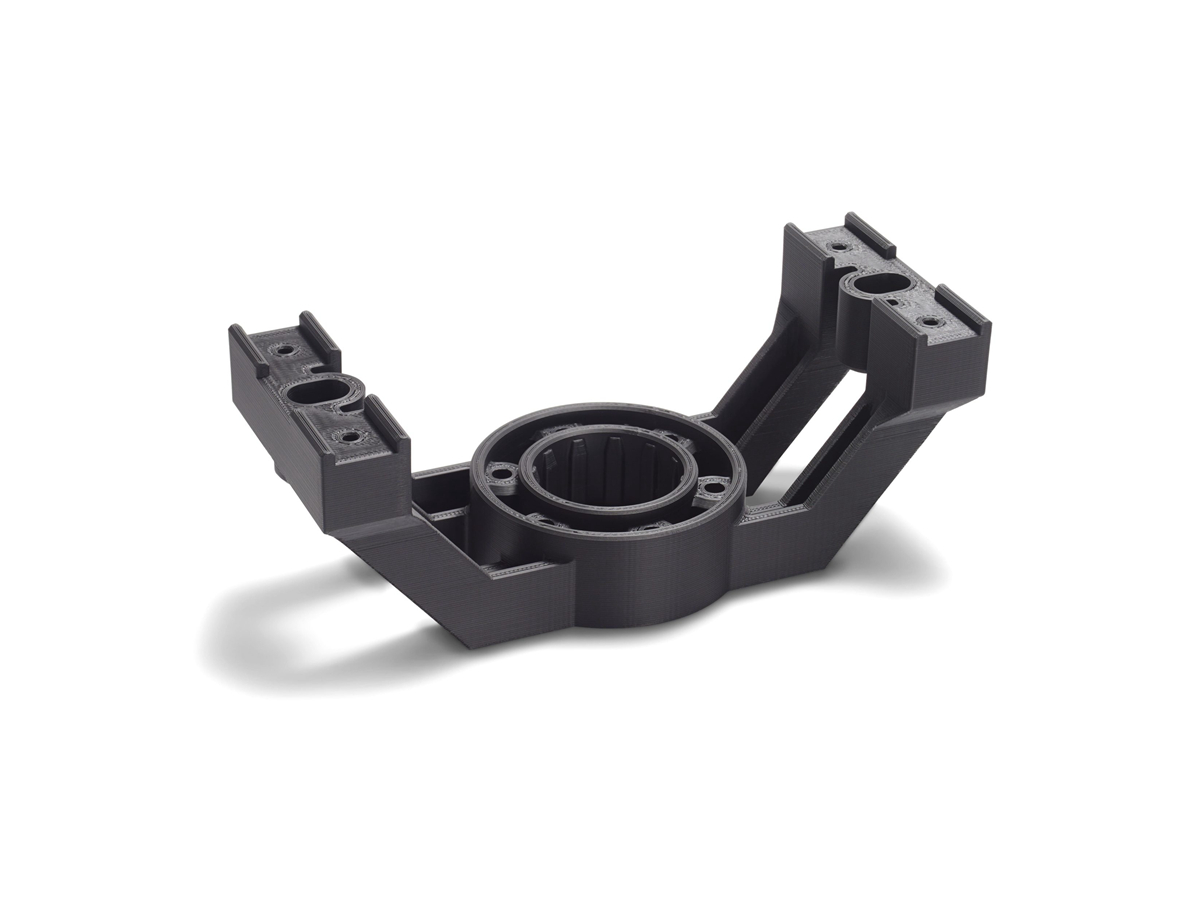
Buyers should choose 3D printing when geometry complexity, fast iteration, part consolidation, internal channels, low quantity, or early design learning matters more than production-equivalent material behavior. Printed prototypes can help evaluate packaging, airflow paths, mounting envelopes, ducts, covers, housings, and ergonomic forms.
The RFQ should still define the required printing material, build orientation concerns, surface finish, heat exposure, and load condition. A 3D printed part can be useful for functional testing only when the test does not demand material behavior that the printed material cannot represent.
When should buyers choose CNC machining for automotive prototypes?
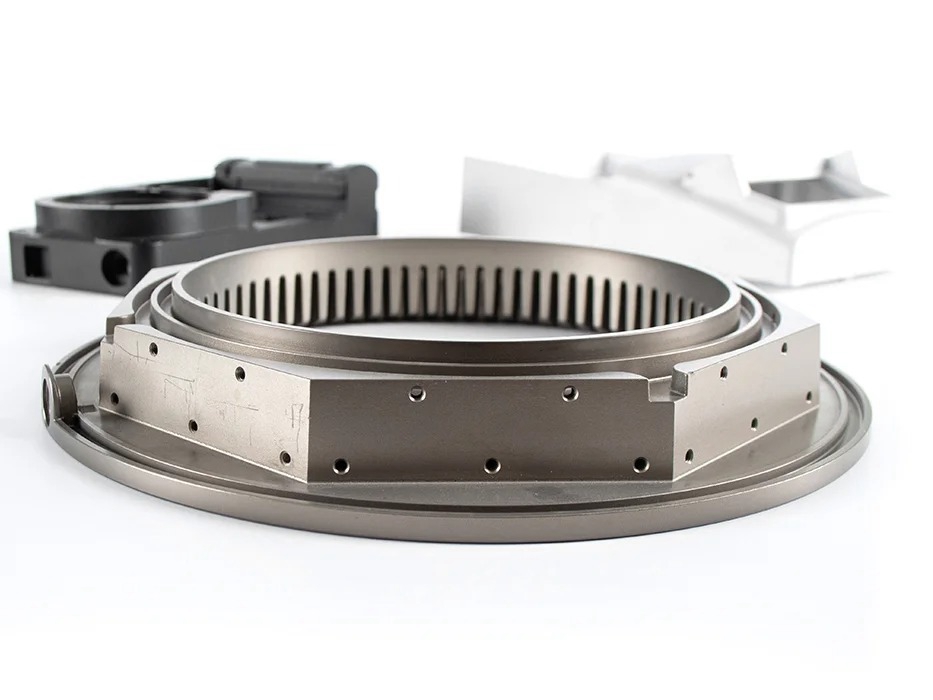
Buyers should choose CNC machining when the prototype needs machined datums, threaded holes, tight mating features, flat sealing faces, metal strength, predictable stock material, or stronger dimensional repeatability. CNC machining is often suitable for brackets, housings, jigs, fixtures, drivetrain test parts, aluminum prototypes, stainless steel parts, and engineering plastic components.
The RFQ should identify critical surfaces and features. CNC machining may be slower for enclosed internal channels or very complex organic shapes, but CNC machining can better represent many production materials and functional surfaces.
How do materials compare between printing and machining?
Material comparison is often the most important engineering difference. CNC machining uses billet, bar, plate, or block stock, so the prototype can often use a material close to the intended automotive grade. 3D printing uses printable polymers or metal powders, so strength, heat resistance, surface texture, and anisotropy may differ from the final production material.
Buyers should state whether material equivalence is required or whether a substitute material is acceptable. A substitute may be enough for packaging checks, but durability, thermal, vibration, or sealing tests usually need stricter material alignment.
How do tolerances and surface finish affect the choice?
Tolerances and surface finish can move a project toward CNC machining when assembly datums, bearing seats, threads, O-ring grooves, sealing faces, or mounting holes control the test result. 3D printing can require secondary machining or finishing when printed texture or dimensional variation affects fit.
The buyer should define which features are critical to function. Noncritical external shape may be printed, while critical holes, sealing faces, or threaded inserts may need machining after printing or a full CNC route.
How does each process affect functional test reliability?
Functional test reliability depends on whether the prototype represents the part feature being tested. A printed duct can be useful for airflow routing if temperature and pressure are moderate. A machined aluminum bracket may be better for load, vibration, and assembly validation because the stock material and machined datums are closer to the test requirement.
For regulated or safety-related automotive systems, prototype results should be treated as engineering evidence, not final product approval. Final validation remains the responsibility of the buyer or system owner using the full assembly and required test standard.
Can 3D printing and CNC machining be combined?
Yes. A hybrid route can use 3D printing for complex geometry and CNC machining for critical surfaces, holes, threads, or sealing features. This approach can be useful when an automotive prototype has complex internal forms but still needs precise mating interfaces.
Buyers should call out the features that must be machined after printing. This helps the supplier plan allowances, datum strategy, fixturing, and inspection before the prototype is built.
What RFQ details decide the best prototype route?
A clear automotive prototype RFQ should include CAD files, drawings, quantity, material grade, allowed substitutes, tolerance requirements, critical datums, surface finish, heat exposure, vibration or load condition, fluid contact, assembly interfaces, finishing, and inspection report needs. These details let the supplier choose between printing, machining, or a combined route.
The best buyer decision is to select the process by test risk. Use 3D printing when design learning and complex geometry matter most, use CNC machining when material behavior and precision features matter most, and use both when the prototype needs both geometry freedom and controlled interfaces.
Related FAQs
How long does it typically take to produce rapid prototypes for functional automotive testing?
Is CNC machining or 3D printing better for rapid metal prototypes?
What files and specifications are needed for custom 3D prototyping services?
What is functional prototype in rapid prototyping manufacturing?
What tests should be performed on functional prototype parts?
What information should buyers provide for an accurate prototype quote?