How much cost reduction can manufacturers typically expect from implementing over-molding?
Manufacturers should not expect a universal cost-reduction percentage from overmolding because the savings depend on part design, production volume, material pairing, tooling investment, assembly labor, inspection requirements, and scrap risk. This FAQ explains how overmolding can reduce the total cost of overmolded grips, housings, handles, buttons, connectors, seals, and protective components when the process replaces separate assembly steps. The practical RFQ problem is determining whether the higher tooling and process-control requirements are justified by lower assembly complexity, fewer purchased parts, and more repeatable product function.
How much cost reduction can manufacturers typically expect from overmolding?
The realistic answer is that overmolding can reduce total assembled-part cost when it eliminates adhesives, screws, clips, gaskets, manual bonding, or separate soft components. The actual cost result must be calculated from the buyer's part geometry, annual volume, substrate material, overmold material, mold plan, quality requirements, and assembly method.
Buyers should compare overmolding against the current manufacturing route, not against injection molding in isolation. A single overmolded part may have a higher molding cost than a simple molded substrate, but the total program cost may improve if the overmolded part removes secondary operations, reduces handling, simplifies inventory, or improves field reliability.
Which cost categories can overmolding reduce?
Overmolding most often affects assembly cost, component count, purchased hardware, sealing operations, adhesive use, rework, and inventory management. The cost benefit is strongest when the overmolded feature performs a real function, such as grip, sealing, vibration damping, impact protection, insulation, color coding, or user comfort.
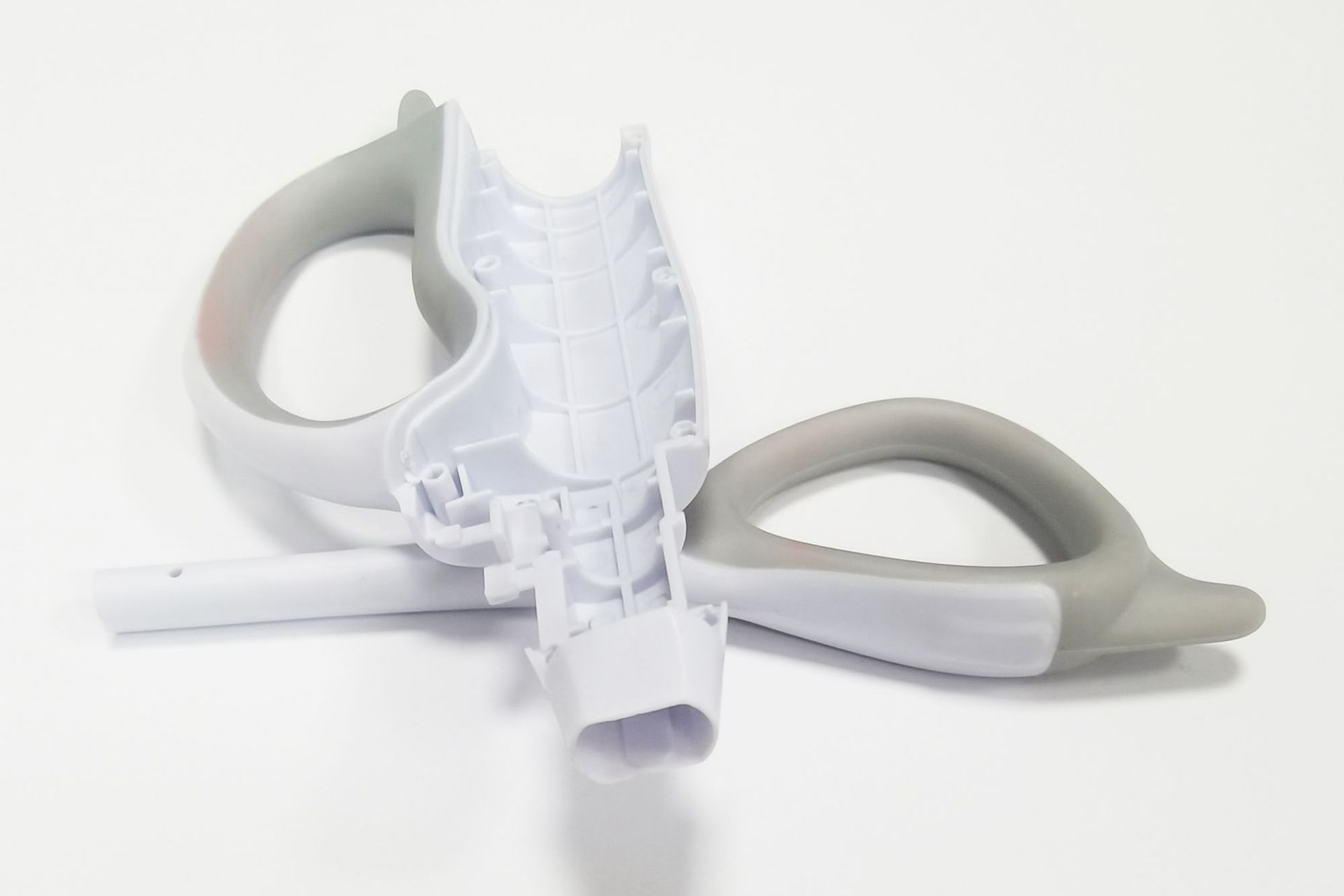
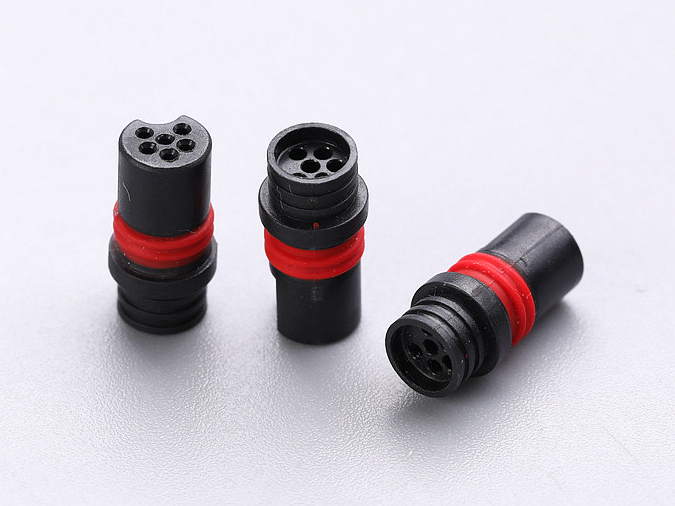
For example, a rigid plastic injection molding substrate with a soft TPE or TPV layer may replace a separate sleeve, pad, or gasket. In that case, the buyer should compare the cost of two separate components, assembly labor, scrap, and quality inspection against the cost of a two-material overmolded component.
Cost category | How overmolding may reduce cost | RFQ data needed to verify the benefit |
|---|---|---|
Assembly labor | Combines rigid and soft features into one molded component | Current assembly steps, labor time, fixtures, and reject rate |
Purchased components | Replaces separate pads, sleeves, gaskets, clips, or fasteners | Bill of materials, component prices, and supply-chain constraints |
Secondary bonding | Removes adhesive application, curing, and manual placement | Bonding method, cure time, surface preparation, and failure mode |
Inspection and rework | Reduces variation from manual assembly when the process is stable | Inspection points, cosmetic standards, dimensional requirements, and defect history |
Inventory handling | Simplifies part numbers and reduces separate stock control | Current part count, packaging method, and production scheduling method |
When does tooling investment offset overmolding cost savings?
Tooling investment can offset overmolding savings when demand is low, the design is still changing, or the part can be assembled cheaply with existing components. Overmolding usually requires more careful mold design than a single-material part because the tool must control substrate location, overmold flow, bonding surfaces, flash, cooling, and ejection.
For low-volume production, buyers should consider rapid molding prototyping or bridge tooling before committing to production tooling. For high-volume production, a higher-quality tool may be justified if it improves cycle stability, reduces variation, and avoids repeated manual assembly cost across many production lots.
How do materials affect overmolding cost reduction?
Material selection affects both the molding cost and the functional value of overmolding. Rigid substrates such as ABS, PC, nylon PA, PBT, and selected metal inserts can be combined with soft materials such as TPE, TPV, or TPU. The chosen materials must meet bonding, hardness, temperature, chemical exposure, color, and durability requirements.
A lower material price does not always lower total cost. If the overmold material causes poor adhesion, excess flash, warpage, cosmetic defects, or unstable processing, scrap and rework can erase the expected savings. Buyers should specify approved material grades, hardness range, functional surfaces, and testing requirements when requesting an overmolding quote.
How does production volume change the cost case for overmolding?
Production volume changes how tooling cost is spread across parts. Low-volume overmolding can still be useful for product validation, pilot builds, and specialized components, but the buyer may accept a higher unit cost to prove function. High-volume overmolding is more likely to justify production tooling because repeated savings in assembly, handling, and consistency can accumulate over the program life.
The volume discussion should include annual demand, launch quantity, expected product life, demand uncertainty, and design-freeze status. If the buyer expects frequent design changes, a lower-commitment tooling route may be more practical than a full production overmolding tool.
What RFQ cost model should buyers request for overmolding?
Buyers should request a cost model that separates tooling, substrate molding, overmolding, materials, insert handling, inspection, finishing, packaging, and secondary operations. The RFQ should also ask the supplier to identify which assembly steps the overmolded design can remove and which new process risks must be controlled.
A useful comparison includes the current route and the proposed overmolding route side by side. The buyer should provide CAD files, drawings, material targets, estimated annual volume, current bill of materials, known defect issues, cosmetic standards, and test requirements. This information lets the manufacturer quote overmolding as a total manufacturing decision rather than a simple piece-price substitution.
When is overmolding not a cost-reduction method?
Overmolding may not reduce cost when the product does not need integrated soft-touch function, sealing, insulation, impact protection, or assembly simplification. It may also be less suitable when bonding between materials is uncertain, the substrate cannot tolerate the overmold process temperature, or the expected quantity cannot support the tooling plan.
In those cases, separate assembly, a simpler single-material molded part, or a prototype trial may be the better first step. The cost decision should be based on total delivered function, not on the assumption that overmolding automatically makes every product cheaper.
Related FAQs
Is over-molding suitable for both low and high-volume production?
When to select overmolding for plastic injection molding projects?
How does overmolding differ from traditional injection molding?
Are there any specific design considerations to consider when planning for overmolding production?
Are there any limitations or challenges associated with overmolding?