How can businesses effectively adopt insert molding for creative product development?
Businesses can effectively adopt insert molding for creative product development by treating molded-in inserts as an early design decision, not a late manufacturing substitution. This FAQ helps buyers apply insert molding to connector housings, handheld devices, medical-device equipment interfaces, automotive components, industrial controls, threaded bosses, terminals, bushings, and reinforced brackets. The practical RFQ problem is aligning design intent, material selection, prototype validation, tooling strategy, and quality inspection before committing to production.
How can businesses effectively adopt insert molding for creative product development?
Businesses should adopt insert molding through a structured development process: identify the product function, screen the manufacturing route, review material compatibility, complete DFM, validate prototypes when needed, and define production inspection. This approach keeps creative product ideas connected to manufacturing reality.
The first question should be simple: what problem does the molded-in insert solve? Typical answers include stronger threads, stable terminals, compact assembly, insulation, wear resistance, reduced hardware, or improved alignment.
How should businesses screen products for insert molding?
Businesses should screen products by insert function and production need. A good candidate usually has a metal, ceramic, electrical, or polymer insert that must be accurately located and retained inside a molded plastic body. The part should also have enough production demand or functional value to justify tooling and process controls.
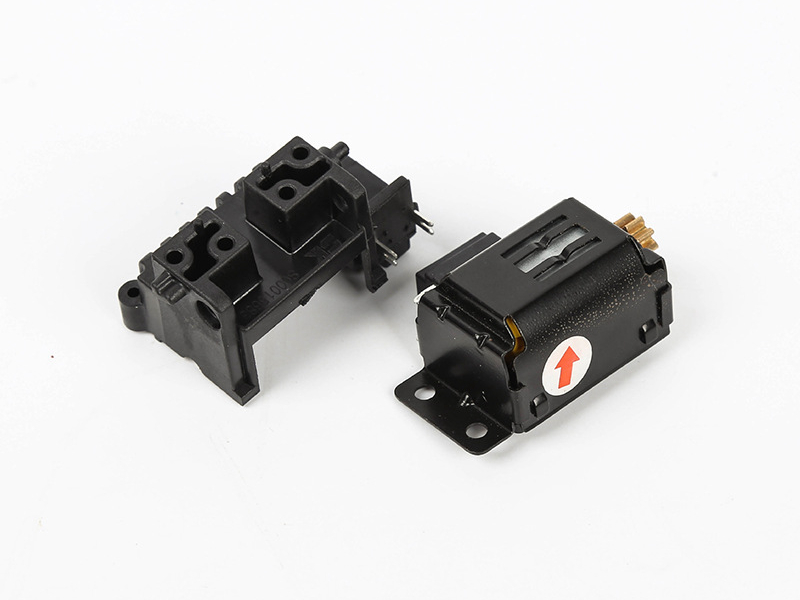
Products that may qualify include connector housings, switch components, threaded plastic brackets, sensor housings, medical-device equipment handles, tool components, and security hardware. If the insert can be added later without quality risk, traditional assembly may remain a practical option.
How should design and manufacturing teams collaborate?
Design and manufacturing teams should review insert molding before the product geometry is frozen. The review should cover insert location, resin flow, shutoff surfaces, wall thickness, draft, parting line, gate location, ejection, and inspection access.
Buyers should share 3D CAD, 2D drawings, insert drawings, design intent, cosmetic surfaces, critical dimensions, and assembly interfaces. The manufacturer can then identify risks such as insert shift, flash, resin bleed, boss cracking, or hidden features that cannot be inspected.
How should businesses select materials for creative insert molding?
Material selection should connect resin and insert material to the product requirement. Engineering plastics such as nylon PA, PC, PBT, PPS, PEEK, ABS, and POM may be considered for the molded body. Inserts may include brass, stainless steel, copper alloy, aluminum, ceramic, or engineered polymer depending on threading, conductivity, insulation, wear, or reinforcement needs.
Businesses should define operating temperature, chemical exposure, moisture exposure, electrical function, user-contact surfaces, and load requirements before selecting materials. Material choices should be validated against both product performance and molding feasibility.
When should prototyping be used before production tooling?
Prototyping should be used when the insert geometry, product fit, material pair, loading method, or functional requirement is uncertain. Rapid molding prototyping, machined inserts, prototype fixtures, or 3D printing prototyping can help check geometry and assembly before production tooling.
Prototype data should be used carefully. A prototype may confirm fit or concept feasibility, but production validation still needs the actual resin, insert, tooling, loading method, process controls, and inspection plan.
How should businesses plan quality and scalability?
Businesses should plan quality by defining measurable acceptance criteria before production. These may include insert position, exposed surfaces, pull-out, torque-out, electrical continuity, insulation, dimensional checks, cosmetic standards, and environmental tests.
Scalability depends on insert supply, insert packaging, loading method, automation need, cycle stability, scrap risk, and inspection capacity. High-volume projects may need carrier-based inserts, automated loading, or process monitoring. Low-volume projects may need a simpler tooling and loading strategy.
What adoption checklist helps businesses implement insert molding?
Adoption stage | Business question | RFQ output |
|---|---|---|
Product screening | Does the insert solve a real product or assembly problem? | Application, insert function, current assembly issue |
DFM review | Can the insert be loaded, held, molded around, and inspected? | CAD, insert drawing, datums, exposed surfaces, critical dimensions |
Material selection | Do resin and insert materials match load, environment, and function? | Resin target, insert material, operating conditions, test needs |
Prototype validation | Which risks must be tested before production tooling? | Prototype quantity, test plan, acceptance criteria |
Production planning | Can the process scale with controlled quality? | Annual volume, insert supply method, inspection plan, automation needs |
What RFQ information supports effective adoption?
A useful RFQ should include product application, design intent, CAD files, insert drawings, resin material, insert material, current assembly route, annual volume, prototype quantity, critical dimensions, exposed insert surfaces, cosmetic surfaces, load requirements, electrical requirements, environmental exposure, and inspection methods.
This information helps the manufacturer determine whether insert molding is a practical route for creative product development. Effective adoption means the design idea, manufacturing process, and quality plan are aligned before tooling cost is committed.
Related FAQs
How can companies effectively integrate insert molding into their product design processes?
How does insert molding enable designers to create more innovative products?
How does insert molding enhance creativity in product design?
Can insert molding handle highly intricate and detailed designs?
What types of products benefit most from creative insert molding techniques?
What are the best materials to use for creative insert molding designs?
What are the common challenges in insert molding and how can they be resolved?