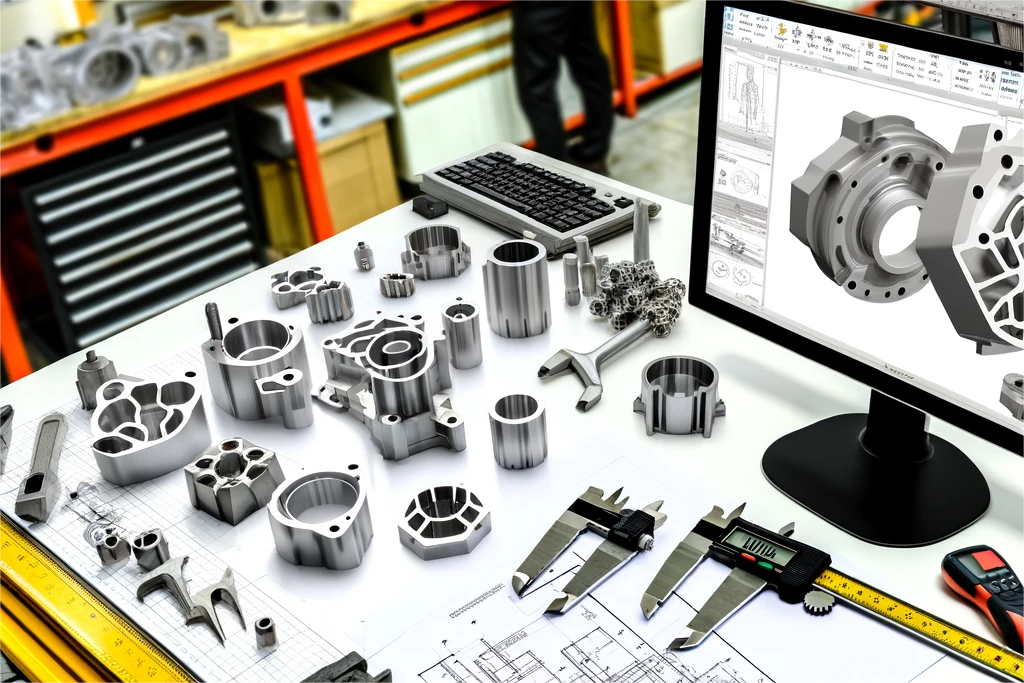
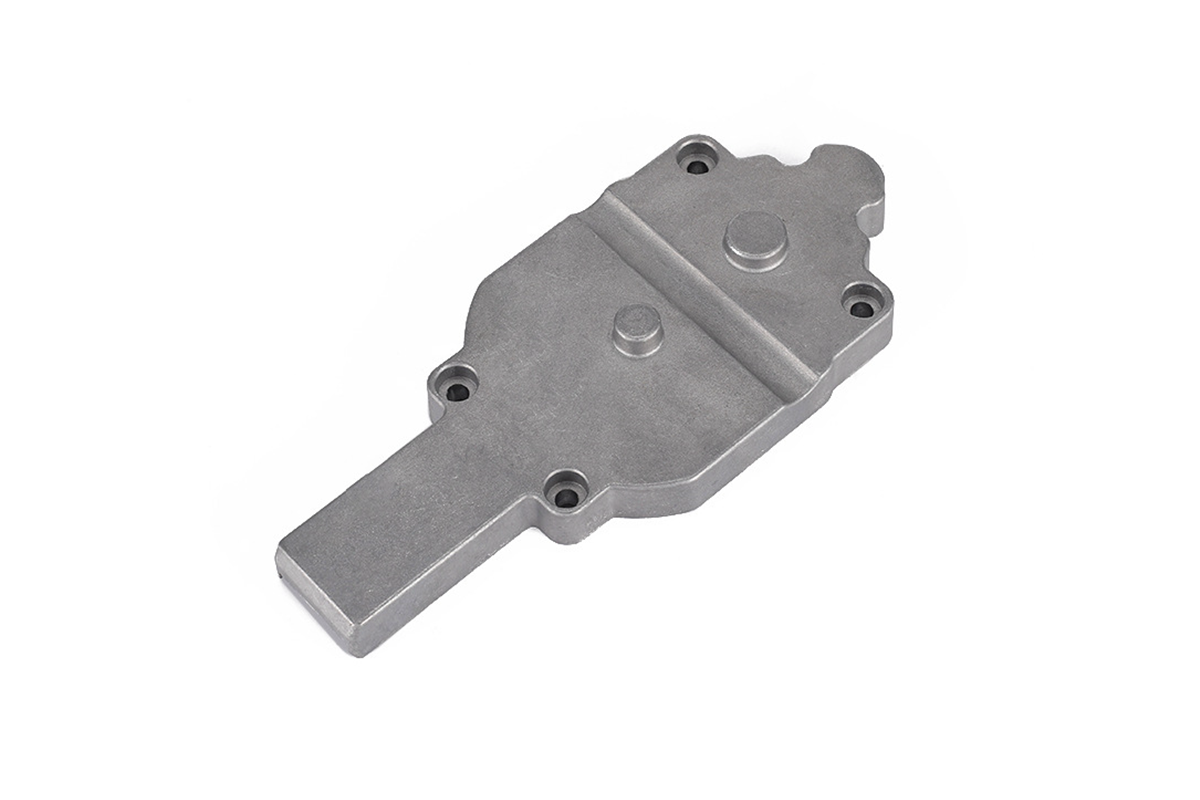
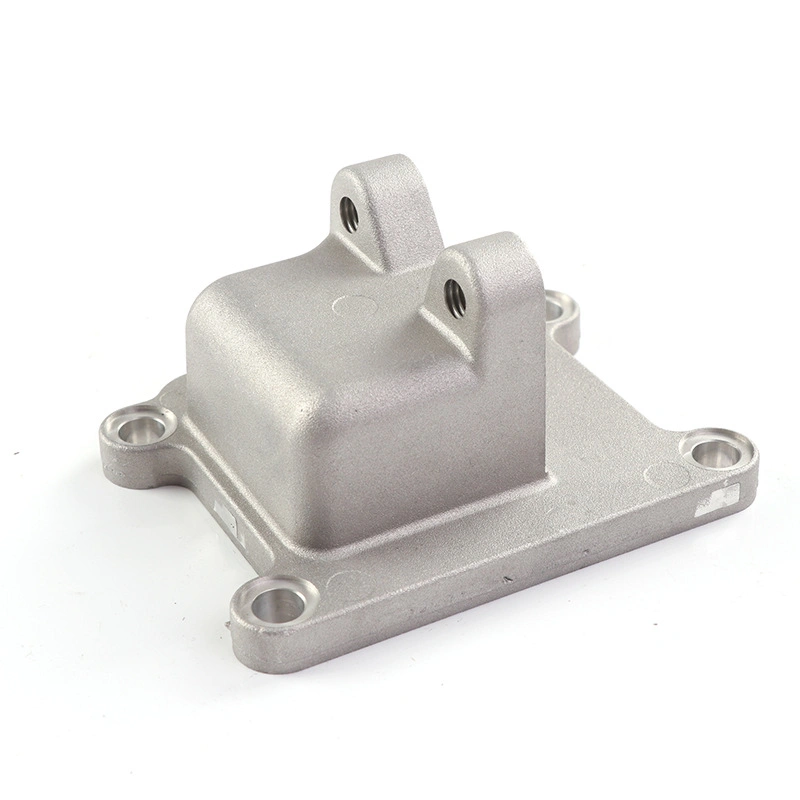
What aluminum die casting services are best for custom OEM parts?
Aluminum die casting services for custom OEM parts should be selected by matching the process route to the part's annual volume, wall thickness, aluminum alloy, tooling plan, tolerance target, surface finish, post-machining needs, and inspection requirements. The practical RFQ problem is to choose a supplier scope that can deliver a finished die cast aluminum part, not only a raw casting.
Which aluminum die casting service scope fits custom OEM parts?
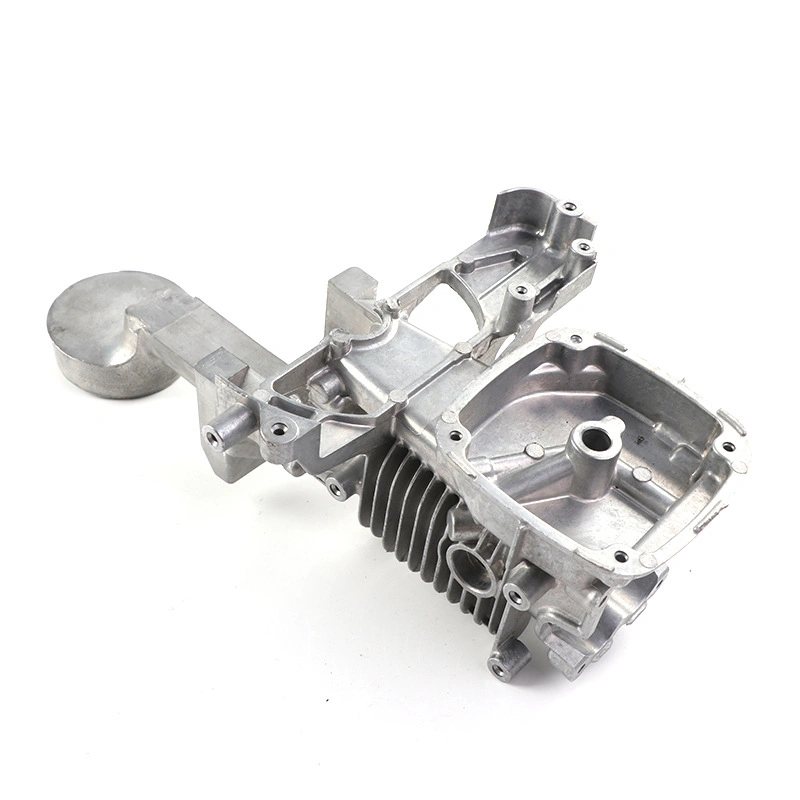
The suitable service scope depends on whether the buyer needs a prototype, a die-cast sample, a machined casting, a finished surface, a tested assembly, or repeat production. Aluminum die casting can support OEM housings, brackets, heat-dissipation parts, covers, enclosures, lighting parts, automotive components, electronics hardware, and industrial parts when the tooling and production assumptions match the program.
Buyers should define the finished component requirement before comparing quotes. A quote that includes only die casting may not cover CNC machining, tapping, deburring, anodizing, painting, powder coating, leak testing, CMM inspection, packaging, or production ramp support. The RFQ should state which services belong in the same supplier scope.
OEM Aluminum Die Casting Scope | Buyer Requirement It Supports | RFQ Detail to Provide |
|---|---|---|
Tooling and DFM review | Confirms mold feasibility, draft, parting line, flow, ejection, and wall thickness | 3D CAD, 2D drawing, wall sections, annual volume, and launch plan |
Die casting production | Forms the aluminum part body for repeat production | Alloy, quantity, part size, tolerance, and quality requirements |
CNC machining | Controls datums, bores, threads, sealing faces, and assembly interfaces | Machined feature list, GD&T, roughness, and inspection method |
Surface finishing | Supports appearance, corrosion resistance, or customer-facing surfaces | Finish type, visible zones, texture, color, and acceptance criteria |
Inspection and release | Verifies dimensional quality, surface quality, and lot consistency | Critical dimensions, sampling plan, CMM report, and packaging needs |
How do volume, tooling, and part size affect aluminum die casting selection?
Production volume is usually the first commercial filter for aluminum die casting. Dedicated tooling requires upfront investment, so the route makes more sense when the expected demand can support mold development, trials, maintenance, and repeat production. Low-volume projects may need prototype validation or another manufacturing route before production tooling is released.
Part size and projected output also affect machine selection, tooling structure, cycle time, cooling, trimming, and handling. A thin-wall electronics enclosure, a lighting heat sink, and a larger structural cover require different mold and production planning. Buyers should provide annual volume, first order quantity, production life, and launch timing so Neway can evaluate tooling and unit-cost logic.
For related planning, see whether aluminum die castings are cost-effective for mass production and what makes aluminum die casting suitable for mass production.
Which aluminum alloy and wall thickness details should buyers define?
Aluminum alloy selection affects castability, strength, corrosion behavior, thermal performance, machinability, surface finishing, and cost. Common aluminum die casting alloys include A380, ADC12, A356, 360, 383, and B390, but the correct alloy depends on the component's mechanical, thermal, corrosion, and finishing requirements.
Wall thickness affects metal flow, solidification, shrinkage, porosity risk, tooling design, and dimensional consistency. Thin walls may support lightweight design, but the buyer should confirm whether the target wall thickness is realistic for the part size, alloy, flow path, and strength requirement.
Related material and design references include common materials used in aluminum die casting services, how buyers should choose between A380 and ADC12 aluminum die casting, and thin-wall limits in aluminum die casting.
How do tolerances, machining, and surface finish change the service route?
Tolerance requirements determine whether a feature can remain as-cast or needs CNC machining. Many OEM die cast aluminum parts use as-cast surfaces for noncritical areas and machined surfaces for datums, threads, bores, sealing faces, and assembly interfaces. Buyers should mark critical dimensions rather than applying tight tolerance to every feature.
Surface finish requirements determine whether the service route includes deburring, tumbling, polishing, blasting, anodizing, painting, powder coating, chromate conversion, or other finishing steps. A hidden internal bracket, a visible consumer housing, and a corrosion-exposed outdoor lighting component require different finishing and inspection criteria.
For follow-up decisions, see whether aluminum die cast parts can be CNC machined after casting, typical aluminum die casting tolerances, and surface finishes available for aluminum die casting services.
Finished Feature Requirement | Service Route Impact | Inspection Focus |
|---|---|---|
General housing wall | Usually controlled as-cast when tolerance allows | Dimensional sampling and visual criteria |
Mounting datum | Often CNC machined after die casting | CMM or fixture inspection of datum relationship |
Threaded hole | Often drilled and tapped after casting | Thread gauge, depth check, and burr review |
Customer-facing surface | May require finishing, masking, and cosmetic sorting | Visual acceptance, color, texture, and scratch control |
Heat-dissipation surface | May require alloy, wall, fin, and contact-surface review | Flatness-related checks and thermal interface quality |
What quality and production support should OEM buyers expect?
OEM buyers should expect quality support that covers tooling trials, first article inspection, process monitoring, defect prevention, dimensional checks, surface review, and lot release. Aluminum die casting quality depends on mold design, alloy control, melt handling, injection parameters, cooling, trimming, machining, finishing, and packaging.
Buyers should ask how the supplier manages common risks such as porosity, cold shuts, flash, warpage, dimensional drift, machining burrs, coating defects, and surface variation. The RFQ should identify critical areas where defects are unacceptable, such as sealing surfaces, pressure-tight zones, thermal interface areas, cosmetic faces, and assembly datums.
Related quality references include common aluminum die casting defects and solutions and how aluminum die casting defects can be reduced in mass production.
What RFQ information helps Neway match OEM aluminum die casting services?
Neway can match OEM aluminum die casting services more accurately when the RFQ includes the 3D CAD file, 2D drawing, alloy grade or performance target, annual volume, first order quantity, part size, wall thickness, critical dimensions, GD&T, machining requirements, surface finish, heat treatment if required, inspection reports, packaging, and launch schedule.
Buyers should state whether the project is a new design, prototype validation, cost reduction, supplier transfer, or mass-production ramp. If the buyer needs a finished die cast aluminum part, the RFQ should include machining, finishing, inspection, and packaging requirements from the start. This keeps the quote aligned with the real production deliverable.
Related FAQs
What information is needed for an aluminum die casting service quote?
What materials are commonly used in aluminum die casting services?
How should buyers choose between A380 and ADC12 aluminum die casting?
What tolerances can aluminum die casting services typically achieve?
What surface finishes are available for aluminum die casting services?
What design factors affect the cost of aluminum die casting parts?