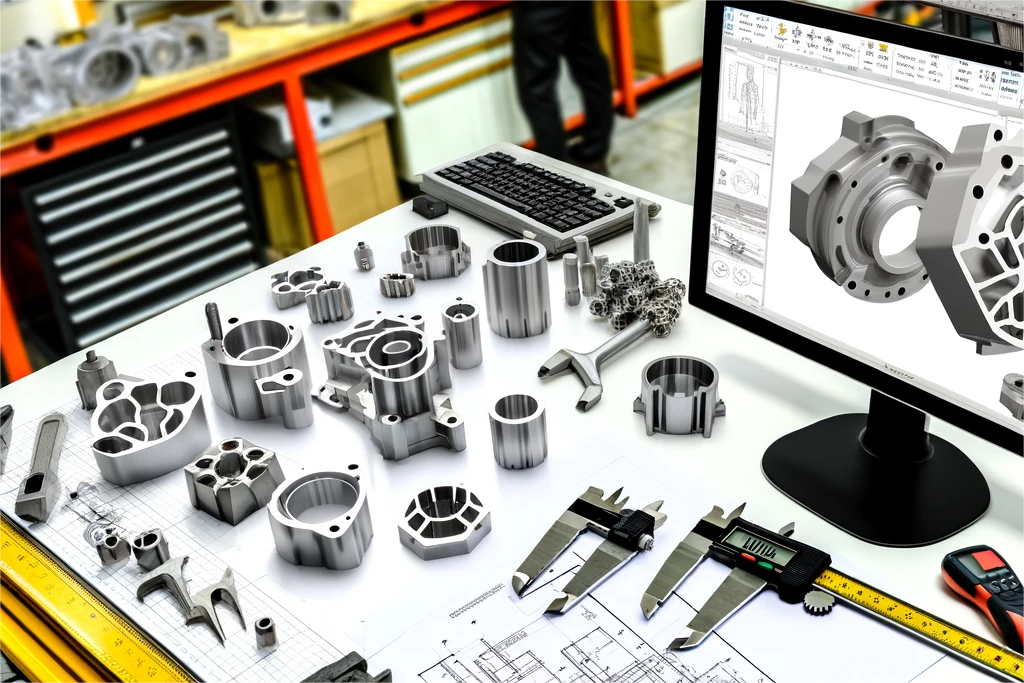
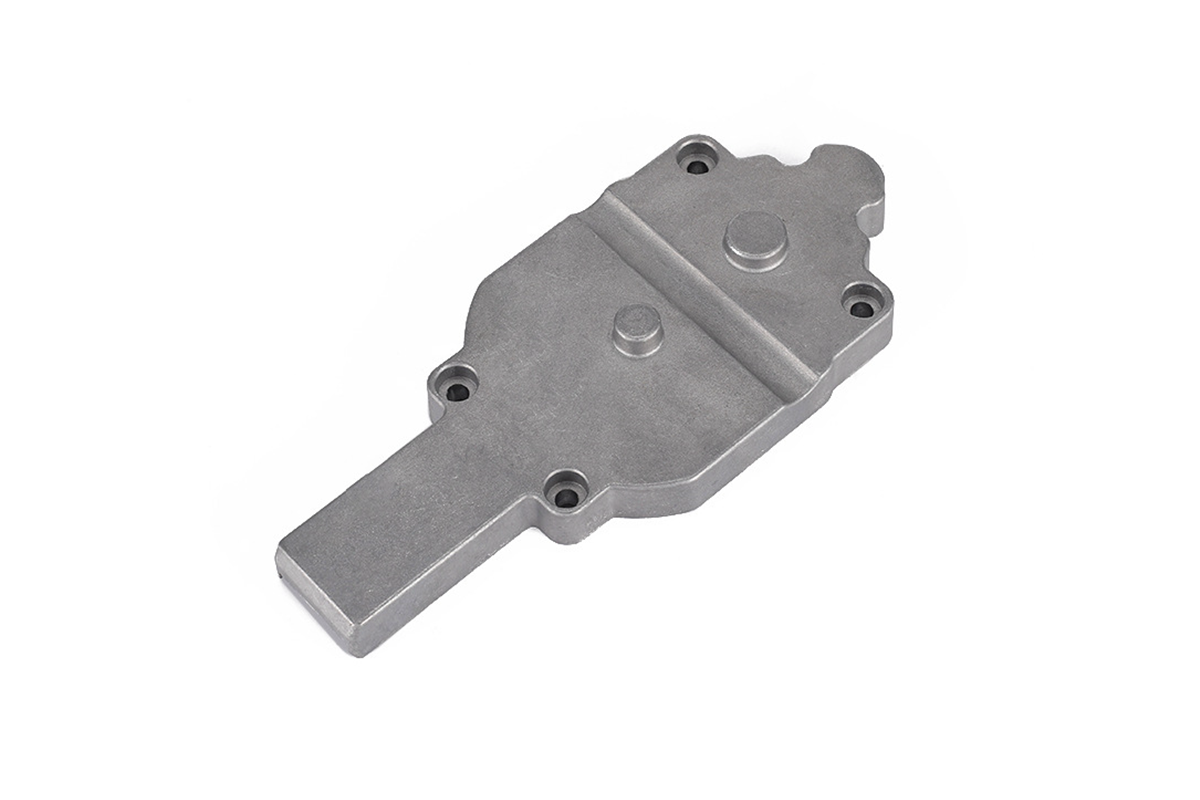
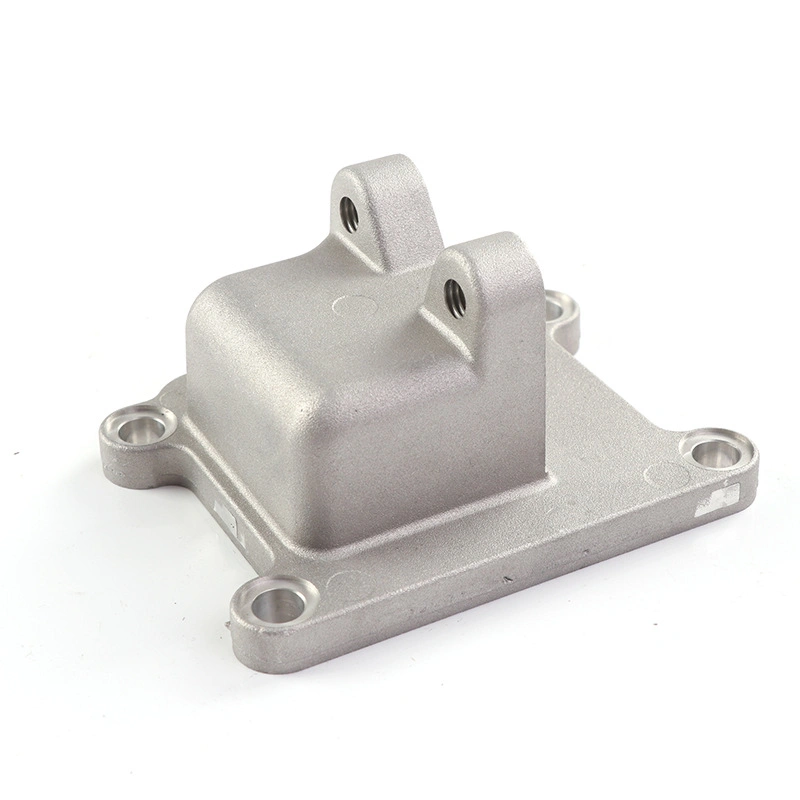
What materials are commonly used in aluminum die casting services?
For aluminum die casting services, buyers commonly compare A380, ADC12/383, 360, A356, B390, and other cast aluminum alloys for custom housings, brackets, covers, heat sinks, and structural parts. The practical RFQ problem is to choose an aluminum die casting material that supports mold filling, strength, corrosion resistance, machining, surface finishing, inspection, and unit cost before tooling is quoted.
Which aluminum alloys are commonly used in die casting services?
The most common aluminum die casting materials are specific cast aluminum alloys, not generic aluminum. A380 and ADC12/383 are often considered for balanced production use, 360 is often reviewed when corrosion behavior matters, A356 is considered when structural performance is a stronger priority, and B390 is considered for selected wear-related applications.
Material selection should start with part function. A visible enclosure, a thin-wall electronics housing, a machined mounting bracket, a heat-transfer component, and a wear-exposed part may need different alloy priorities even when all parts use the same die casting process.
Aluminum Die Casting Material | Common Selection Reason | Buyer Decision to Confirm |
|---|---|---|
Balanced castability, mechanical usefulness, and commercial availability | Whether the part needs a general-purpose die casting alloy for stable production | |
Good filling behavior for many production die castings | Whether thin walls, ribs, and feature density make fill performance important | |
Often reviewed for corrosion-related requirements | Whether the service environment justifies a corrosion-focused alloy review | |
Often considered when mechanical performance is a higher priority | Whether strength, fatigue behavior, or structural duty drives the material choice | |
Often considered for specialized wear-related parts | Whether wear resistance is more important than general casting economy |
When should buyers consider A380 or ADC12 for die cast parts?
A380 and ADC12/383 are common starting points when the buyer needs practical casting performance, reasonable mechanical properties, and stable production economics. These alloys are often reviewed for custom aluminum die cast housings, covers, brackets, frames, and general industrial components.
A380 is often selected when the project needs a balanced material with broad die casting use. ADC12/383 is often reviewed when mold filling and production practicality are important. The buyer should still define wall thickness, rib geometry, bosses, threaded features, machined datums, surface finish, and annual volume because alloy choice cannot solve a poor die casting design by itself.
For a focused comparison, see how buyers should choose between A380 and ADC12 aluminum die casting.
When do corrosion, strength, or wear requirements change the alloy choice?
Corrosion resistance, structural load, wear behavior, and thermal exposure can move the material decision away from a general-purpose alloy. A buyer should state the operating environment, mating parts, load condition, service temperature, chemical exposure, and expected wear surfaces before Neway recommends an alloy route.
If corrosion exposure is the main concern, 360 or a suitable finishing plan may need review. If structural performance is the main concern, A356 or another engineering route may need review. If wear behavior is the main concern, B390 may be considered for specific applications. The material decision should be tied to real service conditions rather than a broad preference for a stronger or more specialized alloy.
Buyers can also review cast aluminum background before narrowing the RFQ to a specific die casting alloy.
How does alloy choice affect casting defects, tolerances, and machining?
Alloy choice affects mold filling, shrinkage behavior, porosity risk, dimensional stability, machining response, and final inspection. A material with better filling behavior may support thin ribs and complex cavities more effectively, while a material selected for a specialized property may require extra attention to gating, venting, shrinkage control, or downstream machining.
Buyers should identify as-cast dimensions, CNC-machined features, datum surfaces, threaded holes, sealing faces, bores, and inspection methods. Critical dimensions may need CMM inspection after machining or after finishing. If the RFQ does not separate as-cast features from machined features, the quote may either miss important work or include machining that the part does not need.
Related engineering pages include typical aluminum die casting tolerances, CNC machining after aluminum die casting, and defect reduction in aluminum die casting mass production.
Material Selection Factor | Manufacturing Impact | RFQ Control Point |
|---|---|---|
Filling behavior | Affects thin walls, ribs, bosses, and complex cavity fill | Provide 3D CAD, wall thickness, and critical feature notes |
Shrinkage behavior | Affects dimensional stability and tooling review | Identify critical dimensions, datums, and inspection method |
Porosity sensitivity | Affects sealing surfaces, cosmetic faces, and machined areas | Define leak test, defect limits, and machined surface requirements |
Machining response | Affects bores, threads, datum faces, and secondary CNC cost | Separate as-cast features from post-machined features |
Production volume | Affects tooling design, process control, and cost assumptions | Provide annual demand, first order quantity, and ramp schedule |
How do finishing and coating requirements affect material selection?
Surface finish requirements can affect aluminum die casting material selection because alloy chemistry, porosity, surface condition, machining marks, and casting texture influence coating appearance and finishing consistency. Buyers should define whether the part needs deburring, tumbling, polishing, painting, powder coating, anodizing, conversion coating, or masked functional surfaces.
A cosmetic enclosure may need a material and process route that supports consistent appearance. A functional bracket may need only deburring plus machined datums. A corrosion-exposed part may need both alloy review and a protective finish. The RFQ should state visible zones, color requirements, coating thickness limits, roughness targets, and surfaces that must remain uncoated.
For finishing decisions, see surface finishes available for aluminum die casting services and surface finishes suitable for aluminum die casting parts.
What material details should buyers include in an aluminum die casting RFQ?
Buyers should provide the preferred aluminum alloy or the performance target, 3D CAD model, 2D drawing, annual volume, application environment, critical dimensions, machined features, surface finish, inspection requirements, and any material documentation requirement. If the buyer has not selected an alloy, Neway can review the part function and suggest a practical material direction.
The RFQ should explain what the material must achieve. For example, the buyer should state whether the priority is mold filling, low part weight, strength, corrosion resistance, wear behavior, heat transfer, cosmetic appearance, machining stability, or cost control. Clear material intent helps Neway connect the die casting alloy to tooling design, process control, secondary operations, inspection, and production pricing.
For quotation preparation, see what information is needed for an aluminum die casting service quote and design factors that affect aluminum die casting cost.
Related FAQs
Which aluminum alloys are commonly used for die casting parts?
How should buyers choose between A380 and ADC12 aluminum die casting?
What tolerances can aluminum die casting services typically achieve?
What surface finishes are available for aluminum die casting services?
What information is needed for an aluminum die casting service quote?
What design factors affect the cost of aluminum die casting parts?
How can aluminum die casting defects be reduced in mass production?