What should buyers provide when requesting aluminum die casting services?
When requesting aluminum die casting services, buyers should provide the technical files, alloy requirement, production volume, tolerance targets, machining needs, surface finish requirements, inspection standards, and launch schedule before asking for a quote. The practical RFQ problem is to give Neway enough information to evaluate tooling complexity, die casting feasibility, CNC finishing, cost, lead time, and production quality without relying on assumptions.
What files should buyers provide for an aluminum die casting RFQ?
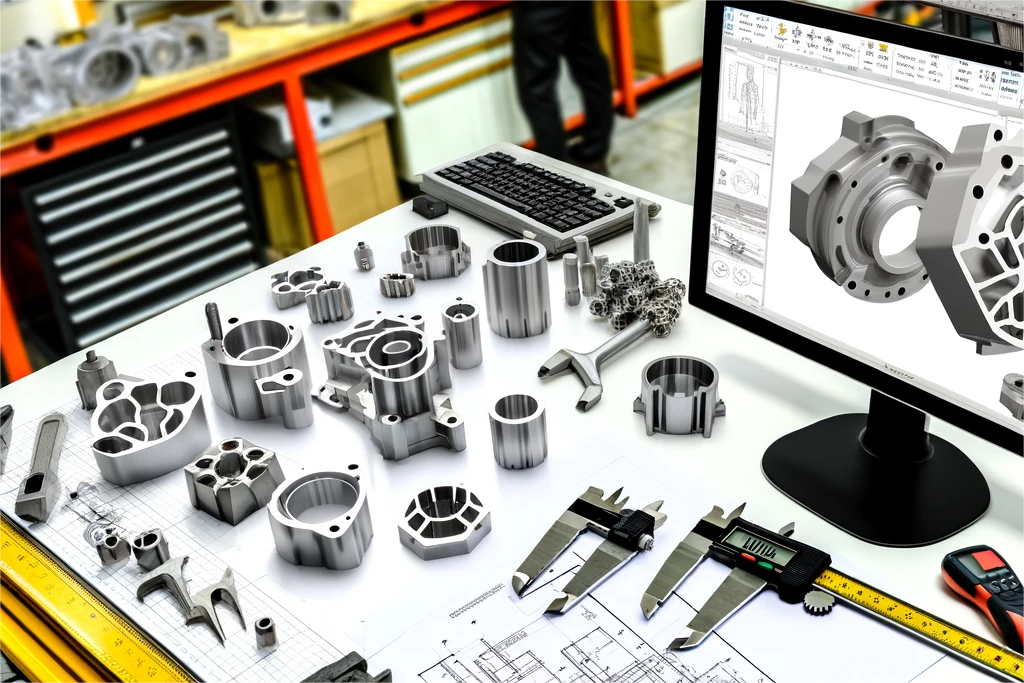
Buyers should provide a 3D CAD model and a 2D drawing for an aluminum die casting RFQ. The 3D model helps Neway evaluate part geometry, wall thickness, ribs, bosses, draft, undercuts, parting direction, and tooling feasibility. The 2D drawing defines dimensions, tolerances, datums, threads, alloy notes, surface finish, inspection requirements, and revision control.
If the part is part of a larger assembly, the RFQ should include mating part data or a description of the functional interface. Mounting faces, sealing surfaces, thermal interfaces, hinge points, threaded inserts, and cosmetic surfaces should be identified clearly because those features influence tooling, machining, finishing, and inspection.
RFQ Item | Why It Matters for Aluminum Die Casting | Useful Format |
|---|---|---|
3D CAD model | Shows wall thickness, ribs, bosses, draft, undercuts, and tooling direction | STEP, IGES, X_T, or another editable engineering file |
2D drawing | Defines dimensions, tolerances, datums, threads, finish, and inspection notes | PDF with drawing revision |
Assembly context | Explains fit, sealing, mounting, thermal contact, or cosmetic function | Assembly drawing, photos, or engineering notes |
Existing sample or issue report | Helps evaluate current defects, finish, or supplier-transfer problems | Sample, photos, CMM report, or defect list |
Which alloy, volume, and tooling details should the RFQ include?
The RFQ should include the required aluminum alloy or the performance target. Common die casting alloy decisions may involve A380, ADC12, A356, 360, 383, B390, or another specified aluminum grade. If the buyer does not know the alloy, the RFQ should state strength, corrosion, thermal conductivity, machinability, surface finish, weight, and application requirements.
Production volume is equally important. Buyers should provide annual demand, first order quantity, expected production life, sample quantity, and ramp schedule. Aluminum die casting uses dedicated tooling, so volume affects mold design, tooling cost, unit price, and production planning.
Related material and volume topics include materials used in aluminum die casting services, A380 versus ADC12 alloy selection, and what makes aluminum die casting suitable for mass production.
Which tolerance, CNC machining, and feature requirements should be stated?
Buyers should separate as-cast features from post-machined features. General walls, ribs, and noncritical surfaces may remain as-cast, while datums, threaded holes, bores, sealing surfaces, bearing seats, and thermal contact surfaces may need CNC machining after casting.
The RFQ should identify GD&T requirements, critical dimensions, datum structure, thread sizes, hole depth, roughness targets, and inspection methods. If the drawing applies tight tolerance to every feature, the quote may include unnecessary machining. If the drawing does not identify functional features, the quote may miss important quality work.
For related planning, see typical aluminum die casting tolerances and CNC machining after aluminum die casting.
Which surface finish and cosmetic requirements should buyers define?
Buyers should define whether the part needs deburring, tumbling, polishing, blasting, painting, powder coating, anodizing, conversion coating, or another finish. The RFQ should separate visible surfaces, functional surfaces, masked areas, threaded areas, and hidden surfaces because each surface may need a different process or acceptance criterion.
Finish requirements can affect cost, lead time, masking, packaging, and inspection. Coating thickness can affect threads and mating features. Polishing can change edges. Anodizing requirements may depend on alloy and surface condition. Cosmetic surfaces should have clear visual acceptance criteria before production starts.
Related finishing guidance is available in surface finishes available for aluminum die casting services and surface finishes suitable for aluminum die casting parts.
Which quality, inspection, and defect criteria should be included?
The RFQ should include first article inspection requirements, CMM report needs, sampling plan, visual criteria, surface defect limits, porosity restrictions, leak test requirements, material documentation, packaging needs, and any customer-specific quality standard. These details affect both quotation and production control.
Buyers should identify critical defect-sensitive zones. A cosmetic cover, a pressure-tight enclosure, a heat sink, a structural bracket, and a machined mounting plate require different inspection focus. Defect criteria should be tied to actual function so the supplier can quote the correct process control and release evidence.
For quality planning, see common aluminum die casting defects and solutions and how defects can be reduced in mass production.
Buyer Requirement | Quote Impact | What to Provide |
|---|---|---|
Critical dimensions | Determines machining and inspection scope | GD&T, datum structure, CMM report, and feature list |
Surface finish | Affects post-processing, masking, and cosmetic sorting | Finish type, visible zones, color, texture, and acceptance criteria |
Defect limits | Affects process control, inspection, and yield assumptions | Porosity limit, leak requirement, cosmetic defect criteria, and test method |
Production ramp | Affects tooling schedule, capacity, and delivery planning | Prototype need, first article timing, annual forecast, and shipment cadence |
Packaging | Protects machined and finished surfaces during shipment | Scratch protection, separation, labeling, cleanliness, and lot traceability |
What commercial information helps Neway prepare a practical quote?
Commercial information should include target volume, first order quantity, expected production life, preferred delivery schedule, target launch date, packaging requirements, shipping destination, and any cost target or comparison process. If the buyer is comparing aluminum die casting with CNC machining, sheet metal fabrication, extrusion, or another route, that context helps Neway evaluate the finished-part economics.
A complete RFQ helps Neway answer four questions: can the part be die cast, what tooling is required, which features need machining or finishing, and what inspection evidence is needed for release. When those questions are answered early, the quotation is more useful for both engineering and purchasing review.
Related FAQs
What information is needed for an aluminum die casting service quote?
Which aluminum die casting service scope fits custom OEM parts?
What materials are commonly used in aluminum die casting services?
What tolerances can aluminum die casting services typically achieve?
What surface finishes are available for aluminum die casting services?
What are common defects and solutions in aluminum die casting?
How can aluminum die casting defects be reduced in mass production?