Consistency Counts: Achieving Exceptional Repeatability in Custom Metal Stamping
Custom Metal Stamping Repeatability RFQ Decision: This article explains how buyers can specify repeatability requirements for custom sheet metal stamping parts such as brackets, clips, terminals, contacts, retainers, shields, covers, tabs, and spring plates. The practical RFQ problem is defining tooling accuracy, material consistency, die maintenance, strip feeding, critical dimensions, burr direction, in-process inspection, and change control before repeated production starts.
Repeatability in metal stamping means that the stamped part remains consistent from part to part, batch to batch, and revision to revision within the buyer's defined acceptance criteria. Repeatability depends on tooling, press setup, material lot behavior, lubrication, automation, inspection, and maintenance. Buyers should define the features that control assembly or function so the supplier can focus process control on the right characteristics.
What Does Repeatability Mean In Custom Metal Stamping?
Repeatability in custom metal stamping means producing the same geometry and functional characteristics across repeated press cycles and production batches. It does not mean every non-critical surface is identical under every viewing condition. The buyer should identify which dimensions, features, and surfaces require consistent control because those features affect assembly, electrical contact, sealing, motion, or handling.
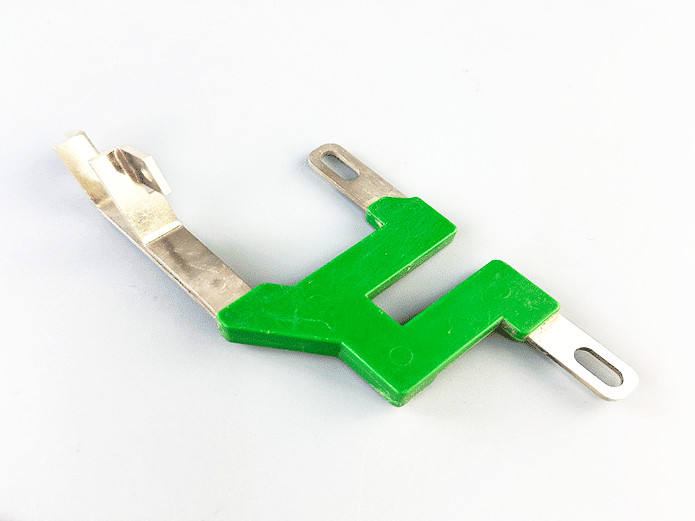
For a terminal, repeatability may focus on contact geometry, burr direction, and surface condition. For a bracket, repeatability may focus on hole pattern, flange angle, and fit-up. For a spring plate, repeatability may focus on material grade, formed height, and heat treatment route if applicable. The correct repeatability plan depends on the part's function.
A repeatability-focused RFQ should therefore include functional notes, datum scheme, critical dimensions, drawing revision, and inspection method. Without those details, the supplier may control the wrong features or over-control non-critical features.
Which Process Variables Control Stamping Consistency?
Stamping consistency is controlled by die clearance, punch and die wear, material thickness, strip feed accuracy, press alignment, lubrication, carrier stability, and part ejection. These variables interact. A small change in material lot or lubrication can affect burr height, forming response, and feature position if the die and inspection plan are not managed.
Automation can improve consistency by reducing manual handling and improving feed repeatability, but automation still needs correct tooling and process checks. Sensors can detect misfeeds or missing features, but sensors must be tied to the buyer's critical characteristics. Buyers should ask how critical features are monitored rather than assuming automation alone controls repeatability.
Stamping Process Variable | Repeatability Risk | Buyer RFQ Control Point |
|---|---|---|
Die clearance and punch condition | Burr growth, feature size drift, and edge variation | Define burr direction, critical edges, and inspection frequency needs |
Strip feed accuracy | Feature offset, station mismatch, and part deformation | Mark datum features and feature-to-feature relationships |
Material lot consistency | Springback, forming variation, and crack risk | Specify material grade, thickness, surface condition, and documentation needs |
Lubrication and press setup | Surface marks, forming instability, and tool wear | State surface requirements and downstream cleaning or finishing needs |
How Do Tooling Accuracy And Maintenance Affect Repeatability?
Tooling accuracy and maintenance affect repeatability because the stamping die defines the part geometry during every press cycle. Punch wear, die wear, chipped edges, loose inserts, misalignment, and carrier wear can all create dimensional drift. A die that produced acceptable parts at the start of a run can produce different parts later if maintenance is not planned.
Buyers should define critical characteristics and ask how those characteristics are monitored during production. The supplier may use first-piece approval, in-process checks, tool maintenance logs, sensor checks, or scheduled die inspection depending on part risk. The buyer does not need to prescribe every maintenance step, but the RFQ should state quality expectations and traceability needs.
Tool maintenance is especially important for high-volume stamping because small changes can repeat across many parts. A burr direction issue, hole shift, or feature wear pattern can create assembly problems if not detected early. A good RFQ connects tooling maintenance to the actual part features that matter.
How Do Material Lots And Coil Conditions Affect Stamped Parts?
Material lots and coil conditions affect stamped parts because sheet thickness, mechanical properties, surface finish, coating condition, and edge condition can vary. Material variation can change forming behavior, springback, burr formation, and surface appearance. Buyers should specify material grade and documentation requirements before approving repeat production.
For stainless steel stamped parts, surface condition and springback may require closer review. For carbon steel brackets, thickness and strength consistency may affect formed geometry. For copper alloy contacts, conductivity, surface condition, and burr control may be critical. For coated steel parts, coating behavior during forming and downstream finishing should be reviewed.
Material substitution should not happen silently. If equivalent material alternatives are allowed, the buyer should define the acceptable property range and approval process. If the material is fixed, the RFQ should state that the material cannot be substituted without review.
Which Inspection Methods Verify Repeatability In Production?
Inspection methods verify repeatability by checking the features that control function across production. Typical methods include first-article inspection, first-piece approval, in-process sampling, go/no-go gauges, coordinate measurement, visual checks for burrs and surface defects, and final lot inspection. The inspection method should match the feature risk.
For repeated stamped parts, a gauge can be useful when the same functional geometry must be checked quickly. Coordinate measurement may be used for dimensional validation or process qualification. Visual checks may be needed for burr direction, surface marks, or coating-sensitive parts. The buyer should identify which records are required, such as inspection reports, material certificates, or lot traceability.
Repeatability Inspection Entity | What It Controls | RFQ Detail Needed |
|---|---|---|
First-piece approval | Confirms setup before batch production | Critical dimensions, datum scheme, and approval criteria |
In-process sampling | Detects drift during repeated stamping | Sampling requirement or critical feature list |
Go/no-go gauge | Checks functional fit quickly during production | Functional geometry and assembly interface |
Burr and surface review | Controls handling, electrical contact, and cosmetic risk | Burr direction, visible surfaces, and acceptable edge condition |
How Should Buyers Manage Changes During Repeat Stamping Orders?
Buyers should manage changes during repeat stamping orders through controlled drawing revisions, tool change approval, material change approval, and inspection updates. Repeatability can be lost when a small design change is made without updating the die review, strip layout, or inspection plan. A hole move, bend height change, or material substitution can affect more than one die station.
Change control should include the finished drawing, flat pattern or strip layout if shared, tooling revision, material specification, and quality plan. If the supplier stores tooling for repeat production, the buyer should identify which version of the part the tool represents. If the tool is modified, the RFQ or purchase documentation should reflect the modified revision.
Repeat orders benefit from historical production information. Prior burr issues, assembly feedback, material problems, or inspection concerns should be shared before the next run. That information helps the supplier adjust maintenance and inspection focus.
What Should A Repeatability-Focused Stamping RFQ Include?
A repeatability-focused stamping RFQ should include CAD files, PDF drawings, revision number, material grade, thickness, target production volume, batch pattern, critical dimensions, datum scheme, burr direction, surface requirements, secondary operations, inspection method, traceability needs, and change-control expectations. The RFQ should make clear which characteristics must remain stable across repeated production.
If the part is still in development, the buyer should consider a lower-tooling or prototype route before committing to production tooling. If the part is stable, the buyer should provide enough forecast information for tool design and maintenance planning. The supplier can then evaluate whether progressive tooling, automation, gauges, or secondary operations are appropriate.
Custom metal stamping repeatability comes from controlled tooling, stable material, disciplined press setup, focused inspection, and clear change control. A clear RFQ helps the supplier protect the features that matter while keeping repeated production practical.
Related FAQs
What are the common defects in sheet metal stamping and how can they be prevented?
How does automation improve the efficiency of metal stamping operations?
What are the common issues encountered during mass production metal stamping?
Why is regular tooling maintenance critical in high-volume metal stamping processes?
What strategies help balance cost savings with quality assurance?