When is MIM better than CNC machining for metal parts?
When is MIM better than CNC machining for metal parts?
MIM is better than CNC machining for metal parts when the part is small, complex, stable in design, and required in medium to high production volume. For an RFQ, buyers should compare geometry complexity, annual volume, material utilization, tolerance priorities, tooling budget, and secondary machining needs because metal injection molding and CNC machining solve different manufacturing problems.
Metal injection molding can reduce unit cost for compact complex parts after tooling is validated. CNC machining is usually stronger for prototypes, low-volume parts, changing designs, large parts, and broad tight tolerance requirements. The practical buyer decision is not which process is universally better, but which process fits the part geometry, volume, tolerance, material, and program stage.
Which buyer scenarios favor MIM over CNC machining?
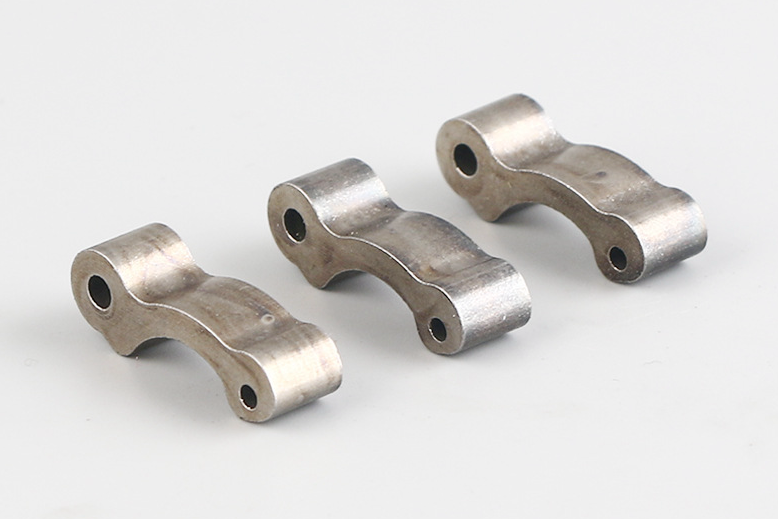
MIM is usually a stronger route when the metal part has complex 3D geometry, thin walls, small holes, internal features, multiple small surfaces, or a shape that would require long CNC cycle time. The tooling cost must be justified by production volume, but the molded process can reduce repeated material removal and machining time once the program is stable.
Buyers should consider MIM when the part is a compact bracket, latch, connector, medical instrument component, lock part, gear, micro structural part, or electronic hardware component with repeat demand. These parts often need stainless steel, low-alloy steel, soft magnetic alloy, or other MIM materials with controlled density and repeatable dimensions.
Buyer Scenario | Why MIM May Fit | RFQ Checkpoint |
|---|---|---|
Small complex metal part | Molding forms geometry that may be slow to machine | Send 3D model and critical feature notes |
Medium or high annual volume | Tooling cost can be spread across repeated production | Provide estimated annual quantity and batch size |
High material removal in CNC | MIM can reduce scrap from machining solid bar or billet | Share target material grade and part weight |
When should CNC machining still be selected instead of MIM?
CNC machining should usually stay in the plan when the part is needed in low volume, the design is still changing, the part is too large for practical MIM tooling, or the drawing requires tight tolerance across many surfaces. CNC can also be the better prototype route before investing in MIM tooling.
For early-stage RFQs, buyers can use CNC prototypes to verify fit, function, and assembly risk. After the design stabilizes and annual demand becomes clear, the buyer can compare CNC production cost against MIM tooling cost, MIM sintering shrinkage control, and secondary machining requirements.
Decision Factor | MIM Route | CNC Machining Route |
|---|---|---|
Design maturity | Better after design is stable | Better while dimensions are changing |
Production volume | Better when tooling can be amortized | Better for one-off or low-volume demand |
Tolerance pattern | Good for molded shape plus selected critical machining | Good for broad tight tolerance across many features |
Part size | Strong for compact metal components | More flexible for larger machined parts |
How does production volume change the MIM vs CNC cost decision?
Production volume is often the main reason MIM becomes more attractive than CNC machining. MIM requires tooling, process validation, and shrinkage compensation, so the first cost is higher. After tooling is approved, the repeated unit cost can become lower for suitable small complex parts.
CNC machining has lower initial tooling cost but repeated cycle time, fixture setup, tool wear, and material waste continue with every part. For RFQ comparison, buyers should provide annual volume, expected product life, batch size, and design-change risk. Without volume data, the supplier cannot judge whether MIM tooling cost is justified or whether CNC machining remains the practical route.
How does part geometry affect the MIM vs CNC choice?
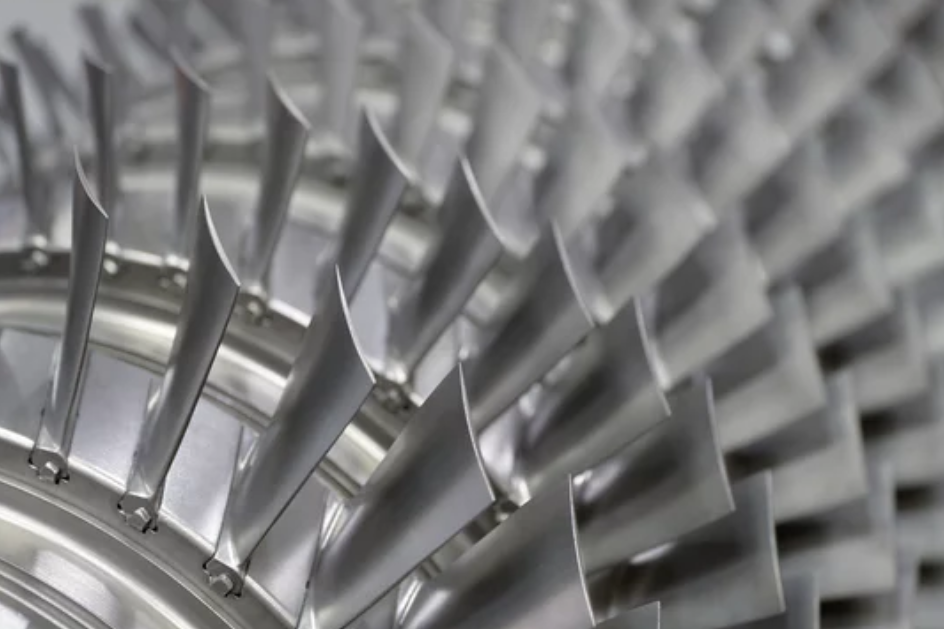
Part geometry affects the MIM vs CNC choice because MIM forms the geometry by molding and sintering, while CNC machining removes material with tools. Small internal features, undercuts, curved surfaces, ribs, thin walls, and complex contours may increase CNC time but can be efficient in MIM when the geometry is moldable and sintering distortion can be controlled.
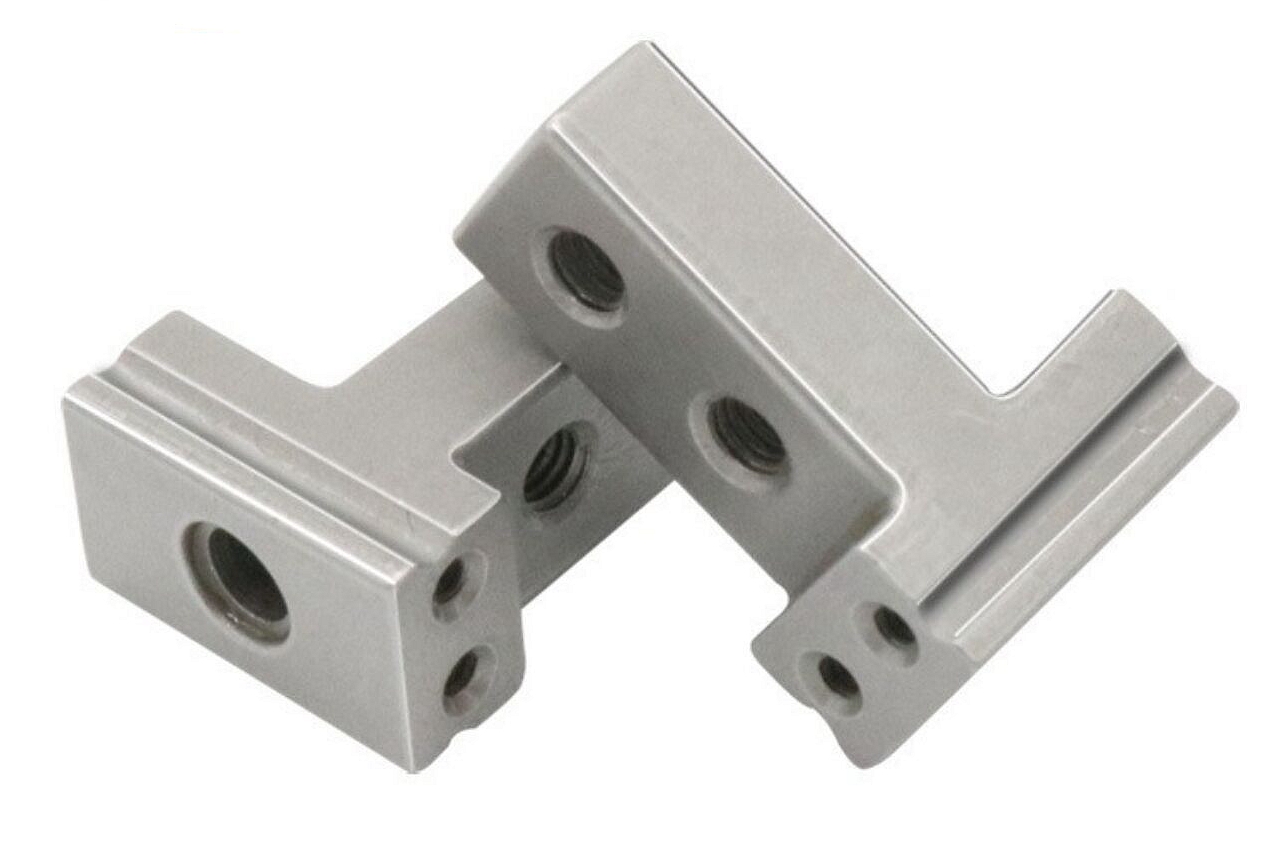
CNC still has advantages for flat datum faces, precision bores, threads, and features that require very tight local tolerance. Many production routes combine both processes: MIM forms the near-net shape, then CNC machining, reaming, tapping, grinding, or sizing controls selected functional features.
Part Feature | MIM Manufacturing Implication | CNC Manufacturing Implication |
|---|---|---|
Complex external shape | Can be molded repeatedly after tooling validation | May require long toolpath time |
Small internal feature | May be possible if mold and debinding design are suitable | May be limited by tool access |
Critical datum or bore | May need secondary machining after sintering | Can be machined directly to specified tolerance |
How do tolerance and inspection requirements affect the process choice?
Tolerance requirements can shift the process choice. MIM dimensions are influenced by feedstock, mold compensation, debinding, sintering shrinkage, support strategy, and inspection control. CNC dimensions are controlled by machine accuracy, tool condition, workholding, thermal stability, and inspection method.
If only a few features require tight tolerance, MIM plus secondary machining may be efficient. If the whole part requires tight tolerance across many surfaces, CNC machining may be simpler. Buyers should mark critical dimensions, datum surfaces, inspection method, and acceptable secondary operations before asking suppliers to compare MIM vs machining.
What RFQ information is needed to compare MIM and CNC?
Buyers should send a 3D model, 2D drawing, material grade, annual volume, batch quantity, tolerance priorities, surface finish requirement, prototype status, and expected production life. The quote should also identify whether the part can accept MIM tooling development and whether any post-sintering machining is required.
The clearest comparison separates tooling cost, unit cost, lead time, material utilization, tolerance control, secondary operations, and inspection requirements. That structure helps the buyer choose the correct production route instead of comparing MIM and CNC only by piece price.
Related FAQs
What cost advantages does the MIM process offer compared with CNC machining?
How does production volume affect the unit cost of metal injection molded parts?
Why are custom metal injection molding services suitable for high-volume production?
Can secondary machining improve tolerances for metal injection molded components?