Which materials are best suited for both a metallic appearance and electrical insulation?
Materials for a metallic appearance with electrical insulation should be selected by resin dielectric properties, heat resistance, impact strength, surface finish route, and the location of live electrical features. For buyers quoting injection molded housings, connector shells, covers, lock parts, lighting components, electronics enclosures, and handheld device cases, the practical RFQ problem is whether injection molding can create a metal-like surface while keeping creepage distance, clearance, dielectric strength, and surface conductivity risks under control.
Which materials fit metallic appearance and electrical insulation?
ABS, PC, PC-ABS, PBT, PA, PPS, PEI, and PEEK can be considered when a plastic housing needs a metallic look and electrical insulation. The right choice depends on temperature exposure, impact load, flame rating, dimensional stability, cosmetic requirements, and whether the metal-like appearance is molded in or added as a finish.
The buyer should define the electrical function first. A decorative metallic look is different from a conductive metal coating, EMI shielding layer, busbar contact surface, or plated connector feature. If the surface must remain insulating, the finish route needs extra review.
Material option | Why buyers consider it | Insulation and finish concern | RFQ detail to provide |
|---|---|---|---|
ABS | Good processability and cosmetic flexibility for indoor housings | Heat resistance and scratch resistance may limit demanding applications | Cosmetic target, impact need, operating temperature |
PC | Impact resistance, dimensional stability, and transparent or opaque options | Surface finish and chemical exposure need review | Impact load, lens or housing function, finish requirement |
PC-ABS | Balanced toughness, moldability, and appearance control | Flame rating, surface coating, and dimensional tolerance should be confirmed | UL rating if required, texture, color, tolerance |
PBT or PA | Useful for electrical connectors and functional plastic parts | Moisture, dimensional change, and filler choice can affect fit | Connector function, glass fiber, humidity exposure |
PPS, PEI, or PEEK | Higher heat and chemical resistance for demanding parts | Material cost, processing window, and surface appearance need review | Temperature, chemical exposure, flame rating, volume |
When is molded-in metallic color better than coating?
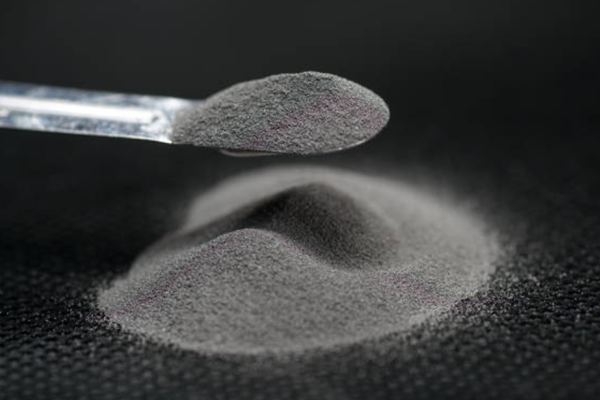
Molded-in metallic color can be better when the part needs a metallic appearance without adding a conductive metal layer. Metallic masterbatch, pearlescent pigment, or controlled texture can create a metal-like visual effect while the base resin remains the insulating structure.
Buyers should still review weld lines, flow marks, color shift, gate location, and texture consistency. Metallic pigments can make cosmetic variation more visible, especially on large flat covers or glossy housings.
When does a metallic finish create electrical risk?
A metallic finish can create electrical risk when the coating is conductive, continuous across insulating barriers, or close to live electrical contacts. Vacuum metallization, electroplating, conductive paint, and some metal-filled coatings may change surface conductivity and affect creepage or clearance performance.
If a buyer needs a real metal layer, the RFQ should define masked zones, electrical isolation surfaces, coating thickness, adhesion requirements, and test method. A decorative finish cannot be assumed to preserve insulation without electrical validation.
How does material selection affect housing strength and insulation?
Material selection affects impact strength, stiffness, heat resistance, dimensional stability, flame behavior, and dielectric performance. A handheld enclosure may prioritize impact and appearance, while a connector shell may prioritize tracking resistance, dimensional stability, and heat exposure.
Buyers should state whether the part is a cosmetic cover, structural housing, high-current connector, lighting component, smart-lock part, or electronics enclosure. That part type changes the balance between resin cost, molding performance, finish durability, and insulation risk.
Which finishing options support a metal-like appearance?
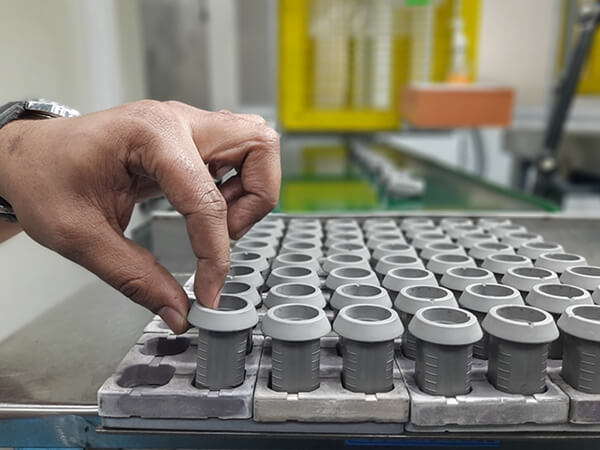
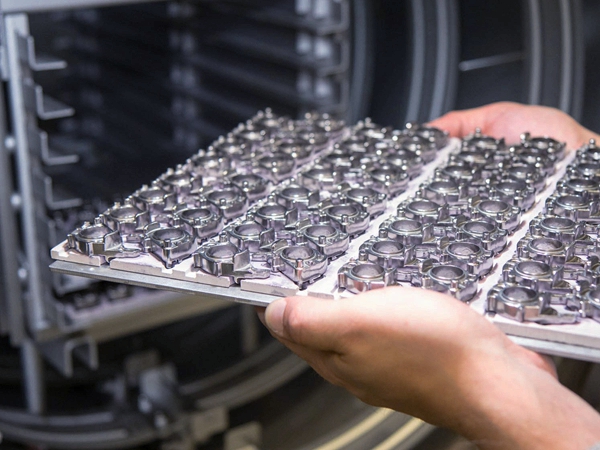
Metal-like appearance can come from molded-in color, textured tooling, painting, clear coating, vacuum metallization, decorative plating, laser marking, or other surface finishing routes. The finishing route must be matched to the electrical requirement and the expected handling environment.
For insulated housings, non-conductive paint or molded-in metallic effect may be safer than conductive plating when electrical isolation is critical. If plating or metallization is required, the supplier and buyer should identify which surfaces must remain nonconductive.
What inspection and testing should buyers define?
Buyers should define color standard, gloss, texture, adhesion test, coating thickness if used, dielectric requirement, flame rating, dimensional tolerances, and environmental exposure. Cosmetic inspection alone is not enough when electrical insulation is part of the function.
For connector housings or lighting components, the RFQ should also identify creepage distance, clearance, mating surfaces, contact areas, and any high-voltage or high-current test requirements. Final electrical validation belongs to the buyer or system owner because insulation performance depends on the complete assembly and test standard.
What RFQ details help select the right resin and finish?
A useful RFQ should include 3D CAD, 2D drawing, resin preference, flame rating, operating temperature, impact requirement, color and texture target, electrical insulation requirement, surface conductivity limits, coating or pigment preference, quantity, and inspection method. These details let the supplier compare resin and finish options before tooling.
The best buyer decision is to choose the resin and finish together. A resin that molds well may not give the desired metallic look, and a finish that looks metallic may not be acceptable for electrical insulation unless masked, isolated, or validated.
How should buyers compare material cost with performance risk?
Buyers should compare material cost with heat exposure, electrical risk, cosmetic reject risk, tooling complexity, and long-term durability. ABS or PC-ABS may fit many consumer housings, while PPS, PEI, or PEEK may be justified for higher heat, chemical exposure, or stricter electrical requirements.
The lowest material price is not always the lower project cost. If a cheaper resin increases coating rejects, warpage, tracking risk, or assembly failure, the total program cost can rise after tooling and validation.
Related FAQs
What finishing options are available for custom molded parts?
Which materials and finishes best resist UV and corrosion outdoors?
Which surface treatments resist daily scratches and wear best?
How to achieve a premium look while keeping costs controlled?
What material and design factors matter for high-current LED driver connections?
How do Neway connectors meet electrical safety standards in different regions?
Can engineering plastics be used in high-security locks and what limits exist?