
Utilizing Powder Compression Molding Parts in Diverse Manufacturing Sectors
Powder Compression Molding Parts RFQ Decision: This article explains how buyers should evaluate powder pressing molding for powder compression molded parts such as sintered gears, bushings, bearings, structural inserts, magnetic parts, wear components, locking parts, and ceramic or metal powder parts. The practical RFQ problem is deciding whether powder selection, compaction, green strength, sintering, density, porosity, secondary sizing, and inspection can meet the part function.
Powder compression molding, also called powder pressing or press-and-sinter processing, compacts powder into a die cavity and then sinters the green compact to create a solid part. The process can be useful for repeated parts with controlled material use and near-net geometry, but the buyer should define material grade, density target, dimensional requirements, surface finish, secondary operations, and validation criteria before quotation.
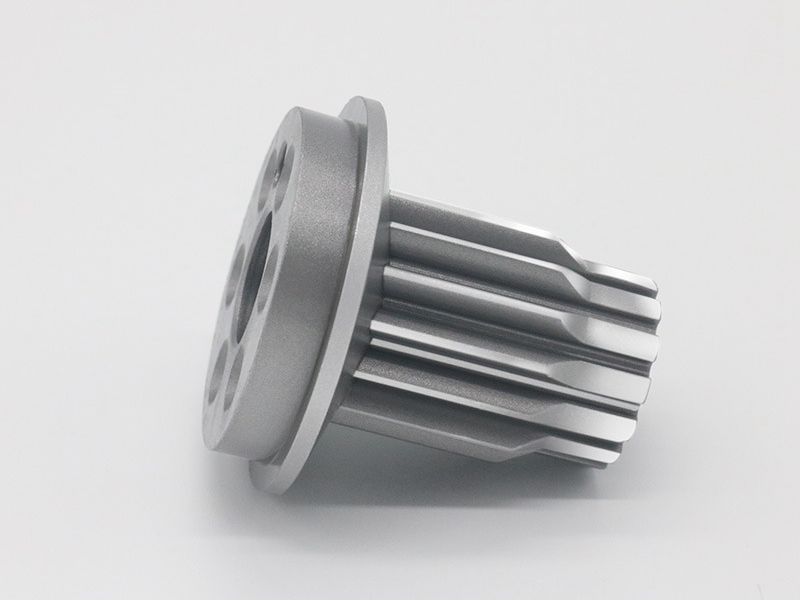
When Is Powder Compression Molding Suitable For Parts?
Powder compression molding is suitable when a part can be formed by axial powder pressing, sintered to the required material condition, and finished with limited secondary operations. Common candidates include gears, bushings, bearings, spacers, rings, structural inserts, magnetic cores, wear components, and simple-to-moderately complex sintered parts.
The buyer should confirm whether the geometry is pressable. Features aligned with the pressing direction are usually easier to form than deep undercuts, side holes, or complex internal channels. If the part requires geometry that cannot be formed by pressing, the buyer may need machining, MIM, casting, ceramic injection molding, or another route.
For a broader process explanation, buyers can review powder compression molding materials and applications and how the PCM service works.
Which Powder Materials Should Buyers Specify?
Powder material should be specified by part function. Stainless steel may be reviewed for corrosion resistance. Low-alloy steel may be reviewed for structural parts. Tool steel may be reviewed for wear resistance. Magnetic alloy may be reviewed for magnetic function. Ceramic powders such as silicon carbide or boron carbide may be reviewed when ceramic hardness, wear, or heat behavior is part of the requirement.
The RFQ should state material grade, powder family, required property, density expectation, heat treatment, surface finish, and any approved substitute. If the buyer only states "powder metal," the supplier may not know whether the part requires strength, corrosion resistance, magnetism, wear behavior, or thermal stability.
Powder Pressing Material | Typical Part Need | RFQ Detail To Provide |
|---|---|---|
Stainless steel powder | Corrosion-resistant sintered parts, inserts, and housings | Grade, corrosion expectation, surface finish, and inspection need |
Low-alloy steel powder | Structural gears, bushings, spacers, and mechanical parts | Strength need, heat treatment, density target, and critical dimensions |
Tool steel powder | Wear parts, tooling inserts, and hard functional surfaces | Hardness target, wear surface, and secondary finishing requirement |
Ceramic powder | Wear, thermal, insulation, or hardness-driven ceramic components | Ceramic grade, firing route, finish requirement, and testing method |
Material references include stainless steel powder pressing, low-alloy steel powder pressing, tool steel powder pressing, and magnetic alloy powder pressing.
How Do Compaction And Sintering Affect Part Quality?
Compaction and sintering affect part quality because density, porosity, green strength, shrinkage, and dimensional stability are controlled across these stages. Powder filling affects uniformity. Pressing affects green compact density. Sintering bonds powder particles and changes final dimensions. Secondary sizing or coining may be needed when the final dimensional requirement is more demanding.
Buyers should identify the functional surfaces and load paths before quotation. A bushing may need controlled bore geometry and oil impregnation review. A gear may need tooth geometry, hardness, and runout review. A magnetic core may need material and magnetic property confirmation. A ceramic wear part may need firing and surface finishing review.
For sintering context, buyers can review metal sintering in powder metallurgy and MIM production.
Which Part Features Fit Powder Pressing Molding?
Part features that fit powder pressing molding are usually features that can be compacted with direct pressing motion and ejected without damaging the green compact. Straight walls, simple bosses, through holes aligned with pressing direction, gears, rings, bushings, and flat or stepped shapes may be easier to review than side holes or re-entrant features.
Buyers should flag any undercuts, thin walls, sharp corners, deep grooves, side holes, or delicate teeth. These features may require design changes, secondary machining, split tooling, or a different manufacturing process. The RFQ should state which features are fixed and which can be adjusted for pressability.
Powder Pressed Feature | Manufacturing Concern | Buyer RFQ Action |
|---|---|---|
Through bore | Core pin alignment, density around the bore, and sizing need | State bore function, tolerance priority, and inspection method |
Gear teeth | Tooth fill, green strength, sintering distortion, and hardness | Provide tooth geometry, load expectation, and secondary finishing need |
Thin wall | Cracking, density variation, and handling risk before sintering | Identify minimum wall zones and allow manufacturability review |
Side hole or undercut | May not be directly pressable with simple tooling | State whether machining or design adjustment is acceptable |
How Should Buyers Compare PCM With MIM, Forging, And Machining?
Buyers should compare powder compression molding with MIM, forging, and machining by geometry, quantity, material, density, tolerance, and secondary operation needs. Powder pressing is often reviewed for parts that can be compacted and sintered efficiently. MIM may be more suitable for smaller and more complex 3D features. Forging may be reviewed for dense structural parts. CNC machining may be better for prototypes, low quantity, and tight machined datums.
The comparison should not be based only on part shape. A powder pressed part can have useful material and cost characteristics, but density, porosity, and sintering behavior must match the buyer's application. If a fully dense wrought property is required, the buyer should state that requirement before quote comparison.
For broader powder metallurgy context, buyers can review powder metallurgy process, materials, and applications.
Which Secondary Operations Should Be Included?
Secondary operations should be included when the powder pressed part needs sizing, coining, machining, heat treatment, oil impregnation, resin impregnation, surface finishing, plating, grinding, deburring, or assembly. These operations may be required for bore control, gear performance, surface finish, corrosion behavior, or final dimensional acceptance.
The RFQ should state whether the supplier is responsible for the final usable component or only for the sintered blank. If the part will be machined after sintering, the drawing should identify machining stock and critical surfaces. If the part will be impregnated or heat treated, the acceptance criteria should be stated before quotation.
How Should Powder Compression Molded Parts Be Inspected?
Powder compression molded parts should be inspected using methods that match the part function. Inspection may include visual review, dimensional inspection, density checks, hardness testing, bore gauges, gear checks, surface finish review, magnetic property review, ceramic property testing, and first article inspection.
Buyers should define critical features, sampling expectations, and required records before production. If porosity, density, or hardness is functional, those checks should be visible in the RFQ. If only certain dimensions control assembly, the drawing should mark those dimensions clearly.
Inspection should also clarify the stage being checked. A part may be checked after sintering, after sizing, after heat treatment, after impregnation, or after final finishing. The inspection stage can change the acceptance result.
What Should A Powder Compression Molding RFQ Include?
A powder compression molding RFQ should include the 3D model, 2D drawing, material grade, powder family, expected quantity stage, density or porosity requirement, critical dimensions, pressing direction concerns, sintering requirement, secondary operations, heat treatment, surface finish, inspection records, packaging needs, and validation criteria.
Buyers should state which features are functional and which features are flexible. A bore, gear tooth, bearing surface, magnetic feature, or wear surface may need stronger process control. A non-critical chamfer, radius, or hidden face may be adjusted for pressability.
Powder compression molding parts are easier to quote when the buyer connects powder material, compaction, sintering, density, secondary operations, and inspection from the start. A clear RFQ helps determine whether powder pressing is suitable for the required manufacturing sector and part function.
Related FAQs