Compare the Material Density and Mechanical Properties of MIM and Forged Parts
MIM Forged Parts Density RFQ Decision: Comparing material density and mechanical properties of metal injection molding parts and forged parts helps buyers choose between near-net-shape MIM, wrought forging, and secondary machining routes for gears, levers, hinges, lock parts, brackets, shafts, connectors, and miniature structural components. This article explains how MIM sintering, forged grain flow, alloy selection, heat treatment, porosity control, and inspection evidence affect the buyer decision. The practical RFQ problem is deciding whether the part needs MIM geometry efficiency, forged load-bearing behavior, or a combined route with machining and final inspection.
MIM and forging should not be compared by one density number or one strength value. A small complex MIM part, a machined-from-forging shaft, and a forged bracket may all use different alloys, heat treatments, test coupons, and feature geometry. Buyers should define the load case, material grade, density requirement, critical dimensions, fatigue risk, wear surface, and inspection method before asking a supplier to compare the two processes.
How Should Buyers Compare MIM and Forged Part Density?
Buyers should compare density by material grade, process route, and inspection method. MIM density is controlled by powder feedstock, debinding, sintering, and any post-sintering treatment. Forged part density is tied to wrought stock, deformation, heat treatment, and machining after forging.
The engineering reason is that MIM begins with fine metal powder and binder, while forging begins with solid metal stock that is plastically deformed. MIM can form complex small geometry before sintering. Forging can create a wrought structure and directional grain flow. Both routes can produce useful metal parts, but density and performance must be verified against the drawing and material specification.
The RFQ should ask for the density test method only when density is a functional or quality requirement. If the part needs magnetic performance, wear resistance, sealing, strength, or fatigue performance, the buyer should define those properties directly instead of assuming density alone will answer the performance question.
How Do Mechanical Properties Differ Between MIM and Forged Parts?
Mechanical properties differ because MIM and forging create different microstructures and feature constraints. MIM is often chosen for small complex parts with integrated details. Forging is often chosen for parts where wrought structure, directional strength, and high load capacity are the primary requirements.
MIM mechanical properties depend on powder chemistry, binder removal, sintering densification, alloy grade, heat treatment, residual porosity, and surface condition. Forged mechanical properties depend on billet quality, deformation direction, forging temperature, heat treatment, grain flow, machining allowance, and final surface condition. A direct comparison should use the same material family only when the material specifications are actually comparable.
The RFQ implication is that buyers should provide load direction, impact or fatigue concerns, wear surfaces, hardness requirements, corrosion requirements, and any test method required for acceptance. A MIM latch with complex geometry and a forged shaft under heavy cyclic load are not the same decision.
Which Part Geometry Makes MIM More Suitable Than Forging?
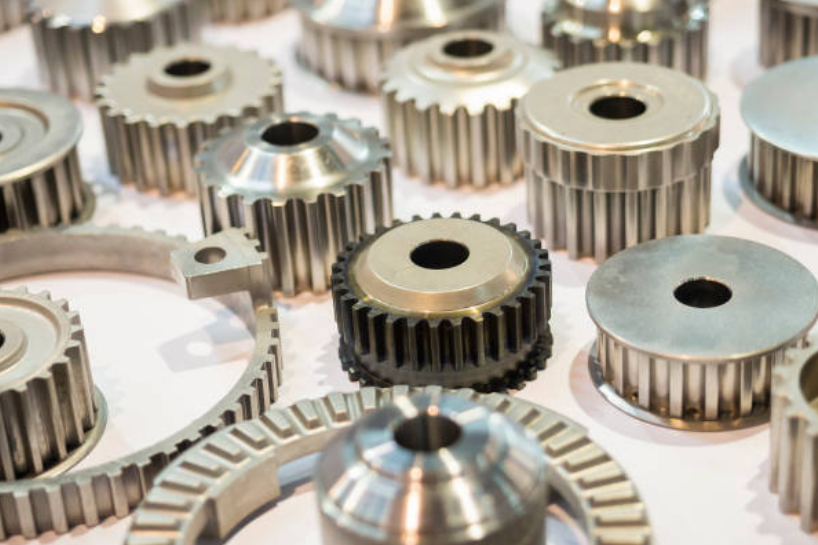
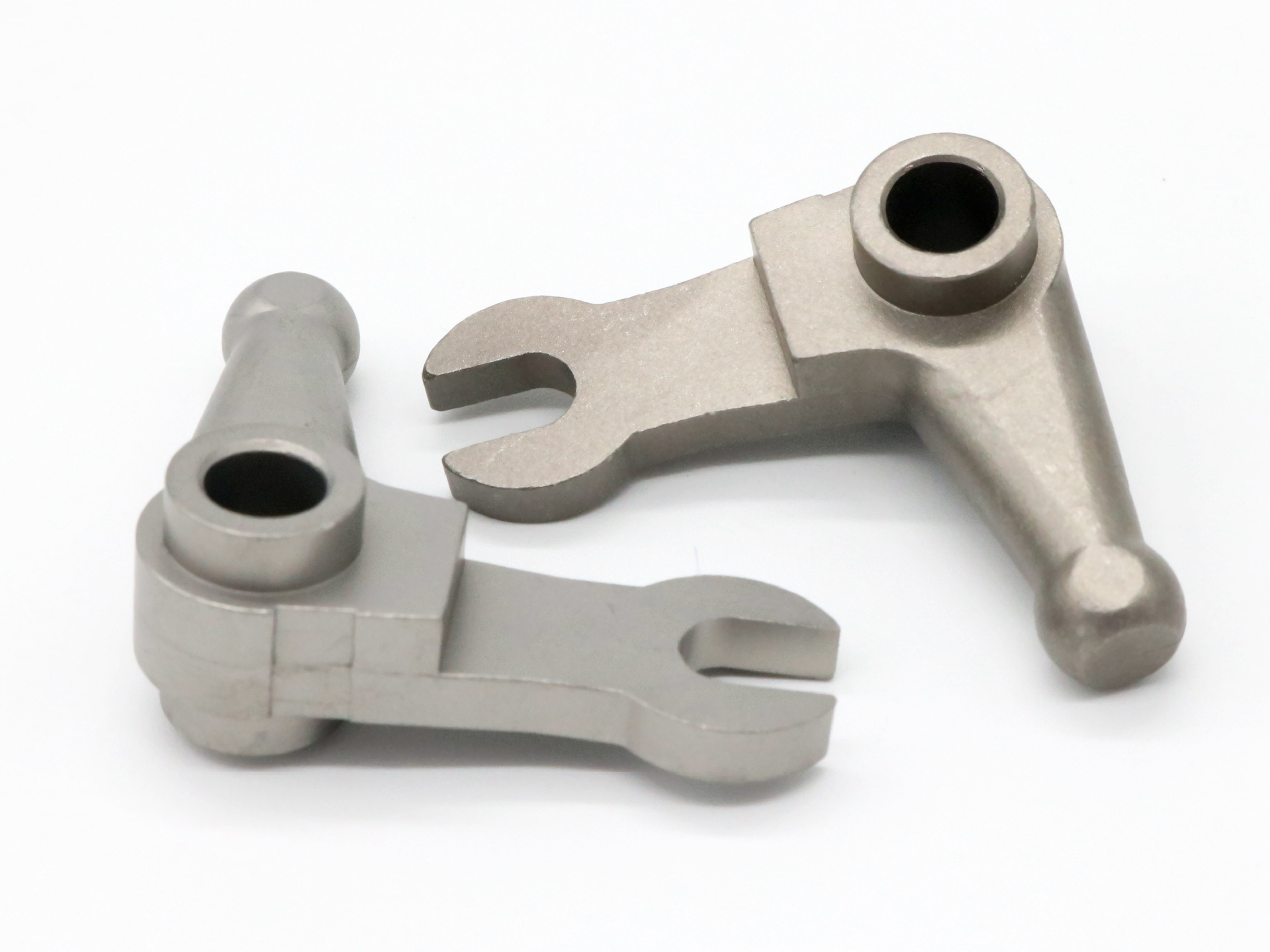
MIM is more suitable when the part is small, complex, and feature-rich. Fine teeth, ribs, bosses, grooves, holes, latches, curved surfaces, and integrated mounting details can make MIM more efficient than forging followed by extensive machining.
The engineering reason is near-net shape formation. A forged blank may still need multiple machining setups to create internal pockets, small slots, complex profiles, or fine functional details. MIM can mold many of those details before sintering if the design supports tool release, feedstock flow, debinding, sintering shrinkage, and inspection access.
Buyers should mark which features are expensive or difficult in the current forged or machined route. If most cost comes from removing material to create small details, MIM may deserve review. If the part is simple and loaded heavily in a dominant direction, forging may remain the better route.
When Does Forging Offer a Better Property Route Than MIM?
Forging may be better when the part is larger, simpler, highly loaded, or dependent on wrought grain flow and directional mechanical behavior. Shafts, heavy brackets, critical load paths, and large structural shapes may fit forging better than MIM when geometry complexity is not the main cost driver.
The engineering reason is that forging deforms solid metal and can align grain flow with the part function. Forged blanks can then be machined to final dimensions. When the buyer needs high load-bearing behavior on a relatively simple shape, the cost of forging plus machining may be justified by the mechanical property requirement.
The RFQ should not ask MIM to replace forging only because the part is metal. The buyer should compare function, geometry, alloy, heat treatment, dimensional requirements, production volume, and validation evidence. If a forged feature must remain forged for design reasons, the supplier should know that before quoting alternatives.
What Test and Inspection Data Should an RFQ Request?
Test and inspection data should match the buyer's acceptance criteria. Density checks, hardness testing, tensile or impact testing, microstructure review, CMM inspection, surface finish checks, and functional testing may all be relevant, but not every project needs every test.
Buyer Requirement | MIM Review Point | Forged Part Review Point | RFQ Evidence Needed |
|---|---|---|---|
Material density or porosity risk | Powder feedstock, debinding, sintering densification, and residual porosity control. | Wrought stock quality, forging process, heat treatment, and machining condition. | Density test method, material certificate if required, and sample inspection plan. |
Strength, wear, or fatigue behavior | Alloy grade, heat treatment, surface condition, feature geometry, and sintered microstructure. | Grain flow, heat treatment, machining allowance, surface condition, and load direction. | Mechanical test requirement, hardness check, functional test, and critical load case. |
Complex geometry with local precision | Mold design, shrinkage control, secondary machining, and inspection access. | Machining setup count, material removal, tool access, and final datum control. | 3D CAD model, 2D drawing, datum scheme, CMM report, and fixture check if needed. |
Production consistency | Feedstock lot, molding parameters, furnace control, machining, finishing, and lot inspection. | Forging lot, heat treatment batch, machining process, and final inspection plan. | Sampling plan, first article inspection, lot records, and acceptance criteria. |
How Should Buyers Choose Between MIM and Forging for Production?
Choose MIM when the part needs small complex geometry, integrated features, material efficiency, and repeatable production after tooling. Choose forging when the part needs wrought mechanical behavior, directional grain flow, or a larger load-bearing shape where machining from a forged blank is practical.
The buyer decision should include the whole manufacturing route. MIM may need secondary machining for precision datums, threads, bearing seats, or sealing surfaces. Forging may need extensive machining to create small details. Both processes may need heat treatment, surface finishing, inspection, and functional validation.
For difficult comparisons, buyers can review MIM versus CNC machining, die casting, and investment casting as part of a broader process selection. The best route depends on geometry, material, volume, strength requirement, dimensional control, and inspection evidence.
What Neway Precision Reviews for MIM vs Forged Part Decisions
Neway Precision reviews MIM versus forged-part RFQs by checking material grade, density requirement, mechanical property requirement, load direction, fatigue risk, wear surface, part size, geometry complexity, wall thickness, ribs, holes, threads, heat treatment, secondary machining, finishing, and inspection criteria. The review connects MIM materials, sintering behavior, and buyer performance requirements.
A complete RFQ should include the 3D CAD model, 2D drawing, target material, existing forged or machined route if available, required mechanical properties, density or porosity requirement if any, critical dimensions, surface finish, heat treatment, testing requirements, production volume, and acceptance criteria. Clear RFQ data helps determine whether MIM, forging, or a hybrid route with machining is the more suitable manufacturing decision.
Related FAQs
How Do Powder Metallurgy Parts Compare With Forgings In Cost And Performance?
What Quality Inspection Methods Are Used For Tight Tolerance MIM Components?
Can Secondary Machining Improve Tolerances For Metal Injection Molded Components?
How Can Custom MIM Services Maintain Part Consistency Across Large Production Runs?