Why is plasma cutting particularly suited for fabricating thicker metals?
Plasma cutting is particularly suited for fabricating thicker conductive metals because the plasma arc can cut carbon steel, stainless steel, aluminum, copper, brass, and low-alloy steel plates with practical productivity for heavy brackets, frames, machine guards, structural blanks, and equipment parts. This FAQ explains when plasma cutting is a strong RFQ choice for thick metal fabrication and when buyers should compare oxy-fuel, laser cutting, waterjet, or CNC machining.
Why is plasma cutting particularly suited for fabricating thicker metals?
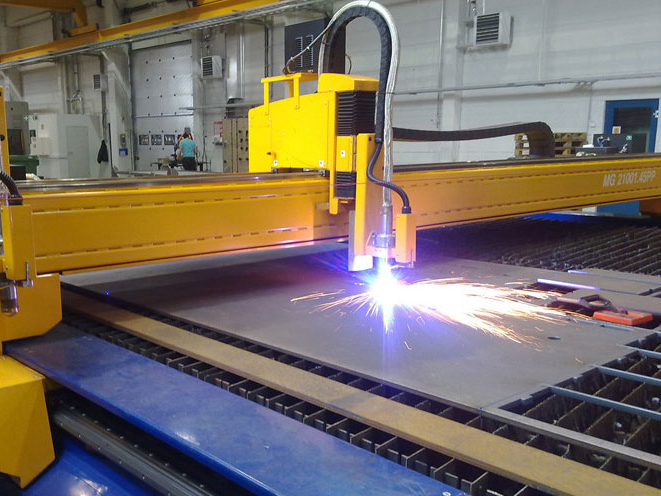
Plasma cutting is suited for thicker conductive metals because the plasma arc transfers concentrated heat into the cut path and removes molten metal from the kerf. This makes the process useful for rugged profiles, heavy plate blanks, structural parts, and industrial fabrication where edge cleanup is acceptable or planned.
The buyer decision should consider material, thickness, edge quality, dross, bevel, heat input, flatness, weld preparation, and downstream machining. Plasma cutting is not automatically the best option for every thick part, but it is often a practical route when the part is conductive, profile-based, and used in fabrication.
Thick metal fabrication need | How plasma cutting can help | RFQ issue to confirm |
|---|---|---|
Heavy steel plates and frames | Provides a practical profile cutting route for carbon steel and low-alloy steel | Dross, bevel, weld preparation, and edge cleanup |
Stainless steel or aluminum plates | Can cut conductive non-ferrous or corrosion-resistant metals where oxy-fuel is not suitable | Heat discoloration, flatness, surface finish, and documentation |
Industrial brackets and guards | Supports rugged shapes, holes, slots, and repeatable CNC profiles | Hole quality, tolerance expectations, burr limits, and inspection |
Energy and equipment parts | Useful for thick conductive blanks that later need welding, machining, or coating | Material grade, traceability, weld edge, and secondary operations |
What thick metal parts are good candidates for plasma cutting?
Good candidates include base plates, gussets, mounting brackets, heavy equipment guards, flanges, structural blanks, machine frames, weldment components, and energy equipment plates. These parts often need profile cutting before bending, welding, machining, coating, or assembly.
Plasma cutting is commonly connected with sheet metal fabrication and plate fabrication because it can create blanks that move into downstream manufacturing. The buyer should define whether the plasma-cut edge will remain as-cut or be ground, welded, machined, painted, or inspected.
How does plasma cutting compare with oxy-fuel for thick steel?
Plasma cutting and oxy-fuel cutting can both be considered for thick steel, but they work differently. Plasma cutting uses an arc and can process a broader range of conductive metals. Oxy-fuel cutting is mainly used for carbon steel and low-alloy steel because it depends on oxidation of the heated steel.
For RFQs, buyers should compare edge cleanup, heat input, portability, part size, thickness, weld preparation, and production environment. Oxy-fuel may still be considered for very heavy simple steel cuts or field work, while plasma cutting may be more suitable for shop-based CNC profiles and mixed conductive metals.
How does plasma cutting compare with laser cutting for thick metals?
Laser cutting is often considered when fine detail, small holes, tighter edge quality, or cleaner sheet profiles are required. Plasma cutting is often considered when the material is thicker, the part is rugged, and the edge can accept dross removal or secondary cleanup.
The buyer should compare plasma and laser cutting by material grade, thickness, hole size, tolerance, edge roughness, flatness, and finishing route. If the part includes precision machined features, CNC machining may still be required after cutting.
What edge quality and secondary operations should buyers expect?
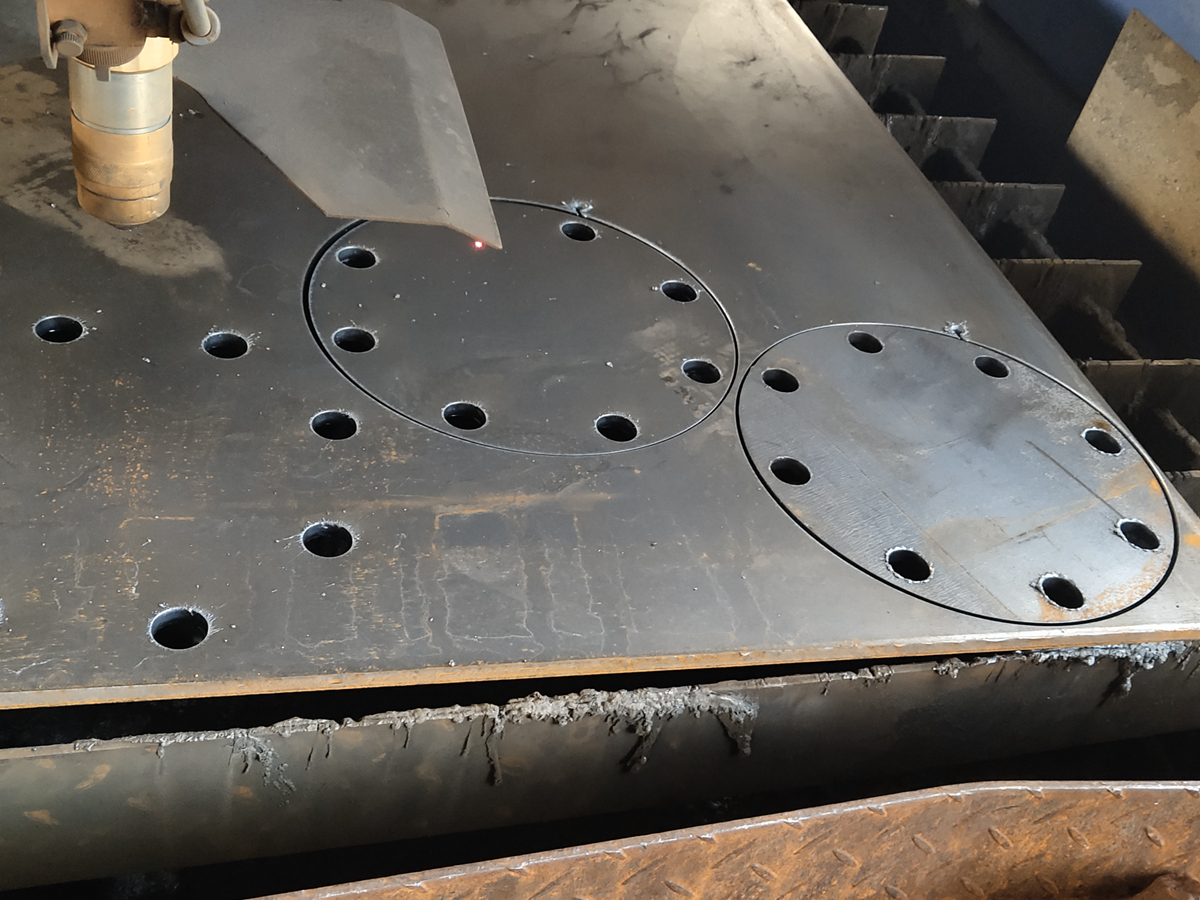
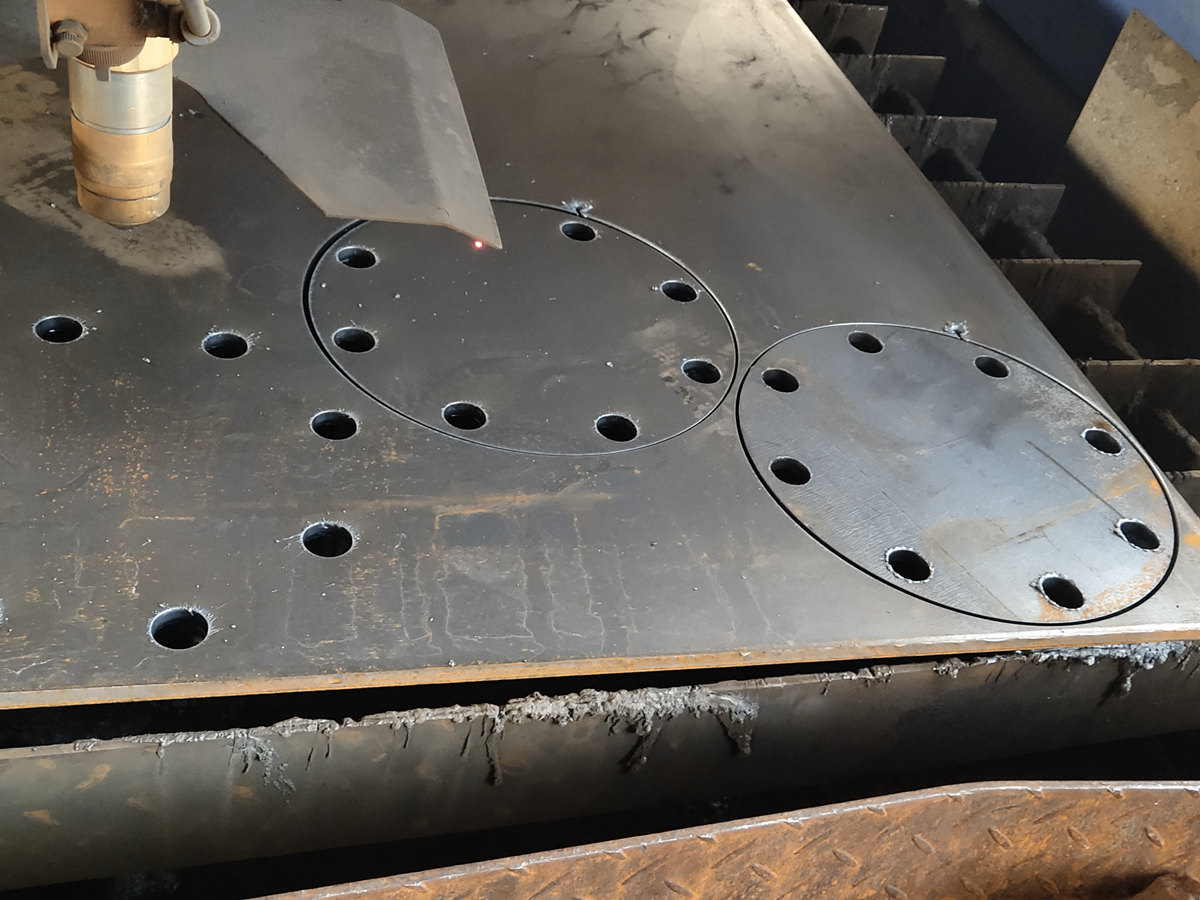
Thick metal plasma cutting can create dross, bevel, heat discoloration, and edge roughness depending on material and settings. These conditions may be acceptable for rough blanks but may need grinding, deburring, machining, weld preparation, or coating preparation for finished components.
Buyers should state whether edge cleanup is required before shipment and whether grinding marks are acceptable. If the finished part is used in energy, automotive, aerospace equipment, or telecommunication equipment, inspection and documentation needs should be identified in the RFQ.
What RFQ information helps confirm thick metal plasma cutting fit?
A strong RFQ includes the 2D drawing, material grade, plate thickness, quantity, edge quality, dross allowance, bevel allowance, hole sizes, slot dimensions, flatness, weld preparation, secondary machining, coating, and inspection method. The buyer should also state whether the blank is for prototype, repair, low-volume fabrication, or repeat production.
With those details, the supplier can decide whether plasma cutting is the best route or whether oxy-fuel, laser cutting, waterjet cutting, sawing, or machining should be compared. Thick metal fabrication works best when cutting, cleanup, welding, and inspection are quoted as one manufacturing route.
Related FAQs